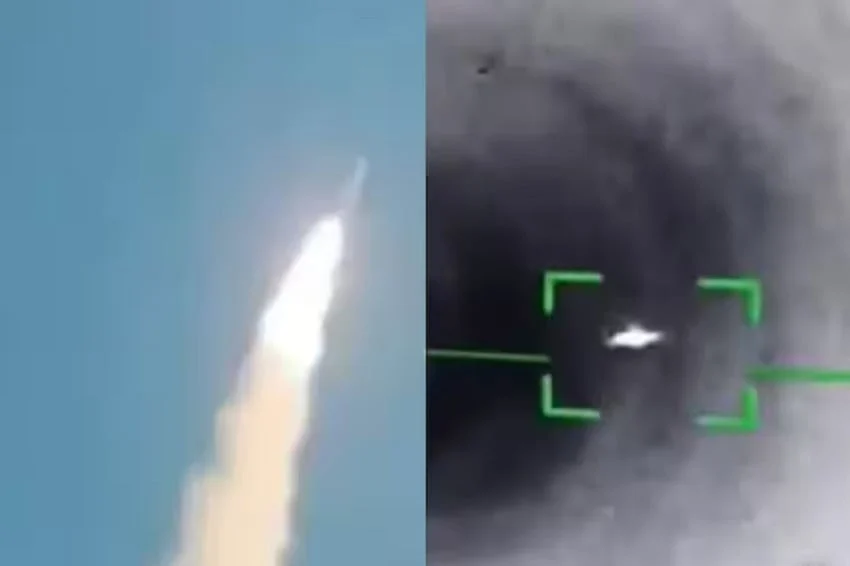
The geopolitical stability of the Middle East faces renewed scrutiny following a high-stakes confrontation over the Persian Gulf on Friday night. The Iranian military has formally declared that its domestically manufactured air defense systems successfully engaged and damaged a United States Air Force F-16 fighter jet. According to statements released by the Iranian Army and disseminated via the Mehr News Agency, the aircraft was intercepted after allegedly violating Iranian airspace. While Tehran maintains that the damaged jet was forced to execute an emergency landing at a regional airfield, the United States Central Command (CENTCOM) has categorically denied the incident, asserting that all American assets in the theater remain accounted for and operational.
This incident marks a significant escalation in the ongoing friction between Washington and Tehran, occurring against a backdrop of heightened military posturing that has persisted since late February. The conflicting narratives from both sides underscore the volatility of the region and the increasing frequency of aerial encounters over one of the world’s most critical maritime corridors.
Chronology of the Incident
The events unfolded late Friday evening when the integrated air defense network of the Islamic Republic of Iran reportedly identified an unidentified aerial contact approaching its southern maritime borders. According to Iranian military officials, the aircraft was identified as a U.S. F-16 Fighting Falcon.
As the jet allegedly penetrated the sovereign airspace of Iran, ground-based air defense units—which Tehran claims are entirely locally produced—were activated. The military stated that a surface-to-air missile was launched, resulting in a direct hit on the aircraft. Iranian sources claim that the strike caused significant structural damage to the jet, forcing the pilot to abort the mission immediately. The aircraft reportedly diverted from its original flight path to perform an emergency landing at a nearby military facility.
By Sunday, November 22, 2026, the narrative had been fully solidified within Iranian state media, framing the engagement as a successful defense of national integrity. However, the timeline provided by the U.S. military suggests a starkly different reality. CENTCOM issued an official rebuttal via social media platform X, stating, "Iran did not attack any U.S. F-16 aircraft yesterday." The statement further emphasized that all U.S. military aircraft operating within the Middle East are currently accounted for and in safe, operational condition.
Strategic Context and Regional Dynamics
The claim of an aerial engagement must be viewed through the lens of the broader conflict that has gripped the region since February 28. This period has seen a consistent uptick in military friction, involving both direct and proxy engagements. The Persian Gulf, serving as a vital artery for global energy supplies, has become a primary theater for these tensions.
Iran has frequently touted the advancements of its indigenous defense industry, particularly in the realm of radar technology and surface-to-air missile (SAM) systems. By asserting that its systems—which operate independently of foreign technology—can detect and damage high-performance Western aircraft, Tehran is attempting to project a narrative of technological parity. This is part of a larger strategy to deter U.S. and allied aerial surveillance and patrol operations in the vicinity of the Iranian coast.
Furthermore, this latest claim follows a series of reciprocal escalations. On Saturday, the Islamic Revolutionary Guard Corps (IRGC) announced a combined drone and missile strike targeting a U.S. military installation in Bahrain. Tehran framed this as a retaliatory measure for the alleged breach of its airspace, signaling that it no longer views U.S. presence in the neighboring Gulf Cooperation Council (GCC) states as a passive reality, but rather as an active participant in regional hostilities.
Technical Assessment and Military Implications
The F-16 Fighting Falcon remains a cornerstone of U.S. power projection in the Middle East. Designed as a multirole fighter, it possesses sophisticated electronic warfare suites and defensive systems meant to counter ground-based threats. For an Iranian missile to "damage" such an aircraft, it would imply either a highly successful interception by a sophisticated, modern SAM system or a failure in the aircraft’s defensive countermeasures.
Independent military analysts observe that the absence of physical evidence—such as wreckage or corroborating satellite imagery—makes verification of the Iranian claim difficult. Historically, both sides have used information warfare as a strategic tool to influence domestic and international perceptions. Tehran utilizes such claims to demonstrate its defensive capabilities to its internal audience and regional rivals, while the U.S. maintains a policy of denying incidents that could undermine its regional dominance or embolden adversaries.
However, the frequency of these reports is increasing. Iran has previously alleged the targeting of advanced platforms, including F-35 stealth fighters and F-15s, though none of these claims have been substantiated by Western military authorities. The persistent nature of these reports suggests that the Iranian military is under strict directives to contest every U.S. flight near its borders, regardless of the actual kinetic outcome.
Official Responses and International Repercussions
The U.S. Department of Defense has maintained a stance of calculated restraint, focusing on the safety of its personnel and the integrity of its mission. By explicitly stating that all aircraft are "safe and accounted for," CENTCOM is effectively attempting to neutralize the Iranian claim without engaging in a protracted diplomatic argument that could escalate the situation further.
Conversely, the Iranian leadership continues to frame the current military posture of the U.S. and its regional allies—specifically Israel—as a violation of the United Nations Charter and international law. Tehran’s official rhetoric maintains that the actions taken by the IRGC and the Iranian Army are necessary responses to an ongoing "war of aggression" initiated in late February.
The implications for the regional security architecture are profound. If Iran continues to escalate its response to aerial surveillance, the risk of miscalculation increases exponentially. Any misidentified signal or technical error could lead to a catastrophic confrontation, drawing in additional regional players and potentially disrupting global oil markets, which remain highly sensitive to instability in the Persian Gulf.
Analysis: A New Era of Shadow Warfare
The current standoff is indicative of a "grey zone" conflict—a state of affairs where the intensity of the struggle falls between peace and conventional, all-out war. In this environment, the truth is often the first casualty, as both sides prioritize the preservation of their respective strategic narratives.
- Information Operations: Iran’s use of the Mehr News Agency to broadcast these claims is a calculated move to assert sovereignty. By claiming to have forced an emergency landing, Iran provides a specific, albeit unverifiable, narrative that satisfies the domestic requirement for a strong defense posture.
- Deterrence Strategy: By targeting radar systems and claiming hits on advanced fighters, Iran is attempting to impose a "cost" on U.S. presence in the region. Even if the aircraft were not hit, the requirement for the U.S. to constantly refute these claims forces a drain on diplomatic and military communication resources.
- Escalation Management: The U.S. strategy of rapid denial serves to reassure allies in the region, such as Bahrain, Saudi Arabia, and the UAE, that the U.S. security umbrella remains intact and that Iranian claims are exaggerated or fabricated.
Conclusion
As of Sunday evening, the situation in the Persian Gulf remains tense but stable. The lack of confirmation regarding the damaged F-16 suggests that the incident may have been a near-miss or a tactical encounter that did not result in the severity described by Tehran. However, the underlying friction remains unresolved. With the IRGC engaging in multi-pronged strikes on regional bases and the Iranian Army asserting its dominance over its skies, the potential for further escalation is significant.
The international community, particularly major powers with interests in the stability of the Gulf, will likely be watching closely for any signs of a physical, verified incident. Until such evidence emerges, the conflict will remain a battle of words and strategic posturing, with both Washington and Tehran maneuvering for the upper hand in a region that continues to sit at the precipice of major military volatility. The coming weeks will be critical in determining whether these aerial encounters remain controlled, or if they represent the precursor to a more direct and sustained military confrontation.