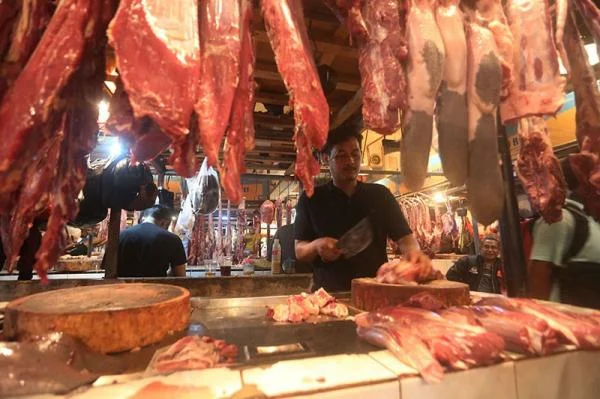
The National Food Agency, known locally as Badan Pangan Nasional (Bapanas), has officially called for the immediate acceleration of beef distribution across Indonesia following reports of retail prices soaring to an unprecedented Rp180,000 per kilogram in several key markets. This strategic move is designed to mitigate the financial burden on consumers and prevent wider economic volatility. To execute this stabilization plan, Bapanas is coordinating a multi-sectoral intervention involving the Jakarta-owned market operator Perumda Pasar Jaya and prominent State-Owned Enterprises (BUMNs), specifically PT Berdikari and PT Perusahaan Perdagangan Indonesia (PPI). The primary objective is to flood the market with existing stocks and imported reserves to force a price correction at the consumer level.
I Gusti Ketut Astawa, the Deputy for Food Availability and Stabilization at Bapanas, emphasized that the agency is prioritizing the logistical pipeline to ensure that meat supplies reach traditional markets and retail outlets without further delay. By streamlining the movement of goods from cold storage facilities to the hands of traders, the government aims to restore the price of beef to its normal range, which typically fluctuates between Rp130,000 and Rp140,000 per kilogram depending on the cut and quality. The current spike to Rp180,000 represents a significant deviation from the government’s reference price, prompting an urgent tactical response from food security authorities.
The Catalyst for Intervention: Analyzing the Price Surge
The sudden escalation of beef prices to Rp180,000 per kilogram has caused concern among both households and small-to-medium enterprises (MSMEs), particularly those in the culinary sector such as bakso (meatball) vendors and traditional restaurants. While food prices often fluctuate due to seasonal demand, the current surge in late July 2026 has been identified as a result of localized supply bottlenecks rather than a national shortage of cattle.
Data from the National Strategic Food Price Information Center (PIHPS) indicated that while other commodities like chili and rice had begun to stabilize or even decrease in early July, beef remained an outlier. The disparity between the price at the slaughterhouse and the price at the retail level suggested that the distribution chain was experiencing friction. Bapanas identified that the speed at which meat was moving from importers and state warehouses to the municipal markets was insufficient to meet daily demand, allowing speculative pricing to take root in several regions, most notably in the Greater Jakarta area.
Strategic Coordination with BUMNs and Regional Entities
To address these distribution hurdles, Bapanas has activated its partnership with the "Pangan" (Food) cluster of State-Owned Enterprises. PT Berdikari, which specializes in livestock and meat distribution, and PT Perusahaan Perdagangan Indonesia (PPI), a major trading house, have been tasked with releasing their frozen beef and buffalo meat reserves. These entities hold government mandates to manage imports and maintain the Government Food Reserve (Cadangan Pangan Pemerintah or CPP).
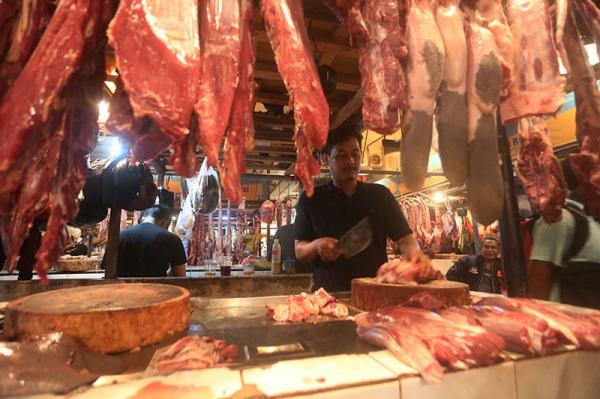
In addition to the BUMNs, Perumda Pasar Jaya plays a critical role as the manager of Jakarta’s vast network of traditional markets. By working with Pasar Jaya, Bapanas ensures that the intervention is not just a high-level policy but a practical solution that reaches the "los daging" (meat stalls) where the majority of Indonesians shop. The coordination involves "Market Operations" or "Ketersediaan Pasokan dan Stabilisasi Harga" (KPSH) programs, where meat is sold at subsidized or controlled prices directly to the public or through trusted distributors.
"We will continue to coordinate with our colleagues at Perumda Pasar Jaya, as well as with Berdikari and PPI, to immediately distribute and stabilize the price of beef," stated Ketut Astawa in an official press release on Friday, July 24, 2026. He noted that this collaborative framework is the most effective short-term solution to provide immediate relief to the market.
The Role of Frozen Meat Imports in Stabilization
A key component of the stabilization strategy involves the distribution of frozen meat, including frozen beef from Australia and Brazil, as well as frozen buffalo meat from India. Frozen meat serves as a more affordable alternative to fresh "warm" meat, which is often preferred by Indonesian consumers but is more susceptible to price volatility due to the costs of live cattle logistics and slaughtering.
The government has historically used frozen buffalo meat as a "price damper." By ensuring that frozen meat is widely available at a fixed price—often around Rp80,000 to Rp95,000 per kilogram—Bapanas creates a ceiling that prevents fresh beef prices from climbing indefinitely. If consumers have a viable, high-quality, and affordable frozen alternative, the demand for hyper-inflated fresh beef naturally decreases, forcing traders to lower their prices to remain competitive.
Berdikari and PPI have been specifically instructed to expedite the release of these imported stocks. The logistics involve moving meat from bonded warehouses through the cold chain infrastructure to ensure that food safety standards are maintained until the product reaches the end-user.
Chronology of Market Monitoring and Response
The intervention follows a week of intensive market monitoring by Bapanas and the Food Task Force (Satgas Pangan).

- Early July 2026: Initial reports showed beef prices hovering around Rp150,000/kg, a slight increase from the previous month.
- July 15-20, 2026: While rice and horticultural products saw a downward trend, beef prices spiked sharply in several Jakarta markets, hitting the Rp180,000 mark.
- July 22, 2026: Bapanas conducted field inspections and identified that while stocks were technically available in warehouses, the "last-mile" delivery to traditional markets was lagging.
- July 24, 2026: Deputy I Gusti Ketut Astawa issued the directive for accelerated distribution and confirmed the partnership with BUMNs and Pasar Jaya to flood the market with supply.
This timeline illustrates a proactive rather than reactive stance by the National Food Agency, aiming to squash the price bubble before it can trigger broader inflationary pressure on the national economy.
Economic Implications and the Importance of Price Stability
The price of beef is a sensitive economic indicator in Indonesia. Beyond its nutritional importance as a source of protein, beef prices have a direct impact on the Consumer Price Index (CPI). High beef prices can erode the purchasing power of the middle and lower-class populations, leading to a decrease in overall consumption.
Furthermore, Indonesia is currently engaged in a national campaign to reduce stunting rates. Affordable access to animal protein is a cornerstone of this policy. When the price of beef reaches Rp180,000 per kilogram, it becomes a luxury item inaccessible to many families, potentially undermining public health objectives.
From a macro perspective, Bapanas’ intervention is part of a broader effort to keep inflation within the target range set by Bank Indonesia. Food inflation, often referred to as "volatile foods" inflation, is the most significant contributor to the overall inflation rate in the country. By stabilizing beef, Bapanas helps maintain national economic stability.
Challenges in the Distribution Chain
Despite the government’s efforts, several challenges remain in the beef distribution network. One of the primary hurdles is the "Cold Chain" infrastructure. Unlike dry commodities like rice or sugar, meat requires continuous refrigeration. Many traditional markets in Indonesia lack adequate cold storage facilities, forcing traders to sell meat quickly or rely on daily deliveries of fresh carcasses.
The reliance on imports also introduces external risks, such as fluctuations in global commodity prices and shipping delays. However, Bapanas’ strategy of using BUMNs to manage the Government Food Reserve acts as a buffer against these external shocks. By holding significant stocks in state-controlled cold storage, the government can intervene in the market even when global supply chains are tight.
Future Outlook and Long-term Strategies
While the current focus is on short-term distribution acceleration, Bapanas and the Ministry of Agriculture are also looking at long-term solutions to reduce Indonesia’s dependency on beef imports. These include programs to increase the national cattle population through artificial insemination, improving local feed quality, and providing incentives for local cattle farmers.
However, for the immediate future, the priority remains the consumer. The directive to Berdikari, PPI, and Pasar Jaya is clear: move the stock, fill the markets, and bring the prices down. Bapanas has signaled that it will continue to monitor the situation daily and is prepared to take further measures if prices do not return to the desired equilibrium within the coming week.
In conclusion, the swift action taken by the National Food Agency reflects a coordinated government effort to protect consumers from market anomalies. By leveraging the logistical capabilities of BUMNs and the market reach of regional entities like Pasar Jaya, the government aims to ensure that beef remains an affordable staple for all Indonesians, maintaining both social welfare and economic order.