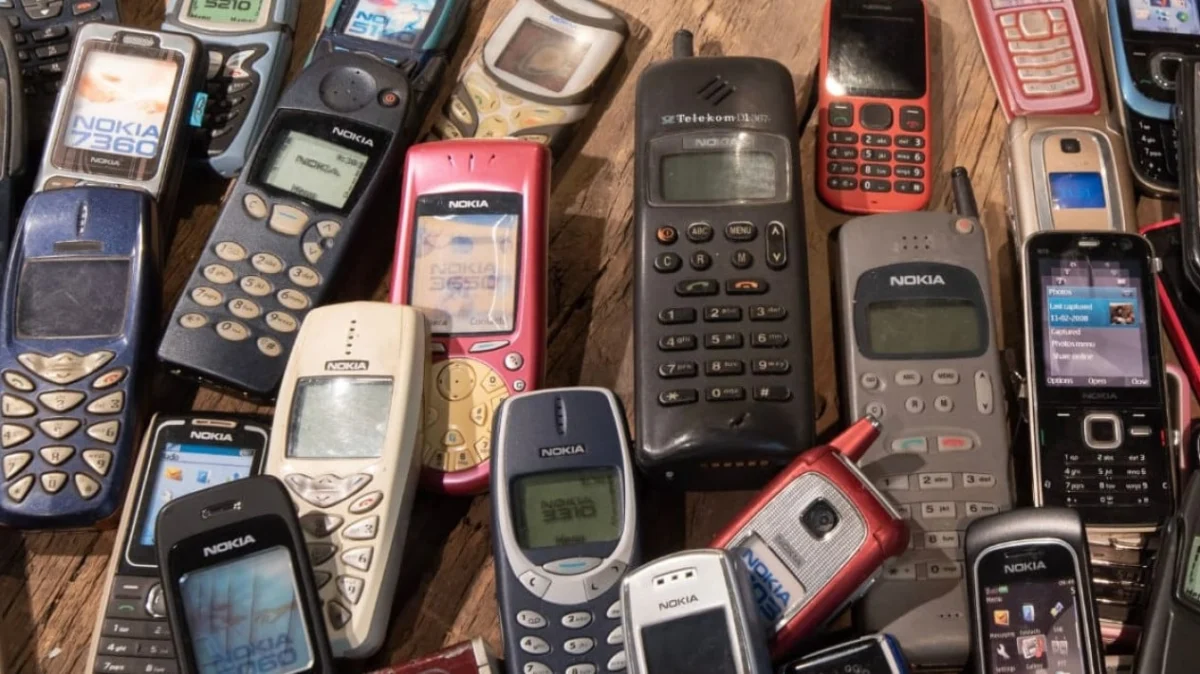
The rapid acceleration of telecommunications technology has historically rendered mobile devices obsolete within just a few years of their release. However, a counter-intuitive trend has emerged in the global secondary market where certain "vintage" handsets are no longer viewed as electronic waste, but as high-value cultural artifacts and investment assets. While the average consumer upgrades their smartphone every 24 to 36 months, a dedicated community of collectors and tech historians is driving the prices of specific legacy models to unprecedented heights. In some extraordinary cases, these devices—many of which lack basic modern features like high-definition cameras or internet connectivity—are fetching prices at auction that exceed the cost of a fleet of modern flagship smartphones.

This phenomenon is driven by a combination of scarcity, historical significance, and the "unopened" premium. Much like the markets for rare comic books or classic cars, the value of a mobile phone is exponentially higher if it remains in its original factory-sealed packaging. As of July 2026, the market for retro technology has stabilized into a legitimate asset class, with auction houses in London, New York, and Hong Kong regularly featuring telecommunications milestones in their catalogs.
The Genesis of a New Collectible Market
For decades, the value of technology was tied strictly to its utility. Once a device could no longer run the latest software or connect to updated cellular networks, its financial value plummeted to the price of its recycled components. This changed in the mid-2010s when the first generation of "digital natives" reached a level of financial maturity that allowed them to seek out the iconic devices of their youth.

Industry analysts suggest that the shift from "gadget" to "collectible" occurs when a device represents a paradigm shift in human behavior. The three devices currently dominating the collector’s market—the original iPhone, the Nokia 8800 Arte, and the Motorola DynaTAC 8000X—each represent a specific "first" or "best" in the history of mobile engineering.
1. The 2007 iPhone: The "God Phone" and Its Auction Dominance
The first-generation iPhone, often referred to as the iPhone 2G, remains the undisputed king of tech collectibles. When Steve Jobs took the stage at Macworld in January 2007, he promised a "wide-screen iPod with touch controls," a "revolutionary mobile phone," and a "breakthrough internet communications device." He famously emphasized that these were not three separate devices, but one.

The historical weight of this moment cannot be overstated. The iPhone 2G effectively killed the physical keyboard era and established the "black slab" design language that every manufacturer still follows today. Consequently, the value of original, sealed units has skyrocketed.
Data and Auction Trends
In early sales cycles, a factory-sealed 8GB iPhone might have fetched $5,000 to $10,000. However, the market saw a massive leap in 2023 and 2024. Records were shattered when a rare 4GB model—which was discontinued shortly after launch due to poor sales compared to the 8GB version—sold for over $190,000. By 2026, valuation experts suggest that any factory-sealed 2007 iPhone in "A-grade" condition is worth a minimum of $100,000, with rare iterations exceeding the $250,000 mark.

The primary reason for this valuation is the extreme rarity of the 4GB model and the psychological appeal of the "sealed box." Once the plastic wrap is broken, the value drops by approximately 90%. Collectors are not buying a phone to use; they are buying a piece of 21st-century history, preserved in its original state.
2. Nokia 8800 Arte: The Pinnacle of Feature Phone Luxury
While the iPhone is valued for its revolutionary impact, the Nokia 8800 Arte series is hunted for its sheer craftsmanship and status as a luxury icon. Released during the twilight of the feature phone era, the 8800 Arte was never intended for the mass market. It was a statement piece, designed for executives and the global elite who valued tactile quality over app ecosystems.

The 8800 Arte featured materials rarely seen in mobile phones: stainless steel, carbon fiber, premium leather, and sapphire crystal. Its signature "flick" slider mechanism was engineered with ball bearings from high-performance auto manufacturers to ensure a precise, weighted movement.
Market Positioning and Value
Unlike the iPhone, which is often sold through high-end auction houses, the Nokia 8800 Arte maintains a robust "boutique" market. A used but mint-condition 8800 Sapphire Arte can easily fetch between $800 and $1,500. However, "New Old Stock" (NOS) units—those that were never sold or used—regularly command prices between $3,000 and $5,000.

The appeal of the Nokia 8800 Arte in 2026 is also linked to the "digital detox" movement. Wealthy individuals looking to disconnect from the constant notifications of modern smartphones often turn to the 8800 Arte as their primary calling device, as it offers a level of prestige and build quality that modern "dumb phones" lack.
3. Motorola DynaTAC 8000X: The "Brick" That Started It All
To understand the value of the Motorola DynaTAC 8000X, one must go back to April 3, 1973, when Motorola engineer Martin Cooper made the first public cell phone call while walking down a street in New York City. It took another decade for the device to reach the commercial market. When it finally debuted in 1983, the DynaTAC 8000X cost $3,995—equivalent to nearly $12,000 today when adjusted for inflation.

The device weighed nearly two pounds (800 grams), offered only 30 minutes of talk time, and took 10 hours to charge. Despite these limitations, it became a symbol of the 1980s "Yuppie" culture and appeared in iconic films like Wall Street.
Historical Context and Current Value
Today, the DynaTAC 8000X is considered a museum-grade piece. It is the "Type 1" of mobile phones. Because so few were produced and even fewer survived the e-waste bins of the 1990s, the supply is incredibly low.

In the current 2026 market, a complete DynaTAC 8000X system—including the heavy "briefcase" charger and original documentation—is valued between $10,000 and $20,000. If the unit is in pristine condition and can still hold a charge (even if it can no longer connect to modern 5G or 6G networks), it represents the ultimate trophy for a technology historian.
Analysis: Why "Obsolete" Technology is Gaining Value
The rise in value of these three devices reflects a broader shift in how society views the history of the digital age. Several factors contribute to this "Vintage Tech" boom:

The "End of an Era" Sentiment
As we move further into the era of Artificial Intelligence and augmented reality, the physical hardware of the past takes on a nostalgic charm. The tactile click of a Nokia slider or the weight of a Motorola "brick" provides a sensory connection to a simpler time in telecommunications.
Scarcity and Degradation
Unlike stamps or coins, mobile phones contain lithium-ion batteries and delicate capacitors that degrade over time. Many devices from the 1980s and 1990s have succumbed to "battery leakage" or "screen rot." Consequently, a device that has survived in perfect condition is statistically much rarer than a rare coin of similar age.

Cultural Provenance
The iPhone 2G is intrinsically linked to Steve Jobs, a figure whose memorabilia has reached the same status as that of Albert Einstein or Thomas Edison. When a device is linked to a specific historical figure or a turning point in civilization, its value ceases to be based on its components and begins to be based on its provenance.
Implications for the Future of Collecting
The 2026 market for vintage phones suggests that the next wave of collectibles will likely include the first generation of "foldables" or specific "limited edition" collaborations (such as the luxury brand partnerships seen with Samsung and Thom Browne). However, experts warn that the high volume of modern production may prevent newer phones from reaching the same levels of scarcity as the DynaTAC or the original iPhone.

For the average consumer, this trend serves as a reminder to check old drawers and storage units. While a cracked iPhone 6 may be worth very little, an unopened box from the mid-2000s or a pristine luxury feature phone from the 1990s could potentially be a "lottery ticket" in the burgeoning world of high-stakes technology collecting.
As the industry looks forward to the next decade of innovation, the high prices of these three legendary handsets prove that in the world of technology, sometimes the most valuable thing you can have is a piece of the past that everyone else threw away.