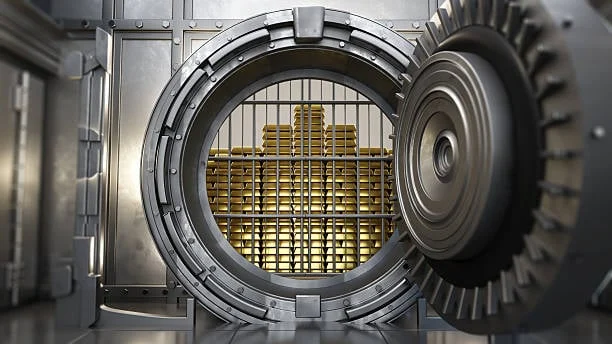
The global gold market is currently navigating a period of heightened volatility as the final week of September 2026 approaches, characterized by shifting investor sentiment and strategic maneuvers by major financial institutions. According to recent market analysis, while retail gold prices have exhibited fluctuations, this downward pressure has inadvertently created a strategic window for central banks worldwide to aggressively bolster their precious metal reserves. As currencies grapple with the persistent uncertainties of the global macroeconomic landscape, gold remains the bedrock of fiscal stability for sovereign entities seeking to diversify their holdings away from traditional fiat currency dependencies.
Ibrahim Assuaibi, a prominent analyst specializing in currencies and commodities, has projected that gold prices will continue to trace a volatile path throughout the upcoming week. Assuaibi suggests that the domestic price for gold in Indonesia is expected to hover within a range of IDR 2,520,000 to IDR 2,720,000 per gram. As of Saturday morning, September 27, 2026, the price was recorded at IDR 2,653,000 per gram. Analysts anticipate a potential for a marginal correction of approximately IDR 10,000 per gram should market pressures persist into the early trading sessions of the new week.
The Macroeconomic Landscape and Central Bank Strategy
The renewed interest from central banks in gold is not an isolated phenomenon but rather a component of a broader trend that has been accelerating over the past few years. Central banks, particularly in emerging markets, have been systematically increasing their gold holdings to hedge against the volatility of the U.S. dollar and to mitigate risks associated with geopolitical tensions.
When global prices dip—as observed in recent trading cycles—central banks often perceive these lower entry points as an opportunity to "buy the dip." By accumulating gold at more favorable price points, these institutions effectively lower the cost basis of their reserves, providing a more robust buffer against potential future economic shocks. This strategy serves as a critical defense mechanism, ensuring that sovereign wealth remains insulated from the unpredictable swings of the international currency exchange markets.
Understanding Price Volatility: A Technical Perspective
For international markets, the gold price benchmarks are equally critical. Current data indicates that the support level for global gold stands at approximately USD 3,948 per troy ounce, while the resistance level is positioned near USD 4,654 per troy ounce. These figures underscore a significant price corridor, reflecting the tug-of-war between inflationary concerns, interest rate policies set by major central banks like the Federal Reserve, and the safe-haven demand for bullion.
The volatility observed in September 2026 is largely attributed to the adjustment of market expectations regarding monetary policy. As investors digest data on inflation rates, employment figures, and industrial output, the "risk-on" or "risk-off" sentiment shifts rapidly. When uncertainty spikes, gold is traditionally viewed as a reliable store of value, which keeps trading volumes high even as prices fluctuate within the established support and resistance bands.
Historical Context: The Evolution of Gold as a Reserve Asset
Gold has functioned as a global reserve asset for centuries, yet its role underwent a significant transformation following the abandonment of the gold standard in the 20th century. In the early 21st century, gold was often viewed as a "barbarous relic" by some financial theorists. However, the events of the last decade—including the 2008 financial crisis, the COVID-19 pandemic, and subsequent geopolitical realignments—have restored gold to its status as a vital component of a well-balanced national reserve portfolio.
The recent data from 2026 highlights a continuation of this "gold-buying spree." Many nations are seeking to "de-dollarize" their trade and reserves, viewing gold as a neutral, non-sovereign asset that cannot be devalued by the fiscal policy of any single nation. This shift has created a floor for gold prices that may not have existed in previous decades. Whenever market sentiment drives prices lower, the active intervention of central banks acts as a stabilizer, preventing a prolonged or severe market collapse.
Implications for Retail Investors
For the average investor, the current market climate presents both challenges and opportunities. While the volatility described by experts like Ibrahim Assuaibi might be intimidating, it also provides clarity on the long-term trend of the precious metal. Retail investors are often advised to look at the broader market structure—the consistent demand from institutional buyers, such as central banks, acts as a long-term signal of confidence in gold’s enduring value.
Investors holding gold or looking to enter the market are encouraged to monitor the interplay between the domestic price of Indonesian gold (Antam) and global spot prices. The correlation is strong, yet domestic factors—including the strength of the Indonesian Rupiah against the U.S. dollar—play a crucial role in determining the final price at the counter. A weaker Rupiah, for instance, typically pushes the domestic price of gold higher, even if the global price remains stagnant.
Analyzing the Future Outlook
As we look toward the final quarter of 2026, the trajectory of gold prices will likely remain tethered to three primary variables:
- Central Bank Policy: Continued purchases by major central banks will provide a structural floor for prices.
- Global Interest Rate Environments: A pivot toward lower interest rates in major economies typically increases the appeal of non-yielding assets like gold.
- Geopolitical Stability: Any escalation in global conflict or trade protectionism will likely drive safe-haven capital into gold, pushing prices toward the higher resistance levels mentioned earlier.
The current range of IDR 2,520,000 to IDR 2,720,000 per gram is a reflection of the market’s current indecision. If the price manages to hold above the support levels throughout the remainder of the month, analysts expect a consolidation phase, which could pave the way for a more stable trend heading into the holiday season.
The Role of Analytical Forecasts in Market Stability
Market analysis provided by experts such as Ibrahim Assuaibi serves as a vital tool for both institutional and individual stakeholders. By identifying the support and resistance levels, analysts help market participants navigate the psychological barriers that often drive impulsive selling or buying.
The report that gold has seen a decline of IDR 15,000 over the past week serves as a reminder that gold is not immune to short-term price drops. However, in the context of a long-term investment horizon, these movements are often viewed as noise rather than signals of a fundamental change in the value of the asset. The fact that the price remains relatively high in comparison to historical averages suggests that the market continues to price in significant risk, thereby maintaining gold’s relevance as an essential hedge.
Conclusion: Navigating the Coming Weeks
The final week of September 2026 will be a litmus test for the gold market. Investors and stakeholders should watch closely for any announcements from major global central banks regarding their reserve allocations. Should there be news of significant, continued gold acquisition, it is likely that the market will react positively, potentially testing the upper resistance levels mentioned by analysts.
In summary, while the market remains volatile, the underlying demand remains robust. Central banks are not just observers of the gold market; they are active participants who are effectively setting the tone for the coming months. For those involved in the gold market, patience and a focus on long-term fundamentals—rather than short-term price fluctuations—remain the most prudent strategies for navigating the remainder of 2026. As the market continues to evolve, the ability to interpret these complex signals will define the success of both institutional reserve managers and private investors alike.