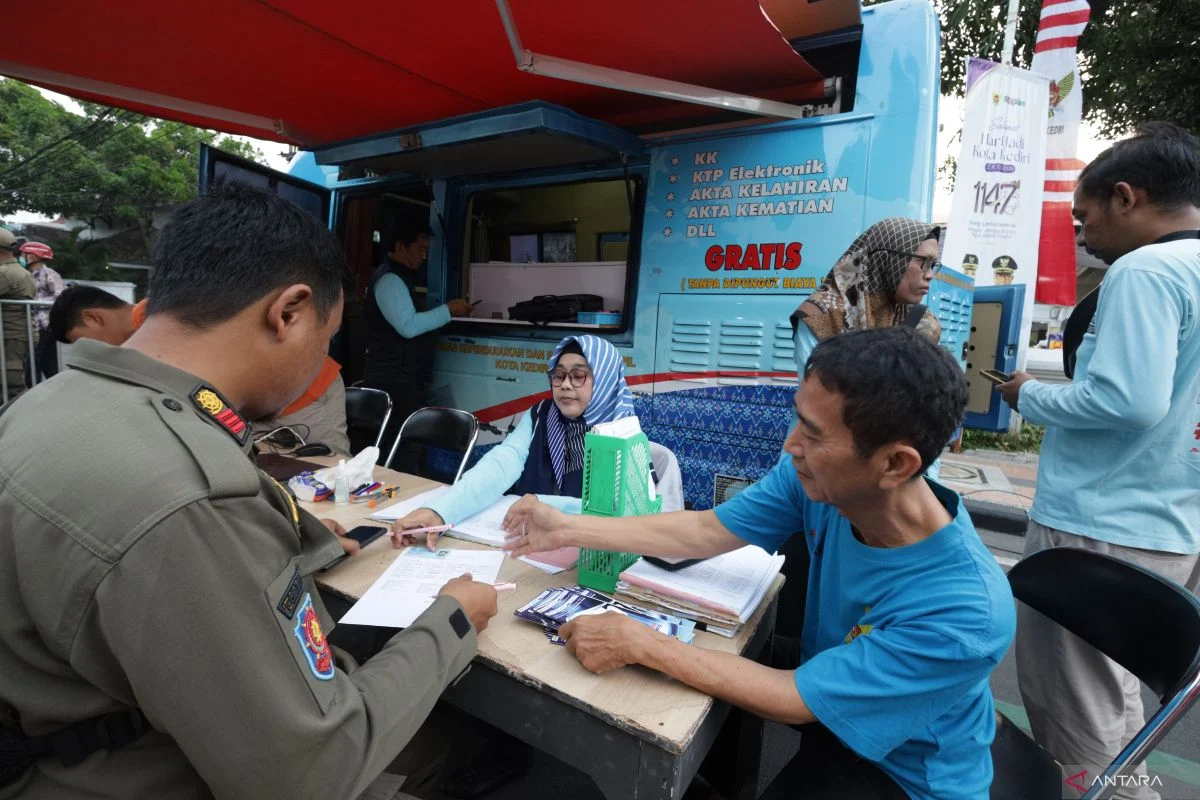
The Indonesian Ministry of Home Affairs, through the Directorate General of Population and Civil Registration (Dukcapil), has officially implemented a significant policy shift aimed at reducing bureaucratic hurdles by eliminating the requirement for neighborhood-level recommendation letters for most essential population administration services. This strategic move, designed to accelerate public service delivery and simplify access to vital documents, marks a transformative step in Indonesia’s ongoing administrative reform. Under the new guidelines, citizens are no longer obligated to obtain introductory letters from Neighborhood Unit (RT) or Community Unit (RW) heads, nor from sub-district (Kelurahan) offices, for a wide range of civil registry processes that were previously hindered by multi-layered verification steps.
This policy adjustment is part of a broader national initiative to modernize the Population Administration System (SIAK) and transition toward a more data-centric governance model. By removing the "Surat Pengantar" (introductory letter) requirement, the government aims to empower citizens to interact directly with the Department of Population and Civil Registration (Disdukcapil) at the city or regency level, or utilize digital platforms to manage their identities. This shift reflects a move away from the traditional territorial-based verification system—which often relied on the personal knowledge of local community leaders—toward a centralized, digital database where identity is verified through biometric data and the National Identity Number (NIK).
Historical Context and the Legal Foundation of the Reform
For decades, the "Surat Pengantar RT/RW" served as a foundational document in the Indonesian bureaucratic landscape. Originating as a security and social monitoring tool during previous administrations, it required residents to gain approval from local community leaders before they could apply for state-issued documents. While this system fostered close-knit community ties, it frequently became a bottleneck, especially in rapidly urbanizing areas where residents might not know their local leaders personally, or where administrative fees—though often unofficial—were requested for the issuance of such letters.
The legal groundwork for this deregulation was laid several years ago but has seen intensified enforcement recently. The primary legal pillars include Presidential Regulation (Perpres) Number 96 of 2018 concerning Requirements and Procedures for Population Registration and Civil Registration, and Minister of Home Affairs Regulation (Permendagri) Number 108 of 2019. These regulations explicitly state that for residents whose data is already recorded in the national population database, the introductory letter from the RT/RW is no longer a prerequisite for administrative services. The recent announcements from the Ministry of Home Affairs serve to reiterate these rules to ensure that local Disdukcapil offices across Indonesia’s 500-plus regencies and cities are aligned with the national standard.
Specific Services Exempted from Local Recommendation Letters
The Ministry of Home Affairs has clarified that the removal of the recommendation letter requirement applies to the most frequently accessed civil registry services. This change is intended to minimize the time and cost associated with document procurement.
1. Electronic Identity Cards (KTP-el)
The procurement of an Electronic Identity Card (KTP-el), whether for initial recording or for the issuance of a replacement due to damage or loss, no longer requires a letter from the RT/RW. Citizens who have reached the age of 17 or have married can proceed directly to their local Disdukcapil office or designated service points. For replacements or data updates, such as a change in educational status or profession, the applicant simply needs to bring the necessary supporting documents (such as a diploma or a certificate of employment) directly to the registry office.
2. Family Cards (Kartu Keluarga)
The Family Card (KK) is a fundamental document in Indonesia, used for everything from school enrollments to healthcare access. Under the new policy, the issuance of a new KK due to a change in family composition—such as adding a child, removing a deceased member, or updating data elements—does not require an RT/RW letter. The system now relies on the "stelsel aktif" principle, where the state proactively updates records based on official certificates (like birth or death certificates) provided by the family, rather than local neighborhood testimonials.
3. Domicile Transfers and Migration
One of the most significant changes involves the process of moving domicile. Previously, a resident moving from one city to another had to navigate a complex chain of approvals starting from the RT of their origin and ending with the sub-district of their destination. Now, based on Perpres 96/2018, residents moving within the country only need to bring their KK to the Disdukcapil office in their current location to request a Moving Certificate (SKPWNI). The neighborhood-level clearance is bypassed, significantly easing the burden on Indonesia’s highly mobile workforce.
4. Birth and Death Certificates
The registration of vital events such as births and deaths has been simplified to encourage higher reporting rates. For birth certificates, the primary requirements are the birth statement from a medical facility (hospital or midwife), the parents’ marriage certificate, and their IDs. For death certificates, a statement from a doctor or hospital suffices. The RT/RW letter is no longer a primary requirement for those whose family data is already integrated into the SIAK system.
5. Child Identity Cards (KIA)
The Kartu Identitas Anak (KIA), which serves as an ID for citizens under 17, can be processed directly by parents. By presenting the child’s birth certificate and the parents’ KK, the document can be issued without the need for local neighborhood intervention, provided the family’s data is already verified in the national database.
Exceptions: When Local Verification Remains Necessary
Despite the broad deregulation, the Ministry of Home Affairs emphasizes that the RT/RW system is not being abolished; rather, its role in civil registry is being refocused. There are specific scenarios where an introductory letter or local verification remains mandatory. This is primarily the case for "new registrations"—individuals who have never been recorded in the national population database and do not yet possess an NIK.
In such instances, the RT and RW play a crucial role in verifying the physical presence and residency of the individual to prevent identity fraud or the creation of duplicate identities. This verification ensures that the person being entered into the system for the first time is indeed a resident of that specific locality. Furthermore, in cases where there are discrepancies in land or address data that require field verification, local leaders may still be consulted to provide clarity.
Technological Integration and Regional Innovations
The success of this policy is heavily dependent on the "SIAK Terpusat" (Centralized Population Information System), which allows for real-time data synchronization across the archipelago. This digital infrastructure enables a Disdukcapil officer in one province to verify the data of a resident from another province instantly, negating the need for physical letters of recommendation.
Several regions have taken this a step further by launching digital platforms. The Provincial Government of DKI Jakarta, for example, has introduced the "Alpukat Betawi" application (Akses Langsung Pelayanan Dokumen Kependudukan Cepat dan Akurat). This app allows Jakarta residents to apply for KTP-el updates, KK changes, and birth certificates from their smartphones. By integrating the "no RT/RW letter" policy into the app’s workflow, the government has drastically reduced the need for physical visits to government offices, a move that proved essential during the COVID-19 pandemic and continues to be a hallmark of modern urban governance.
Implications for Governance and Social Dynamics
The elimination of the RT/RW letter requirement carries significant implications for both the state and the citizenry. From a governance perspective, it reduces the opportunities for "pungutan liar" (illegal fees or "pungli"). While many RT/RW heads serve their communities voluntarily and with integrity, the requirement for a signature often created an informal gateway where payments were expected, even if not legally mandated.
For the public, the reform represents a "de-bureaucratization" of daily life. It acknowledges the changing nature of Indonesian society, which is becoming more urban, mobile, and digital. However, some social analysts suggest that this change might weaken the traditional social oversight role of the RT/RW. Historically, these local leaders were the first to know about new residents, helping to maintain security and social cohesion. To address this, the Ministry of Home Affairs encourages residents to still report their presence to the RT/RW for social and security purposes, even if it is no longer a formal requirement for obtaining state documents.
Statistical Impact and Future Outlook
Recent data from the Ministry of Home Affairs indicates that the simplification of procedures has led to a marked increase in the national "coverage ratio" for identity documents. As of late 2023, KTP-el recording reached over 99% of the eligible population, while the issuance of Child Identity Cards (KIA) saw a sharp uptick following the removal of bureaucratic barriers.
Looking forward, the government is moving toward the implementation of the Digital Population Identity (Identitas Kependudukan Digital or IKD). The IKD is a mobile-based version of the KTP-el that resides on a citizen’s smartphone. In this future-facing ecosystem, the concept of a physical "introductory letter" becomes entirely obsolete, as identity verification will be conducted via biometric authentication and QR code scanning.
The Ministry of Home Affairs continues to urge local governments to socialize these changes effectively. There are still reports of local offices or even banks and other institutions that mistakenly demand RT/RW letters because they are unaware of the updated regulations. Continued education for both civil servants and the general public is essential to ensure that the benefits of this deregulation are felt uniformly across all levels of society.
In conclusion, the decision to remove the RT/RW recommendation letter requirement for most population administration services is a landmark achievement in Indonesia’s journey toward modern, efficient, and transparent governance. By leveraging digital technology and prioritizing the convenience of the citizen, the government is not only simplifying administrative tasks but also fostering a more direct and trust-based relationship between the state and its people. As the nation moves toward a fully digital identity ecosystem, this reform stands as a crucial bridge between the paper-based past and a more streamlined, data-driven future.