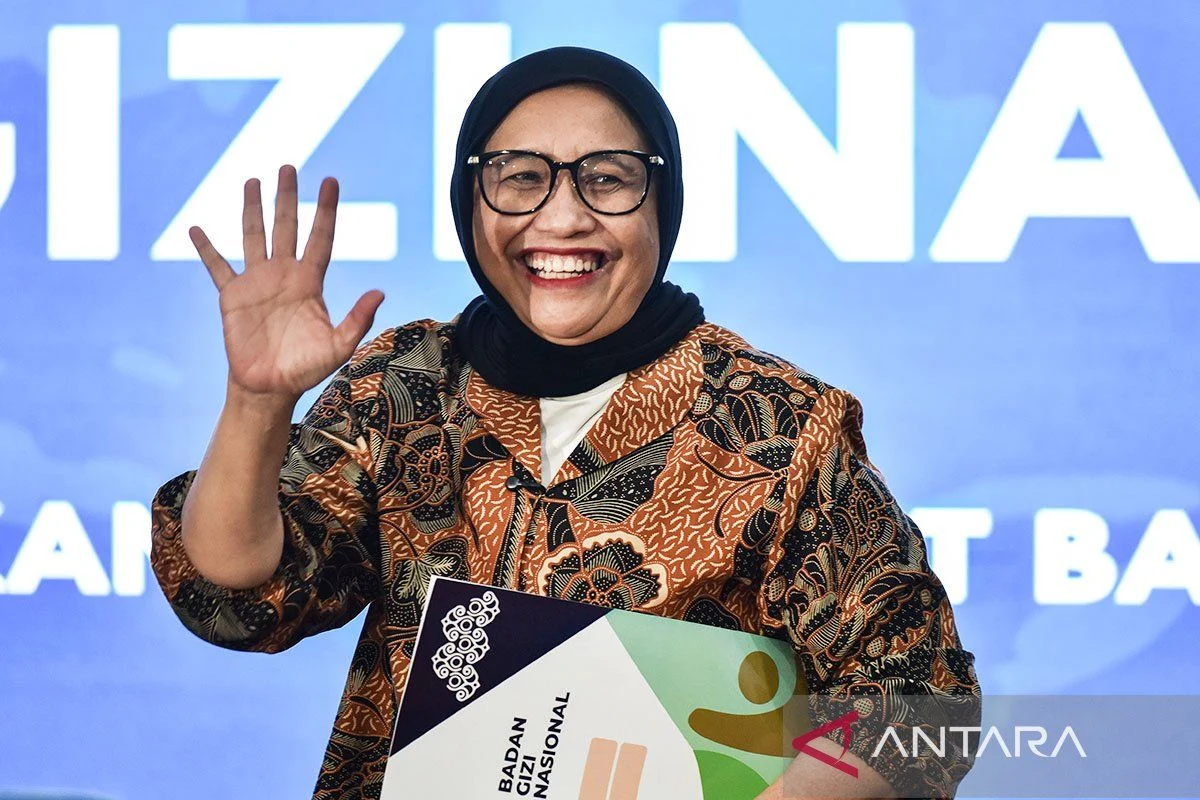
Nanik Sudaryati Deyang has officially tendered her resignation from the position of Head of the National Nutrition Agency (BGN), a decision conveyed directly to President Prabowo Subianto during a formal meeting at the State Palace. The resignation, which comes after a brief but intensive tenure of approximately one and a half months, is primarily motivated by the need for Nanik to focus on significant health challenges, specifically a heart condition requiring specialized medical intervention abroad. This transition marks a pivotal moment for the nascent agency, which is tasked with spearheading one of the administration’s most ambitious social welfare initiatives: the Free Nutritious Meal (MBG) program.
The announcement was confirmed by Dirgayuza Setiawan, the Special Assistant to the President for Communications and Policy Analysis, who noted that Nanik met with the President on Wednesday to bid farewell and provide a final briefing on her activities. President Prabowo, according to official reports, accepted the resignation with a sense of understanding and concern for Nanik’s well-being, acknowledging the immense pressure of the role and the necessity of prioritizing health to ensure a full recovery.
The Motivation Behind the Resignation
Nanik Sudaryati Deyang’s departure is framed as a purely personal medical necessity rather than a political or administrative fallout. In her personal statement, Nanik revealed that she would be seeking a second medical opinion and subsequent treatment in an overseas facility. The decision followed a series of health assessments that suggested a need for more intensive cardiac care than what could be managed while simultaneously running a high-profile government agency.
"Today, Ibu Nanik Deyang bid farewell to President Prabowo to undergo heart treatment and simultaneously resign as the Head of the National Nutrition Agency," Dirgayuza Setiawan stated in Jakarta. He emphasized that the President’s approval was granted out of a sense of empathy and "pity" for Nanik’s physical condition, as the rigors of establishing a new agency from the ground up had clearly taken a toll on her health.
Nanik herself expressed her gratitude and apologies to the President. She noted that while she felt a deep responsibility to continue leading the BGN, her health had reached a point where it could no longer be sidelined. "I conveyed to the President, with a thousand apologies, that it seems I must resign as Head of the BGN for the sake of my health. Because the President was concerned and felt for my situation, he agreed, but I have been asked to remain involved in supervising the BGN," Nanik shared in a social media update.
A Tenure Defined by Rigorous Evaluation
Despite her short time at the helm, Nanik Sudaryati Deyang leaves behind a significant operational blueprint. Appointed to lead the agency shortly after its inception under the new administration, she was tasked with transforming a campaign promise into a functional, nationwide logistical machine. The National Nutrition Agency is the primary body responsible for the Free Nutritious Meal (MBG) program, which aims to provide daily meals to tens of millions of students, toddlers, and pregnant women across the Indonesian archipelago.
During her approximately 45 days in office, Nanik focused heavily on internal auditing and the standardization of service units. Her administration conducted a massive evaluation of nearly 28,000 Nutrition Fulfillment Service Units (SPPG). These units serve as the backbone of the program, acting as the decentralized hubs where meals are prepared and distributed.
Nanik’s evaluation process was meticulous. She categorized thousands of kitchens based on strict quality standards, ranging from hygiene and nutritional balance to logistical efficiency. Under her leadership, the BGN took the bold step of halting the expansion of kitchen units in certain regions that did not meet preliminary benchmarks. Furthermore, her team identified hundreds of SPPGs that were deemed problematic or underperforming, ensuring that the program would not proceed with systemic flaws that could compromise the health of beneficiaries.
The Strategic Importance of the National Nutrition Agency
The BGN is not merely a social assistance body; it is a strategic pillar of President Prabowo’s "Asta Cita" or eight-goal mission. The Free Nutritious Meal program is designed to address several interconnected issues: stunting, cognitive development in children, and the stimulation of local economies through the procurement of agricultural goods from local farmers.
The scale of the program is unprecedented in Indonesian history. With an estimated target population of over 80 million individuals, the logistical requirements are staggering. The BGN is responsible for managing a multi-trillion rupiah budget, coordinating with the Ministry of Agriculture for food supply, and working with the Ministry of Health to monitor the nutritional outcomes of the participants. Nanik’s role was to ensure that the foundation of this agency was transparent, accountable, and scientifically sound.
By auditing the 28,000 service units so early in the process, Nanik established a culture of meritocracy within the agency. Her insistence on "quality over quantity" in the rollout of the kitchen units was seen as a necessary safeguard against the potential waste of state funds and the risk of food safety incidents.
Continuity and the Supervisory Role
Although she is stepping down from the executive leadership, Nanik Sudaryati Deyang’s influence on the BGN is expected to persist. President Prabowo has reportedly requested that she join a forthcoming Supervisory Board (Dewan Pengawas) for the agency. This move is intended to ensure that the institutional knowledge and the evaluative standards she established are not lost during the leadership transition.
The formation of a Supervisory Board suggests a shift in the governance structure of the BGN, moving toward a model that incorporates more checks and balances. Nanik’s involvement in this capacity would allow her to "guard" the program’s integrity without the day-to-day administrative burdens of a cabinet-level head of agency.
"I will remain committed to supporting President Prabowo’s government and ensuring that the programs, particularly those related to improving public nutrition, continue to run effectively," Nanik reaffirmed. Her supporters and colleagues within the administration have praised her for her "workhorse" mentality, noting that she prioritized the agency’s structural integrity even while battling personal health issues.
Potential Successors and Political Reactions
The resignation has immediately sparked discussions regarding her successor. High-profile names within the administration have surfaced, most notably Sudaryono, who currently serves as the Deputy Minister of Agriculture. The Gerindra Party, the President’s political vehicle, has signaled that Sudaryono possesses the necessary performance record and familiarity with the food supply chain to take over the BGN.
Sudaryono’s potential appointment is viewed as a strategic move to integrate the food production side (Ministry of Agriculture) with the food consumption side (National Nutrition Agency). Given that the MBG program relies heavily on the "Food Estate" and local farming initiatives, having a leader with a background in agriculture could streamline the procurement processes and reduce reliance on imports.
Public and political reaction to Nanik’s resignation has been largely sympathetic. Observers note that the high turnover or rapid shifts in the early days of a new administration are often a sign of "fine-tuning" rather than instability. By stepping down early for health reasons, Nanik is seen as having acted in the best interest of the program, allowing a new leader to take over before the full-scale implementation of the MBG program begins in earnest in 2025.
Broader Implications for Indonesia’s "Golden 2045" Vision
The success of the National Nutrition Agency is inextricably linked to Indonesia’s long-term goal of becoming a top-five global economy by 2045. A "Golden Indonesia" requires a human capital base that is healthy, intelligent, and productive. The MBG program is the administration’s primary tool for breaking the cycle of poverty and malnutrition that has historically hindered the potential of millions of Indonesians.
Economists have pointed out that the BGN’s activities will have a significant multiplier effect. By sourcing ingredients like milk, eggs, meat, and vegetables from local small and medium enterprises (SMEs), the agency acts as a guaranteed buyer, providing price stability for farmers and stimulating rural economies. Nanik’s work in identifying "problematic" service units was a crucial step in ensuring that this economic stimulus actually reaches the intended local stakeholders rather than being diverted by inefficient middlemen.
Conclusion and The Road Ahead
Nanik Sudaryati Deyang’s resignation marks the end of a brief but foundational chapter for the National Nutrition Agency. Her legacy will be defined by the rigorous standards she set for the SPPGs and her commitment to transparency in the program’s early stages. As she departs for medical treatment, the focus now shifts to how the administration will maintain the momentum she created.
The transition to a new head of the BGN comes at a critical juncture as the government prepares for the 2025 fiscal year, where the budget for the Free Nutritious Meal program is expected to see a significant increase. The President’s decision to keep Nanik in an advisory or supervisory role indicates a desire for continuity and a recognition of her expertise.
For the Indonesian public, the priority remains the effective delivery of the nutrition program. While leadership changes can often cause delays, the proactive nature of Nanik’s departure and the immediate identification of potential successors suggest that the administration is prepared to handle the transition without disrupting the essential services provided by the National Nutrition Agency. As the agency moves forward, the standards of evaluation and the focus on regional kitchen quality established by Nanik will likely remain the gold standard for the program’s operations.