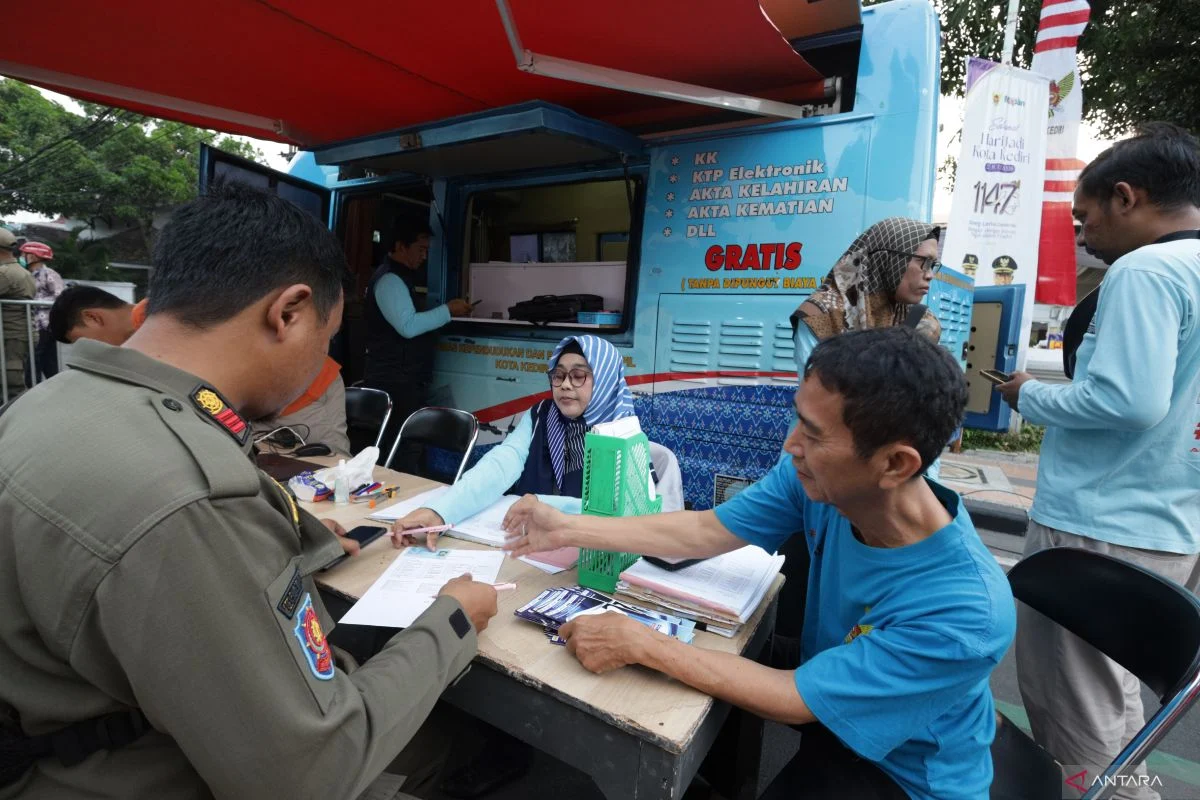
The Indonesian Ministry of Home Affairs, through the Directorate General of Population and Civil Registration (Dukcapil), has fundamentally restructured the nation’s administrative landscape by removing the long-standing requirement for introductory letters from neighborhood and hamlet chiefs (RT/RW) for the majority of civil document applications. This policy shift represents a significant milestone in Indonesia’s broader bureaucratic reform agenda, aimed at dismantling the "red tape" culture that has historically hindered public access to essential services. By prioritizing data-driven verification over manual, localized referrals, the government seeks to foster a more efficient, transparent, and citizen-centric administrative system that aligns with modern digital governance standards.
For decades, the requirement of a "Surat Pengantar" (introductory letter) from the RT/RW served as a gatekeeping mechanism, intended to verify the residency and character of an individual at the grassroots level. However, as the Ministry of Home Affairs has integrated population data into a centralized, biometric-based system, these manual checks have become largely redundant for citizens whose data is already captured in the national database. The Ministry emphasizes that the removal of these requirements is not merely a procedural change but a paradigm shift in how the state interacts with its citizens—moving from a model of suspicion and multi-layered control to one of trust and streamlined service delivery.
The Legal Framework and Strategic Objectives
The transition to a leaner administrative process is anchored in several key pieces of legislation, most notably Presidential Regulation (Perpres) Number 96 of 2018 regarding Requirements and Procedures for Population Registration and Civil Registration. This was further operationalized by Minister of Home Affairs Regulation (Permendagri) Number 108 of 2019. These regulations explicitly state that for residents whose data is already recorded in the Population Administration Information System (SIAK), the presentation of a physical referral from local community leaders is no longer mandatory for updating or issuing most documents.
The primary objective of this deregulation is to improve Indonesia’s "Ease of Doing Business" and "Human Development Index" by ensuring that every citizen can obtain legal identity documents without unnecessary barriers. Historically, the requirement for RT/RW letters was often cited as a point of friction where "pungli" (illegal levies) or administrative delays could occur. By bypassing these informal layers, the government directly connects the citizen to the Disdukcapil (District/City Population and Civil Registration Office), ensuring that the process remains free of charge and standardized across all regions.
Detailed Breakdown of Affected Services
The streamlining of services covers the most critical documents required for daily life, social security, and legal standing. The following six areas have seen the most significant reduction in requirements:
1. Electronic Identity Cards (e-KTP)
The e-KTP is the cornerstone of Indonesian citizenship documentation. Under the current policy, citizens who need to record their biometrics for the first time or those who require a replacement due to damage or loss do not need to visit their RT/RW office. If the citizen’s data is already in the system, they may proceed directly to the Disdukcapil office or designated service points with only their Family Card (KK). For changes in personal data—such as marital status or educational background—the citizen only needs to bring the relevant supporting legal documents (e.g., a marriage certificate or diploma) without a neighborhood referral.
2. Family Cards (Kartu Keluarga)
The Family Card serves as the primary document for accessing government social assistance, health insurance (BPJS), and school enrollment. Changes to the KK, including adding a new family member, removing a member due to death or relocation, or correcting typographical errors, can now be processed directly. The system relies on the "SIAK Terpusat" (Centralized SIAK), which allows officials to verify the authenticity of family ties through existing digital records rather than relying on a manual letter from a local chief.
3. Domicile Transfer and Relocation
One of the most transformative changes involves the process of moving one’s legal residence. Previously, a resident had to obtain a series of letters starting from the RT, then the RW, then the Kelurahan (village office), and finally the Kecamatan (sub-district) before the Disdukcapil would issue a move-out notice. This "chain of command" often took days or weeks. Today, per Perpres 96/2018, a resident simply needs to bring their KK to the Disdukcapil at their point of origin to receive a SKPWNI (Certificate of Move). The requirement for a referral from the neighborhood of origin or the destination has been entirely abolished to facilitate labor mobility and urban migration.
4. Birth Certificates (Akta Kelahiran)
The government is committed to achieving 100% birth registration coverage to ensure every child has a legal identity from birth. To facilitate this, birth certificates can be issued based on the "Surat Keterangan Kenal Lahir" (birth notification) from a hospital, clinic, or midwife, along with the parents’ KK and marriage certificate. The RT/RW letter, which was once used to "witness" the birth, is no longer required if the parents are already registered residents.
5. Death Certificates (Akta Kematian)
Recording deaths is crucial for maintaining the accuracy of the national voter list (DPT) and preventing the misuse of social aid funds. The process has been simplified to require only a medical certificate of death or a report from the local authorities. By removing the need for a neighborhood referral, the government encourages families to report deaths promptly, ensuring that the deceased’s data is immediately deactivated in the national database.
6. Child Identity Cards (Kartu Identitas Anak)
The KIA, often referred to as the "KTP for children," is designed to provide children under 17 with their own legal identification. Like the e-KTP, the application for a KIA is now a direct-to-service model. Parents can apply for their children’s KIA by providing a copy of the birth certificate and the KK, bypassing the local administrative layers entirely.
Chronology of Administrative Evolution in Indonesia
To understand the magnitude of this change, one must look at the timeline of Indonesia’s civil registry evolution:
- Pre-2011: Civil registration was largely decentralized and manual. Each district maintained its own database, leading to widespread "double identities" where one person could hold multiple KTPs from different regions.
- 2011 – 2013: The e-KTP program was launched, introducing biometric data (fingerprints and iris scans). This laid the foundation for a single, unique National Identity Number (NIK).
- 2014 – 2017: The Ministry began integrating the Dukcapil database with other institutions, such as banks, the tax office, and the social security administration.
- 2018: Presidential Regulation No. 96 was signed, legally mandating the simplification of requirements and the removal of the RT/RW referral for most services.
- 2019 – 2021: The rollout of "SIAK Terpusat" transitioned the system from distributed local servers to a real-time, centralized national server, making manual local verification obsolete.
- 2022 – Present: The push toward Digital Identity (Identitas Kependudukan Digital – IKD) began, allowing citizens to carry their documents on their smartphones, further reducing the need for any physical paperwork or localized referrals.
Regional Implementation and the Digital Leap
While the policy is national, implementation is managed at the local government level. In the capital, the Provincial Government of DKI Jakarta has been a frontrunner in adopting these changes. Through the "Alpukat Betawi" (Akses Langsung Pelayanan Kependudukan Cepat dan Akurat) application, Jakarta residents can upload digital copies of their documents and receive processed certificates without ever visiting a government office, let alone an RT/RW chief.
Similar innovations are being mirrored in other major cities like Surabaya, Bandung, and Medan, where "Dukcapil Go Digital" initiatives have introduced 24-hour kiosks and online portals. These digital platforms automatically filter requirements based on the latest Ministry of Home Affairs regulations, ensuring that the system rejects any attempt to demand unnecessary RT/RW letters, thereby enforcing the policy through technology.
Analysis of Implications and Remaining Challenges
The removal of the RT/RW requirement has profound implications for Indonesian society. Firstly, it enhances Bureaucratic Neutrality. By removing the local chief’s power to grant or withhold a referral letter, the state reduces the risk of local political patronage or personal bias affecting a citizen’s right to documentation.
Secondly, it significantly reduces Opportunity Costs. For laborers, informal workers, or busy professionals, the time saved by not having to coordinate meetings with neighborhood officials—who often serve in a voluntary capacity and are not always available—translates into direct economic benefits.
However, the policy is not without its caveats. The Ministry of Home Affairs clarifies that the RT/RW referral is still required for "First-Time Registration." If an individual has never been recorded in the national database and does not possess a NIK, the government still requires local verification to ensure the person is a legitimate resident of that area. This serves as a vital safeguard against identity fraud and illegal immigration.
Furthermore, a "Digital Divide" remains a significant hurdle. In remote areas with limited internet connectivity or low digital literacy, the transition to a direct-to-Disdukcapil model can be challenging. In these regions, local officials still play a supportive role in helping residents navigate the system, though the legal requirement for their formal "approval" has been lifted.
Official Responses and Future Outlook
The Director General of Population and Civil Registration has frequently reiterated that any official still demanding an RT/RW letter for the exempted services is in violation of the law. The Ministry has encouraged citizens to report such instances through "Halo Dukcapil" or official social media channels. The government’s stance is clear: the database is the supreme authority, not the paper trail.
Looking forward, the Indonesian government is moving toward a "One Data Indonesia" (Satu Data Indonesia) framework. In this ecosystem, the NIK will serve as the universal key for all public services, from paying taxes to receiving subsidies. As the system becomes more integrated, the need for any physical supporting documents—including the Family Card itself—may eventually disappear, replaced by a secure, blockchain-verified digital identity.
The simplification of civil administration is more than a convenience; it is a fundamental strengthening of the social contract between the Indonesian state and its people. By eliminating the hurdles of the past, the government is ensuring that the "Administrative Revolution" keeps pace with the nation’s digital and economic aspirations, ensuring that no citizen is left behind due to the weight of unnecessary bureaucracy.