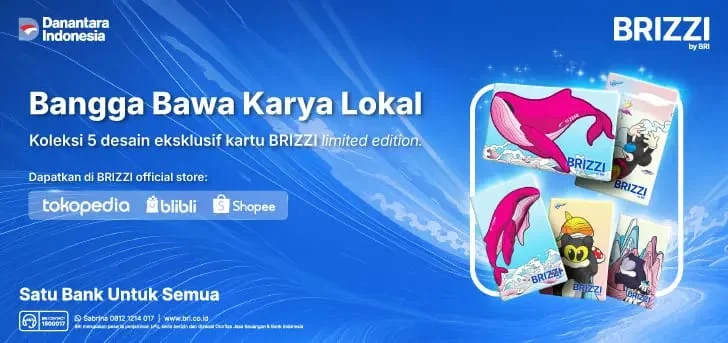
The urban landscape of Jakarta continues to evolve as a dynamic intersection where contemporary youth culture, local artistry, and culinary exploration converge. Among the city’s most vibrant districts, Blok M has firmly established itself as a cultural epicenter, continuously reinventing its identity to cater to the modern urbanite. In a recent development capturing the attention of trendsetters, Gen Z, and Millennials alike, Blok M Hub has transformed into a living gallery and lifestyle destination. This spatial evolution is anchored by a strategic partnership between financial technology and contemporary art: the BRIZZI x ARKIV collaboration.
This initiative bridges the gap between everyday financial utility and high-end local contemporary art. By embedding the iconic visual language of renowned Indonesian artist Arkiv Vilmansa into a widely used payment instrument, the collaboration transcends traditional marketing to offer an immersive cultural experience. As urban centers increasingly demand experiential retail and lifestyle integration, the activation at Blok M Hub serves as a case study in how public spaces, financial institutions, and local creators can symbiotically engage the urban demographic.
Main Facts of the BRIZZI x ARKIV Activation
The core of the BRIZZI x ARKIV activation centers around the distribution and utilization of a limited-edition electronic money card issued by Bank Rakyat Indonesia (BRI), featuring custom artwork by Arkiv Vilmansa. Designed as both a functional cashless payment tool and a collectible art piece, the card is the focal point of an experiential campaign currently running at Blok M Hub in South Jakarta.
Visitors to the hub are introduced to the "Collect the Art" program, which allows patrons to acquire the special-edition BRIZZI cards through two primary purchasing structures. The Single Pack is priced at Rp50,000, while the comprehensive Bundling Pack is available for Rp250,000. To incentivize adoption and reward engagement, organizers have implemented an immediate promotional discount of Rp10,000 on the card purchase for any visitor who simultaneously conducts a minimum top-up of Rp50,000.
Beyond the acquisition of the card, the activation is designed to be a comprehensive ecosystem. The BRIZZI card acts as the sole transactional medium required to navigate a full day of activities within the hub, covering everything from artisanal culinary consumption to the acquisition of exclusive merchandise and participation in localized gamification events designed to yield various prizes.
Chronology and Spatial Itinerary: A Day at Blok M Hub
To fully understand the scope of the collaboration, observers can trace the intended consumer journey meticulously mapped out for visitors. The experience is structured as a progressive narrative, guiding participants from initial arrival to deep immersion within the creative space.
Upon arrival at Blok M Hub, the immediate priority for visitors is securing the limited-edition collectible card. This initial step establishes the thematic tone for the visit. Operating under the "Collect the Art" framework, patrons queue at designated activation booths where brand representatives facilitate the purchase of either the Single or Bundling packs, complete with the top-up incentive.
Once the transaction is completed and the card is loaded with funds, the itinerary opens into the broader gastronomic and retail landscape of Blok M. Participants utilize their newly acquired art pieces as functional payment tools across an array of curated F&B tenants populating the hub. This seamless integration of contactless payment technology eliminates transactional friction, allowing consumers to transition fluidly from dining to shopping.
As the day progresses into the afternoon and evening, the itinerary shifts toward interactive engagement. Visitors engage in art-hunting and scavenger-style activities across the venue, utilizing the BRIZZI card to unlock special zones, purchase merchandise directly tied to Arkiv Vilmansa’s aesthetic universe, and redeem accrued points or stamps for physical rewards. This chronological flow ensures that the consumer is not merely a passive observer of art, but an active participant in an evolving urban narrative.
Background Context: The Evolution of Blok M and Electronic Money
To contextualize the success and relevance of the BRIZZI x ARKIV initiative, it is essential to examine the socio-economic and cultural shifts that have transformed Blok M over recent decades. Historically recognized as a commercial and transportation hub in South Jakarta since the 1970s and 1980s, Blok M underwent periods of economic fluctuation before experiencing a profound renaissance catalyzed by infrastructural enhancements, most notably the integration of the MRT Jakarta network.
The arrival of mass rapid transit revitalized pedestrian foot traffic, breathing new life into the district. Independent coffee shops, vintage clothing boutiques, vinyl record stores, and local art spaces swiftly populated the neighborhood, transforming it into the undisputed capital of Indonesian youth counterculture. By positioning the activation within this specific geographic context, the organizers tapped into an existing demographic momentum characterized by high foot traffic, disposable income, and a strong affinity for subcultural branding.
Simultaneously, the broader financial landscape of Indonesia has undergone a digital transformation. Driven by central bank initiatives promoting the National Non-Cash Movement (Gerakan Nasional Non-Tunai or GNNT), electronic money usage has transitioned from a novelty to an indispensable utility for urban commuters and consumers. Financial institutions like BRI have increasingly sought creative avenues to maintain brand relevance among younger demographics who prioritize aesthetic value, digital convenience, and lifestyle alignment. By collaborating with Arkiv Vilmansa—an artist celebrated for his distinct, pop-surrealist toy design and character-driven visual arts—BRI successfully bridges the generational divide between traditional banking services and contemporary youth culture.
Supporting Data and Market Dynamics
While specific internal sales figures for the initial weeks of the Blok M Hub activation remain proprietary, broader economic and market indicators validate the commercial logic underpinning the campaign. The Indonesian creative economy has demonstrated resilient growth, contributing significantly to the national Gross Domestic Product (GDP). Within this sector, visual arts, character design, and localized merchandise have emerged as high-growth segments, largely propelled by millennial and Gen Z collectors.
Furthermore, data from Bank Indonesia consistently highlights the steady upward trajectory of electronic money transactions nationwide. As contactless payments become the default standard across retail, public transportation, and F&B sectors, the competition among state-owned and private banks to secure primary-card status in consumers’ wallets has intensified. Differentiating utility products through high-profile artistic collaborations represents a proven psychological strategy to drive card retention and active usage rates.
In terms of pricing strategy, the entry barrier established by the Rp50,000 Single Pack and the Rp250,000 Bundling Pack positions the collectible within accessible impulse-buy territory for middle-class urban consumers. The immediate Rp10,000 discount tied to a Rp50,000 top-up functions as an effective behavioral nudge, ensuring that cards are not merely hoarded as silent collectibles but are immediately funded and utilized within the local merchant ecosystem.
Official Responses and Industry Perspectives
Although direct, individual commentary from executive leadership regarding this specific phase is integrated within the broader promotional framework, the strategic alignment reflects prevailing trends in corporate communications and experiential marketing within Indonesia’s financial sector. Representatives from banking institutions frequently emphasize the necessity of moving beyond functional utility to build emotional resonance with younger consumer segments.
Artistic figures akin to Arkiv Vilmansa have long advocated for the democratization of contemporary art. By removing fine art from the exclusive confines of traditional white-cube galleries and embedding it into everyday consumer objects—such as payment cards—artists can reach broader audiences while validating the commercial viability of local creative intellectual property. Observers and branding analysts note that such cross-sector collaborations elevate the perceived value of standard banking instruments, transforming a mundane piece of plastic into a portable canvas and a badge of cultural identity.
Economic and Cultural Implications
The intersection of financial technology, urban regeneration, and contemporary art observed at Blok M Hub carries several notable implications for urban centers across Indonesia.
First, the initiative underscores the growing economic power of experiential retail. Modern consumers, particularly younger generations, increasingly allocate disposable income toward experiences, spaces, and objects that articulate their personal identity and social affiliations. By transforming a commercial transaction into an exploratory journey, activations of this nature drive sustainable foot traffic to physical retail spaces that might otherwise struggle against the convenience of e-commerce.
Second, the campaign highlights the maturation of Indonesia’s creative economy. Collaborations between major financial corporations and independent local artists signal a shift from corporate patronage to genuine partnership. This dynamic provides local creators with expanded platforms and capital resources, while offering corporations authentic cultural credentials that resonate with discerning, trend-conscious consumers.
Finally, the initiative reinforces the ongoing normalization of cashless ecosystems within specialized cultural hubs. As urban spaces increasingly adopt digital-first infrastructure, creative activations serve as frictionless educational tools, encouraging hesitant users to adopt electronic payment methods through rewarding, gamified, and aesthetically pleasing environments.
Conclusion
The BRIZZI x ARKIV collaboration at Blok M Hub is more than a seasonal marketing campaign; it is a synthesis of modern urban lifestyle, financial technology, and contemporary visual culture. By merging the dynamic energy of Blok M with the distinct artistic vision of Arkiv Vilmansa and the digital convenience of BRI’s payment ecosystem, the initiative provides a blueprint for future urban activations. As cities continue to evolve as living laboratories for creativity and commerce, such cross-disciplinary partnerships demonstrate how everyday objects can be elevated into cultural artifacts, redefining the relationship between the consumer, the city, and the tools they carry in their pockets.