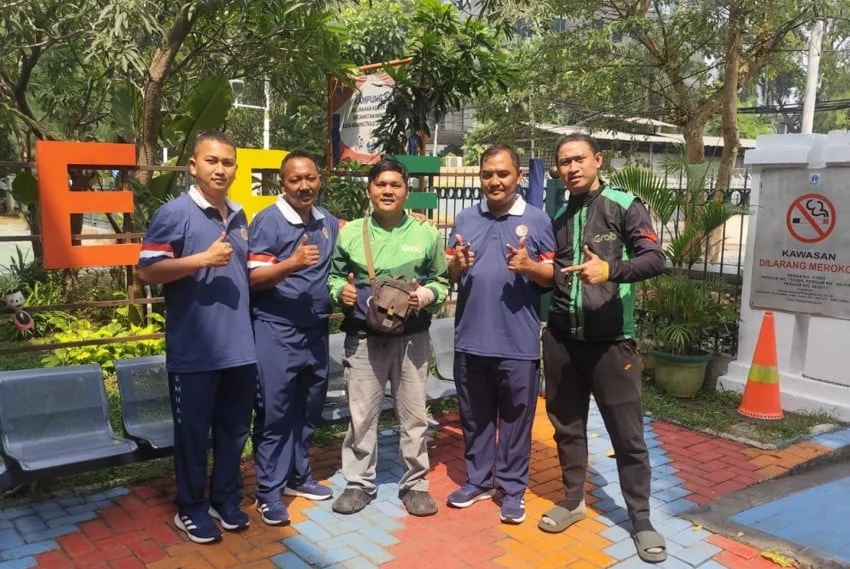
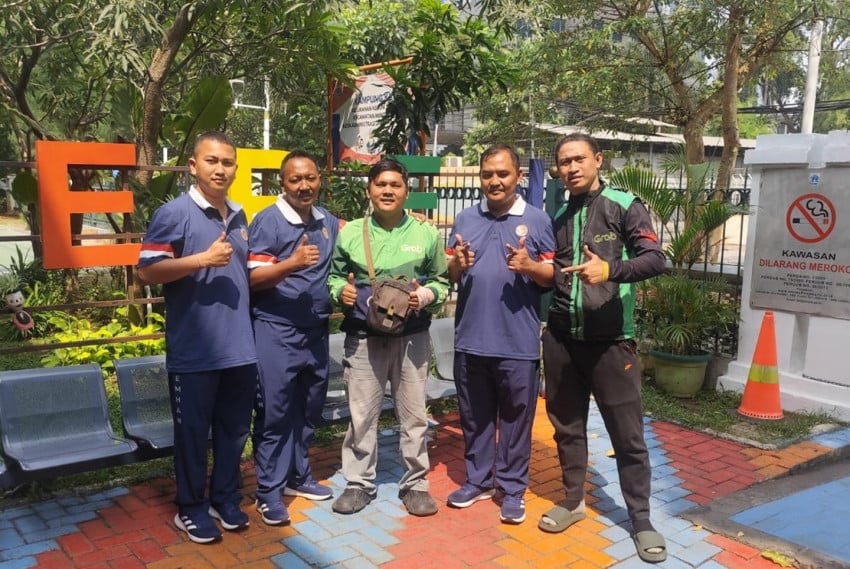
The Indonesian Ministry of Defense (Kemhan) has officially addressed a widely circulated report concerning a collision between one of its official transport buses and a motorcycle taxi driver, confirming that the matter has been resolved through a mutual agreement between the parties involved. The incident, which initially gained public attention following allegations that the driver of the government vehicle had attempted to leave the scene without providing assistance, prompted an immediate internal review by the ministry’s administrative and information bureaus. Brigjen TNI Rico Ricardo, the Head of Information at the Secretariat General of the Ministry of Defense, clarified on Saturday, July 25, 2026, that the ministry had been monitoring the situation closely since it first came to light. According to official reports, the driver of the bus and the affected online motorcycle taxi (ojol) driver have reached a "familial" or amicable settlement, effectively closing the case without further legal escalation.
Chronology of the Incident and Initial Public Response
The incident reportedly took place in a busy corridor of Jakarta, a city notorious for its complex traffic dynamics and high volume of motorcycle-based transportation services. Witnesses and social media reports initially suggested that a Ministry of Defense operational bus was involved in a minor collision with an online motorcycle taxi driver. The narrative that gained the most traction online was that the bus did not immediately stop to assess the damage or check on the welfare of the rider, leading to accusations of a "hit-and-run" maneuver. In the age of digital transparency, such incidents often go viral within minutes, as bystanders and other road users frequently record and upload footage of vehicles bearing official government plates.
Upon the emergence of the footage and the subsequent public outcry, the Ministry of Defense initiated an internal verification process. The ministry’s leadership emphasized that they do not condone any form of negligence or lack of accountability by their personnel while operating state-owned assets. The investigation aimed to identify the specific unit the bus belonged to and the identity of the personnel behind the wheel at the time of the accident.
The chronology provided by the ministry suggests that after the initial confusion at the scene, communication was established between the parties. Brigjen TNI Rico Ricardo noted that the resolution was not forced but was the result of direct dialogue. "The Ministry of Defense has monitored the information. Based on the reports we received, the event has been resolved in a familial manner by the member concerned and the online motorcycle taxi driver," Rico stated during a press briefing. This "familial" approach, known locally as kekeluargaan, is a common cultural and sometimes legal mechanism in Indonesia used to resolve disputes through consensus and compensation rather than through the formal court system.
The Role of Amicable Settlements in Traffic Disputes
The resolution of this case highlights the frequent use of restorative justice and mediation in Indonesian traffic incidents. While the law technically requires all accidents to be reported to the police, many minor collisions involving property damage or minor injuries are settled privately. In this instance, the "familial" settlement typically involves the party at fault covering the medical expenses of the injured party and the repair costs for the damaged vehicle.
For the Ministry of Defense, ensuring a swift and peaceful resolution was paramount to maintaining public trust. Official vehicles, particularly those belonging to the military or defense sectors, are held to a high standard of conduct. Any perception of "immunity" or "arrogance" on the road can lead to significant reputational damage for the institution. By facilitating a direct meeting between the driver and the ojol rider, the ministry aimed to demonstrate that its personnel are subject to the same social and moral responsibilities as any other citizen.
Broader Context: Traffic Safety and Official Vehicles in Jakarta
This incident occurs against a backdrop of increasing scrutiny regarding the behavior of drivers of vehicles with "special" or "official" license plates. Jakarta’s roads are among the most congested in the world, and the interaction between large transport buses and the millions of motorcycle riders is a constant source of friction. Data from the Jakarta Metropolitan Police (Polda Metro Jaya) often indicates that motorcycle riders, particularly those in the gig economy such as ojol drivers, are the most vulnerable demographic on the road.
The online motorcycle taxi industry is a vital pillar of Jakarta’s economy, providing livelihoods for hundreds of thousands of people. However, these drivers often face high risks due to long hours on the road and the pressure to meet delivery deadlines. When an incident involves a government-owned vehicle, the power imbalance is often noted by the public, leading to heightened emotions. The Ministry of Defense’s decision to confirm the settlement publicly serves as an acknowledgment of this dynamic, signaling that the welfare of the "little man"—in this case, the ojol driver—was considered.
Supporting Data on Road Incidents and Government Accountability
While specific statistics for 2026 are still being compiled, historical data from the previous decade shows a fluctuating trend in accidents involving public service vehicles. The Indonesian National Police (Polri) has frequently campaigned for "road safety for humanity," urging government institutions to lead by example.
In recent years, the Ministry of Defense has implemented various training programs for its drivers to improve road safety and etiquette. These programs include defensive driving courses and psychological evaluations to ensure that personnel operating heavy vehicles in urban environments are equipped to handle the stress of Jakarta traffic. The incident involving the bus suggests that while systems are in place, the human element remains a variable.
From a legal perspective, the Indonesian Law on Traffic and Road Transportation (UU No. 22 Year 2009) stipulates that every driver involved in an accident is obligated to stop their vehicle, provide assistance, and report the incident. The initial allegation that the bus "ran away" was the most damaging aspect of the report. By clarifying that a settlement was reached, the ministry is effectively countering the narrative of a hit-and-run, suggesting instead that the resolution occurred shortly after the initial contact.
Institutional Responses and Public Relations
The statement by Brigjen TNI Rico Ricardo is part of a broader strategy of transparency within the Ministry of Defense. Under recent leadership, the ministry has sought to be more proactive in addressing social media trends and public grievances. The "Infohan" (Defense Information) bureau plays a critical role in this, acting as a bridge between the military bureaucracy and the civilian population.
"Both parties have communicated well and reached a settlement through deliberation (musyawarah)," Rico added. This emphasis on musyawarah—a cornerstone of Indonesian social philosophy—is intended to de-escalate any lingering resentment among the ojol community. Motorcycle taxi drivers are highly organized through various "communities" and WhatsApp groups; a perceived injustice against one driver can quickly lead to localized protests or "basecamp" mobilizations. By resolving the issue "familially," the ministry avoided a potential flashpoint.
Implications for Military-Civilian Relations
The incident serves as a reminder of the delicate balance in military-civilian relations in Indonesia. Since the Reformation era, there has been a concerted effort to move away from the "dual function" (dwifungsi) of the military and toward a professional force that is accountable to the law and the public. Incidents on the road, while seemingly minor in the grand scheme of national defense, are daily touchpoints where civilians interact with the state’s power.
How the Ministry of Defense handles a traffic accident can be as influential on public perception as its procurement of high-tech weaponry or its stance on regional security. A transparent, humble, and fair resolution reinforces the image of a "People’s Military" (TNI Manunggal Rakyat). Conversely, a lack of transparency would fuel theories of institutional elitism.
Analysis of the "Kekeluargaan" Outcome
While the amicable settlement has been praised for its efficiency, some legal observers in Indonesia argue that such settlements should not bypass the need for institutional discipline. If a driver of a state vehicle is found to be negligent, an internal sanction—such as a suspension of driving privileges or a formal reprimand—is usually expected regardless of whether the victim has been compensated.
In this case, the Ministry of Defense has not explicitly detailed the internal disciplinary actions taken against the bus driver, focusing instead on the successful mediation with the victim. This approach prioritizes social harmony. For the ojol driver, a quick settlement usually means immediate funds for bike repairs and medical bills, which is often more practical than a lengthy legal battle that could take months to resolve in court.
Conclusion and Future Outlook
The resolution of the incident between the Kemhan bus and the online motorcycle taxi driver marks the end of a brief but intense period of public scrutiny for the ministry. By acknowledging the event and facilitating a peaceful settlement, the Ministry of Defense has followed a path of least resistance that satisfies the immediate needs of the victim while protecting the institution’s reputation.
Moving forward, this incident may prompt further discussions on the visibility and accountability of official vehicles on Indonesian roads. As Jakarta continues to grow and traffic remains a primary concern for its residents, the conduct of those driving under the banner of the state will remain under the microscope. The Ministry of Defense’s swift response serves as a template for other government agencies on how to manage the intersection of social media, public accountability, and traditional conflict resolution.
The ministry concludes that the matter is now fully resolved and urges the public to remain calm and not be provoked by incomplete information circulating on digital platforms. The emphasis remains on road safety, mutual respect among road users, and the continued professionalization of all personnel tasked with operating government equipment in the public sphere.