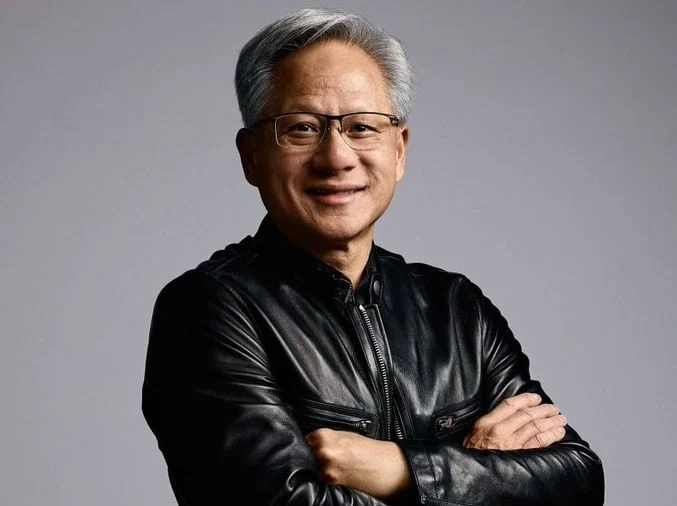
WASHINGTON — The United States Department of Justice has found itself at the epicenter of an unprecedented corporate and national security crisis involving artificial intelligence giant Nvidia and its charismatic co-founder, Jensen Huang. US Attorney General Todd Blanche recently characterized Nvidia as a "good corporate citizen" during a press briefing in Washington, yet he steadfastly declined to confirm or deny whether the federal government has launched a formal investigation into the company or its leadership.
The remarks from the nation’s top law enforcement official come amid intense scrutiny from Capitol Hill, where lawmakers are demanding transparency regarding the extraordinary circumstances surrounding Huang’s sudden departure and equally abrupt return to the helm of the world’s most valuable semiconductor manufacturer. The situation has intensified debates over the intersection of corporate governance, executive misconduct, intelligence operations, and the overarching national security architecture governing critical technologies like artificial intelligence.
The unfolding scandal touches upon sensitive geopolitical tensions between Washington and Beijing, raising alarming questions regarding foreign intelligence infiltration into the American technology sector. As regulatory bodies and congressional committees prepare for high-stakes hearings, the future trajectory of Nvidia, the stability of the global AI supply chain, and the political capital of the current administration hang in the balance.
The Chronology of a Corporate and Security Crisis
The sequence of events leading to the current regulatory and political storm began unfolding rapidly in late autumn, shaking the foundations of Silicon Valley and Washington alike.
Less than two weeks prior to his reinstatement, Jensen Huang was forced to step down from his position as Chief Executive Officer of Nvidia following an internal investigation that revealed a personal relationship outside of his marriage. Crucially, the investigation uncovered that the individual involved was allegedly operating as an intelligence asset for the People’s Republic of China.
The alleged Chinese agent was identified as holding a leadership role within Megaspeed, a Singapore-based technology firm that serves as a major corporate client and purchasing partner of Nvidia hardware. Megaspeed’s deep commercial ties to Nvidia meant that the alleged operative had substantial access to business pipelines, and potentially, sensitive technological and logistical data concerning advanced AI chips.
Despite the gravity of the national security implications, Huang’s exile from the corporate throne proved exceptionally brief. Backed by high-level political interventions and a swift internal realignment, Huang returned to his post as CEO in a move that stunned corporate governance experts. The rapid turnaround has prompted an outcry from members of Congress, who are demanding to know the extent of federal awareness, the status of Huang’s security clearances, and whether any classified or export-restricted technology was compromised during the relationship.
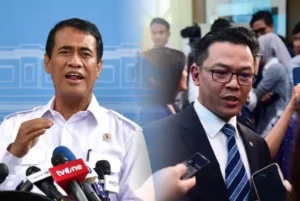
When pressed by reporters regarding whether the Department of Justice or the Federal Bureau of Investigation (FBI) has initiated a formal probe into Huang’s actions, Attorney General Blanche offered a guarded response. During a media exchange, when asked repeatedly about federal investigative steps, Blanche deflected by stating, "I do not know what you are talking about," while simultaneously praising Nvidia’s general operational compliance and standing within the American corporate landscape.
Political Interventions and the Presidential Stance
The controversy took a distinctly political turn when President Donald Trump weighed in on the unfolding scandal, injecting presidential influence directly into what would typically be an independent matter for corporate boards and federal investigators.
In an interview published by the New York Post, President Trump was asked about the legal vulnerabilities facing the Nvidia CEO and whether the executive might face criminal liability for potential breaches of security protocols or interactions with foreign agents. Trump revealed that he would consider issuing a presidential pardon to Huang should any criminal charges materialize, though he suggested that such a drastic measure might ultimately prove unnecessary.
"I think that’s always an option, but I don’t think it’s going to come to that," Trump told the publication.
By actively shielding Huang and signaling a willingness to intervene, the administration has taken a calculated gamble, tightly binding its political fortunes to the stability and public standing of Nvidia. Critics argue that offering premature assurances of executive clemency undermines the rule of law and sends a dangerous signal regarding accountability in matters of foreign espionage and national security. Conversely, supporters of the administration’s stance argue that safeguarding the leadership of a foundational American technology company during a critical geopolitical technological race supersedes procedural orthodoxies.
Congressional Summons and National Security Concerns
Lawmakers on Capitol Hill are moving forward with aggressive oversight measures. Jensen Huang is officially scheduled to appear before a congressional committee next week to face intensive questioning regarding the security breach.
The primary focus of the congressional inquiry will center on the vulnerabilities exposed by Huang’s association with the alleged Chinese operative tied to Megaspeed. Members of both political parties have expressed profound unease over how a foreign intelligence asset could successfully penetrate the inner circle of the world’s leading designer of graphics processing units (GPUs), which form the backbone of modern artificial intelligence development.
The semiconductor industry is viewed by defense and intelligence officials as a critical national security asset. Advanced AI chips are essential not only for commercial applications such as large language models and autonomous systems but also for military simulations, cybersecurity defense, intelligence data processing, and hypersonic missile development. Consequently, any compromise at the executive level of a premier chipmaker is treated as a matter of the highest strategic urgency.
Lawmakers are expected to interrogate Huang on several key fronts:
- The depth and duration of his relationship with the alleged Chinese agent.
- The specific nature of Megaspeed’s business transactions with Nvidia and whether any restricted microarchitectures or proprietary software were exposed.
- The adequacy of Nvidia’s internal vetting processes for corporate partners, clients, and executive associates.
- The timeline of when Nvidia’s board of directors first became aware of the security risks and why immediate public disclosure did not accompany the initial ouster.
Industry Context: Nvidia’s Economic Dominance and Geopolitical Friction
To understand the magnitude of the current crisis, one must examine Nvidia’s towering position in the global economy. Over the past several years, the explosive growth of generative artificial intelligence has propelled Nvidia’s market capitalization to historic heights, making it a bellwether for the entire technology sector.
Nvidia’s GPUs command an overwhelming market share in the AI training and inference hardware market, supplying tech giants such as Microsoft, Alphabet, Meta, and Amazon, alongside numerous sovereign wealth funds and international enterprises. Because these semiconductors are subject to stringent US export controls aimed at preventing advanced computing capabilities from falling into the hands of the Chinese military, Nvidia operates under a microscope defined by geopolitical rivalry.
The United States government has repeatedly tightened export restrictions on high-end chips destined for China, forcing Nvidia to design modified, lower-performance chips to comply with regulations while retaining access to lucrative overseas markets. The revelation that a major client based in Southeast Asia with alleged ties to Chinese intelligence was interacting with the CEO highlights the immense pressure and complex web of influence operations facing American tech executives operating in a globalized economy.
Industry analysts note that any prolonged leadership vacuum or regulatory entanglement at Nvidia could disrupt supply chains, shake investor confidence, and alter the competitive balance of the global AI landscape at a moment when the United States and China are locked in a fierce technological cold war.
Implications for Corporate Governance and Federal Oversight
The handling of the Jensen Huang affair carries profound implications for corporate governance standards within Silicon Valley and the broader American corporate ecosystem. Historically, corporate executives found to have engaged in conduct compromising personal integrity or corporate security faced definitive termination and permanent ostracization from the boardroom.
The swift reversal of Huang’s ouster, facilitated by strategic corporate maneuvering and political alignment, sets a controversial precedent. It suggests that executive indispensability—particularly in monopolistic or highly strategic sectors—can sometimes override standard governance and security protocols.
Furthermore, the apparent dissonance between the Department of Justice’s non-committal stance on investigations and the president’s openness to executive clemency illustrates the growing friction between traditional bureaucratic law enforcement procedures and high-level political priorities. Legal experts point out that if the FBI or the DOJ are indeed conducting a counterintelligence or criminal probe into the matter, public comments from the executive branch hinting at pardons complicate the investigative process and fuel perceptions of a two-tiered system of justice.
As Washington prepares for next week’s congressional hearings, all eyes will be on Jensen Huang’s testimony. The outcome of these inquiries will not only determine the personal accountability of Nvidia’s chief executive but will also establish new boundaries for how the United States government polices corporate security, foreign influence, and the fragile industrial base underpinning the future of global artificial intelligence.