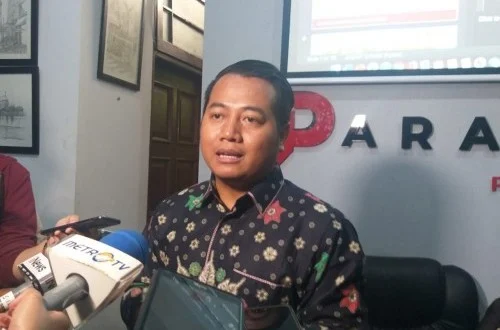
The political landscape in Central Java is beginning to crystallize as the 2024 Regional Head Elections (Pilkada) approach, with recent survey data positioning former Vice Governor Taj Yasin Maimoen as the most recognized figure among potential candidates. According to a comprehensive study conducted by Parameter Politik Indonesia (PPI) between May 15 and May 21, 2024, Taj Yasin, popularly known as Gus Yasin, holds a significant lead in terms of public awareness. The survey results, released by PPI Executive Director Adi Prayitno during a virtual press conference in Jakarta, highlight a shifting dynamic in one of Indonesia’s most strategically vital provinces.
In the survey, respondents were asked individually about their familiarity with various political figures touted for the gubernatorial race. Taj Yasin Maimoen emerged at the top of the list with a popularity rating of 52.1 percent. He is followed by Hendrar Prihadi, the former Mayor of Semarang and current Head of the National Public Procurement Agency (LKPP), who garnered 40 percent. In third place is Dico Ganinduto, the young and social-media-savvy Regent of Kendal, who reached a popularity level of 38.1 percent.
While these figures provide a snapshot of the current political climate, Adi Prayitno cautioned that the race remains wide open. He noted that while these individuals are frequently discussed in the media and political circles, none of the potential candidates have yet achieved a "mentereng" or extraordinary level of dominance that would make them a clear frontrunner. This suggests that the electorate in Central Java is still weighing its options as the official registration period for candidates nears.
Detailed Breakdown of the Popularity Rankings
The popularity contest in Central Java is a crucial precursor to the actual election, as name recognition often dictates a candidate’s ability to attract party endorsements and campaign funding. Taj Yasin’s position at the top is largely attributed to his five-year tenure as Vice Governor alongside Ganjar Pranowo from 2018 to 2023. As the son of the late legendary cleric Maimun Zubair, Taj Yasin also commands a deep-rooted following within the traditionalist Muslim community, particularly among Nahdlatul Ulama (NU) members in the province.
Hendrar Prihadi’s 40 percent popularity reflects his successful track record in Semarang, the provincial capital. His transition to a national role in the LKPP has maintained his profile, though he faces the challenge of expanding his recognition beyond the urban centers of northern Central Java. Meanwhile, Dico Ganinduto’s 38.1 percent is considered impressive for a younger politician. His presence on digital platforms and his affiliation with the Golkar Party have helped him tap into the millennial and Gen Z demographic, which constitutes a massive portion of the voting bloc.
Beyond the top three, other names have surfaced in the PPI survey, albeit with lower initial recognition. These include Sudaryono, the Chairman of the Gerindra Party’s regional board in Central Java, and Ahmad Luthfi, the current Central Java Regional Police Chief. While their current popularity percentages trail the leaders, their institutional backing and strategic positions make them formidable "dark horse" contenders as the campaign season intensifies.
The Socio-Political Context of Central Java
Central Java has long been regarded as the "Kandang Banteng" or the stronghold of the Indonesian Democratic Party of Struggle (PDI-P). For decades, the province has served as the party’s most reliable vote bank in both legislative and presidential elections. However, the 2024 General Election in February showed signs of a shifting tide, where the PDI-P’s dominance was challenged by the coalition supporting Prabowo Subianto and Gibran Rakabuming Raka.
The upcoming gubernatorial election is seen as a litmus test for PDI-P’s resilience in the region. With Ganjar Pranowo having completed two terms, the party must find a successor who can maintain its grip on the province. The high popularity of figures like Taj Yasin (who has ties to the United Development Party, PPP) and Dico Ganinduto (Golkar) suggests that the PDI-P may face a more fragmented and competitive environment than in previous cycles.
Furthermore, the influence of religious organizations cannot be overstated in Central Java. The province is a heartland for Nahdlatul Ulama, and the "Santri" (religious students/followers) vote is often the deciding factor in close races. Taj Yasin’s lineage gives him a natural advantage in this sector, forcing other candidates to seek alliances with prominent clerics and religious institutions to bolster their standing.
Chronology and Timeline of the 2024 Pilkada
The road to the November 27, 2024, election is marked by several key milestones regulated by the General Elections Commission (KPU). The survey conducted by Parameter Politik Indonesia in mid-May serves as a baseline for parties as they enter the final stages of candidate selection.
- May 2024: Political parties began intensive internal scouting and commissioned private surveys to gauge the "electability" (probability of being elected) versus "popularity" (name recognition) of potential candidates.
- June – July 2024: This period is expected to see the formation of coalitions. Given that few parties in Central Java can nominate a candidate without a partner, negotiations between PDI-P, Gerindra, Golkar, PKB, and others will be critical.
- August 27-29, 2024: The official registration window for gubernatorial and vice-gubernatorial candidates opens at the regional KPU offices.
- September 22, 2024: The KPU will officially certify the eligible pairs of candidates.
- September 25 – November 23, 2024: The official campaign period, where candidates will participate in debates, rallies, and media blitzes to convert popularity into votes.
- November 27, 2024: Polling day across Central Java and the rest of Indonesia.
Strategic Reactions and Party Positioning
While official statements from the candidates’ respective parties have been measured, the survey results have clearly influenced their strategic posturing. Sources within PDI-P suggest that the party is carefully evaluating Hendrar Prihadi’s numbers alongside other internal cadres like Bambang "Pacul" Wuryanto. The party’s leadership is reportedly looking for a candidate who can bridge the gap between the traditional nationalist base and the religious voters.
The Gerindra Party, buoyed by the success of the Prabowo-Gibran ticket in the February elections, is looking to capitalize on that momentum. Sudaryono has been active in mobilizing grassroots structures, positioning himself as the candidate most aligned with the incoming central government’s programs. His supporters argue that having a governor from the same party as the president would ensure smoother development and budget allocation for Central Java.
On the other hand, the Golkar Party appears to be leaning toward Dico Ganinduto, potentially pairing him with a more senior figure to create a "balanced" ticket. Dico’s youth and executive experience as a Regent are being marketed as a fresh alternative to the established political guard.
Analysis of Implications: Popularity vs. Electability
Adi Prayitno’s observation that no candidate is yet "mentereng" points to a fundamental truth in Indonesian regional politics: popularity does not always translate to electability. While Taj Yasin is widely known, his ability to secure a victory depends on his platform, his choice of a running mate, and the strength of the coalition backing him.
In Central Java, the "undecided" and "swing" voters often make up a significant portion of the electorate until the final weeks of the campaign. The PPI survey indicates that while 52.1 percent know Taj Yasin, nearly half the population is either unfamiliar with him or remains uncommitted. This leaves substantial room for other candidates to grow their numbers.
The "Ahmad Luthfi factor" is also a critical variable. As the Regional Police Chief, Luthfi has spent years building networks across the province’s 35 regencies and cities. If he decides to retire early or transition to politics, his institutional knowledge and neutral-on-paper status could make him an attractive candidate for a broad coalition of parties looking for a "security and stability" narrative.
Broader Impact on National Stability
The Central Java election is not merely a local affair; it has significant implications for national governance. As the third-most populous province in Indonesia, Central Java is a major contributor to the national GDP and a hub for agriculture and manufacturing. The leadership chosen in November will be responsible for implementing national strategic projects, including the development of industrial zones and infrastructure improvements.
Furthermore, the 2024 Pilkada is the first time Indonesia will hold concurrent regional elections nationwide. The results in Central Java will serve as a barometer for the political health of the major parties heading into the next legislative cycle. A win for a non-PDI-P candidate would signal a historic shift in the province’s political identity, while a PDI-P victory would reinforce the party’s status as the dominant force in the Javanese heartland.
As the months progress, the figures revealed by Parameter Politik Indonesia will likely fluctuate. The introduction of official campaign themes, the endorsement of influential figures like former President Joko Widodo or President-elect Prabowo Subianto, and the performance of candidates in public forums will ultimately determine who leads Central Java for the 2024-2029 term. For now, Taj Yasin Maimoen holds the advantage of recognition, but the race for the governor’s office remains one of the most unpredictable and closely watched contests in the country.