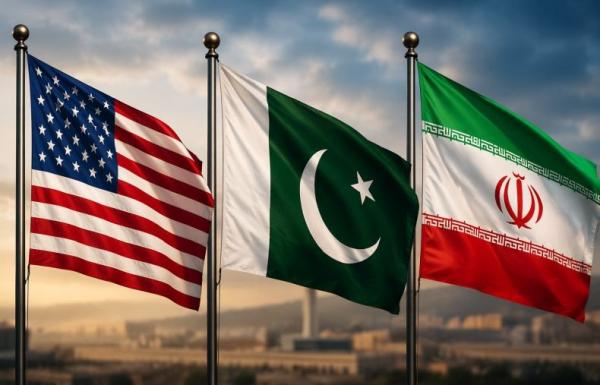
The government of Pakistan has officially commenced high-level preparations for a second round of landmark peace negotiations between the United States and the Islamic Republic of Iran, scheduled to take place in the capital city of Islamabad. According to senior government officials, the logistical and security framework for the summit began taking shape on Tuesday, April 14, 2026, as Pakistan positions itself as a central mediator in one of the world’s most protracted geopolitical conflicts. The anticipated talks, which are expected to convene by the end of this week, follow an initial round of discussions that signaled a potential thaw in the icy relations between Washington and Tehran.
Government sources speaking on the condition of anonymity confirmed that the Ministry of Foreign Affairs, in coordination with national security agencies, has been working around the clock to ensure the success of the summit. "Preparations started yesterday, specifically to ensure perfect security arrangements and to provide a neutral, conducive environment for these high-stakes discussions," a senior official stated on Wednesday. The second round is slated to be held at the same luxury hotel that hosted the previous session, a venue that has now become a symbol of Islamabad’s growing influence in Middle Eastern and Western diplomacy.
The Resumption of High-Level Diplomacy
The upcoming summit comes at a critical juncture for international relations. Following the first round of talks, which focused largely on establishing a baseline for communication, this second phase is expected to delve into more substantive issues, including regional security, nuclear non-proliferation, and the lifting of economic sanctions. The presence of high-ranking officials underscores the importance of the meeting; reports indicate that the United States will once again be represented by Vice President JD Vance, who has been tasked by the Trump administration to spearhead this diplomatic initiative.
The decision to return to Islamabad for a second round suggests that both Washington and Tehran find Pakistan to be a mutually acceptable facilitator. Pakistan’s unique position—maintaining a strategic partnership with the United States while sharing a border and cultural ties with Iran—allows it to bridge the gap in ways other regional players might not. For Islamabad, hosting these talks is a significant diplomatic victory, showcasing its ability to project soft power and contribute to global stability.
Security and Logistics in the Capital
Islamabad has been placed under a stringent security blanket ahead of the weekend. The "Red Zone," which houses the diplomatic enclave and major government buildings, has seen an increase in patrols and surveillance. The luxury hotel designated as the venue will be entirely cordoned off to ensure the safety of the foreign delegations.
"The choice of venue is strategic," noted a security analyst in Islamabad. "It allows for controlled access and provides the privacy necessary for sensitive back-channel communications that often occur on the sidelines of the formal sessions."
In addition to physical security, Pakistani technical teams are reportedly working to ensure secure communication lines for the delegates. The logistical undertaking involves the coordination of hundreds of staff members, from protocol officers to translation experts, highlighting the scale of Pakistan’s commitment to the process.
The Geopolitical Stakes: The Shadow of the Strait of Hormuz
The urgency of these peace talks is underscored by the volatile situation in the Middle East, particularly regarding the Strait of Hormuz. Recent threats of a naval blockade in this vital maritime corridor have sent shockwaves through global energy markets. As one of the world’s most important oil transit chokepoints, any disruption in the Strait of Hormuz could trigger a global economic crisis and potentially ignite a large-scale military confrontation.
The possibility of a "Great War" in the Middle East remains a looming concern for the international community. For the United States, securing the free flow of commerce and stabilizing oil prices are paramount interests. For Iran, the primary objective remains the easing of the "maximum pressure" campaign of sanctions that has significantly hampered its domestic economy. The Islamabad talks represent a pivotal opportunity to address these grievances before they escalate into an irreversible conflict.
A Chronology of Recent US-Iran Relations (2024–2026)
To understand the significance of the Islamabad summit, one must look at the timeline of events that led the two nations back to the negotiating table:
- Late 2024: Following a period of heightened naval skirmishes in the Persian Gulf, secret back-channel communications were established through intermediaries in Oman and Qatar.
- Early 2025: The Trump administration signaled a willingness to negotiate a "New Deal" that would expand upon the original JCPOA framework to include ballistic missile programs and regional proxy activities.
- Mid-2025: Iran’s leadership, facing internal economic pressure and a changing regional landscape, expressed a cautious openness to direct talks, provided that initial sanctions relief was placed on the table.
- February 2026: The first round of talks was held in Islamabad. While no major breakthroughs were announced, both sides agreed to a "road map" for future discussions and a temporary de-escalation of rhetoric.
- April 2026: Preparations for the second round begin, with Vice President JD Vance confirmed as the lead negotiator for the U.S. delegation.
Pakistan’s Role as a Strategic Mediator
Pakistan’s involvement in the US-Iran peace process is not a new phenomenon, but it has reached a new level of intensity under the current administration. Historically, Islamabad has sought to balance its relations with Tehran and Washington, often acting as a messenger during times of crisis.

The current mediation effort is driven by Pakistan’s own national interests. A conflict between the U.S. and Iran would have devastating consequences for Pakistan, potentially leading to a refugee crisis on its western border and disrupting its energy import plans. By facilitating peace, Pakistan not only averts a local catastrophe but also enhances its standing in the eyes of the international community as a responsible nuclear-armed state capable of fostering peace.
Economic Implications and Global Market Reaction
Global markets are watching the Islamabad talks with bated breath. The mere announcement of the second round has already led to a slight cooling of Brent crude oil prices, which had spiked due to fears of a blockade in the Strait of Hormuz. Economists argue that a successful outcome in Islamabad—even if it is just an agreement to continue talking—could provide the stability needed for global markets to recover from the volatility of the past year.
If a framework for sanctions relief is established, it could reopen the Iranian market to international trade, particularly in the energy and automotive sectors. Conversely, a failure of the talks could lead to a renewed "maximum pressure" campaign, further isolating Iran and potentially pushing it closer to other global powers like China and Russia, thereby complicating the Western geopolitical strategy.
Analysis: Challenges and Opportunities
Despite the optimistic preparations in Islamabad, significant hurdles remain. Hardliners in both Washington and Tehran remain skeptical of the diplomatic process. In the United States, some political factions argue that any concessions to Iran would be seen as a sign of weakness. In Iran, the powerful conservative establishment remains wary of American intentions, fearing that any deal would eventually be reneged upon, as occurred with the 2015 nuclear agreement.
However, the "Vance Factor" brings a new dynamic to the table. As Vice President, JD Vance represents a pragmatic, "America First" approach that prioritizes stability and economic interests over ideological transformation. His involvement suggests that the U.S. is looking for a functional, transactional arrangement rather than a total overhaul of the Iranian political system.
For Iran, the opportunity to stabilize its economy and secure its borders is a powerful motivator. The Iranian delegation is expected to push for a phased lifting of sanctions in exchange for verifiable limits on its nuclear enrichment levels.

The Path Forward
As the weekend approaches, all eyes will be on the luxury hotel in Islamabad. The success of this second round of talks will be measured not by a final treaty—which is still likely months or years away—but by the establishment of a sustainable communication mechanism and a commitment to avoid military escalation.
The international community, including the United Nations and the European Union, has expressed support for the Pakistani-led mediation. A spokesperson for the UN Secretary-General noted that "dialogue is the only viable path to lasting peace in the region," echoing the sentiments of many who fear the consequences of a failed diplomatic effort.
Pakistan’s role in this process is a testament to the complexities of modern diplomacy. In a world increasingly defined by polarization, the ability of a South Asian nation to bring two bitter rivals to the table is a significant achievement. Whether the "Spirit of Islamabad" can translate into a tangible peace remains to be seen, but for now, the world watches the Pakistani capital with a mixture of hope and caution.
The meetings this weekend will likely determine the trajectory of Middle Eastern security for the remainder of the decade. With security perfected and the delegations prepared, the stage is set for a historic encounter that could either pave the way for a new era of regional cooperation or signal the start of a much darker chapter in international relations.