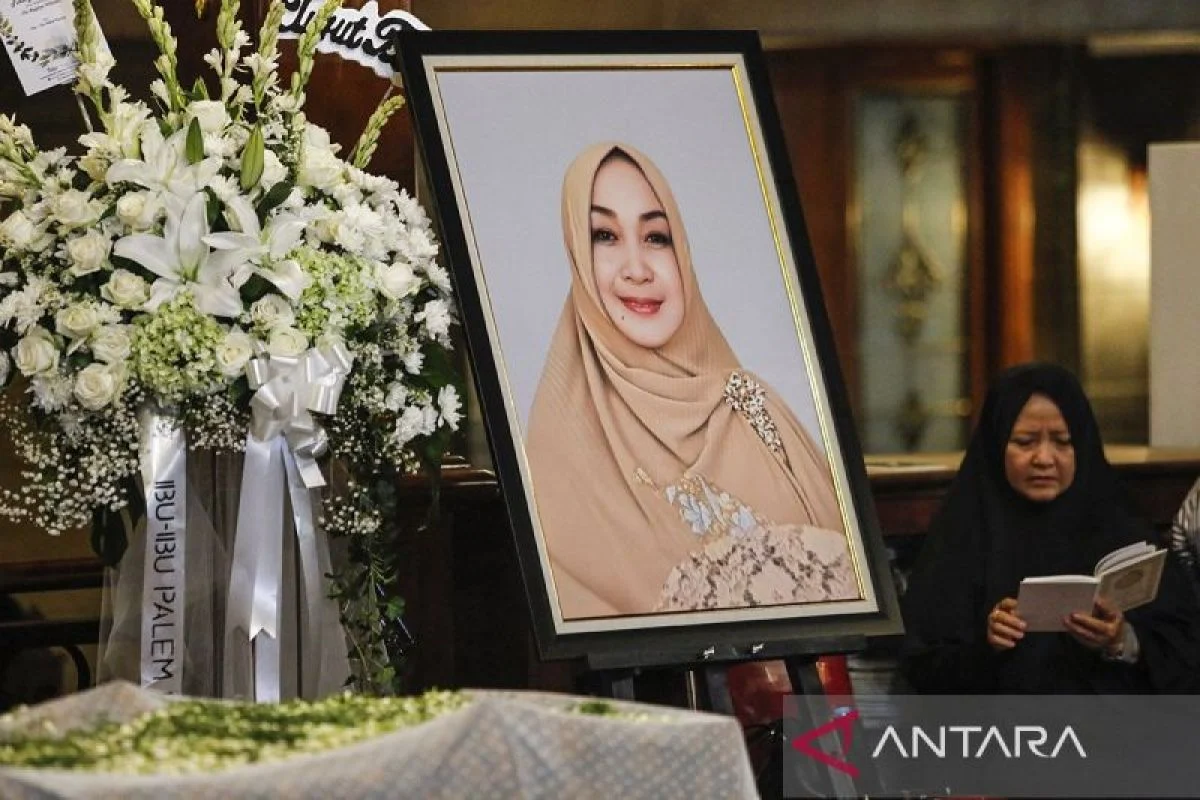
The Indonesian political and military community is in a state of mourning following the passing of Rugaiya Usman, the wife of General (Ret.) Wiranto, who died on Sunday afternoon, November 16, at 15:55 WIB in Bandung, West Java. The news of her departure was confirmed directly by her husband, General Wiranto, who currently serves as the Special Advisor to the President for Political and Security Affairs. In a somber statement reflecting both faith and deep personal loss, the former Commander of the Indonesian National Armed Forces (TNI) announced the passing of his beloved wife, mother, and grandmother, known affectionately as Uga Wiranto. The family noted that she returned to the Almighty peacefully, marking the end of a life defined by resilience, grace, and five decades of partnership alongside one of Indonesia’s most prominent modern historical figures.
Rugaiya Usman’s health had been a matter of private concern for the family for several months prior to her passing. She had undergone extensive and intensive medical treatment at the Gatot Soebroto Army Central Hospital (RSPAD) in Central Jakarta. Despite the efforts of the nation’s top medical teams and the constant presence of her family, her condition did not show significant signs of recovery. In her final days, she was moved to Bandung, where she eventually breathed her last. Her passing comes shortly after a significant personal milestone for the couple, adding a layer of poignancy to the family’s grief as they reflect on a journey that spanned the most transformative eras of Indonesian history.
A Timeline of the Final Days and Medical Journey
The journey toward Rugaiya Usman’s final moments was marked by a long period of medical intervention. As the wife of a high-ranking military and government official, she had access to the best facilities at RSPAD Gatot Soebroto, an institution historically intertwined with the care of Indonesia’s state leaders and their families. Sources close to the family indicate that her hospitalization was necessitated by complications related to her age, which required specialized geriatric and intensive care.
Throughout the late months of 2024, General Wiranto was frequently seen balancing his state duties—including his advisory role to President Prabowo Subianto—with his presence at his wife’s bedside. The family had remained hopeful, seeking various medical opinions as her condition fluctuated. However, by early November, it became clear that the intensive treatments were no longer yielding the desired results. The decision to move to Bandung in her final days provided a quieter environment, away from the immediate bustle of the capital, though it was there that her health finally succumbed.
The official announcement of her death triggered an immediate outpouring of condolences from across the political spectrum. Her body was subsequently transported from Bandung back to the family residence in the Bambu Apus area of East Jakarta. This residence served as the primary location for mourners to pay their final respects before the funeral proceedings commenced.
Early Life and the Foundations of a 50-Year Marriage
Rugaiya Usman, born into the family of Mustafa Usman, was a woman of academic substance and social activity long before she became a public figure. She pursued her higher education at the University of Jember, where she enrolled in the Faculty of Law. This background in legal studies provided her with a structured and disciplined perspective that many peers say complemented Wiranto’s military precision.
The story of Rugaiya and Wiranto is often cited as a classic example of enduring partnership. Their relationship began long before the stars and medals of a General’s uniform were even a distant dream. The two first met as first-year high school students. At the time, Rugaiya was a vibrant student leader, known for her participation in school activities ranging from poetry reading to school beauty pageants. In a story often shared by Wiranto in his memoirs and interviews, their first meeting happened almost by chance when Wiranto attended a school event in place of a friend. This simple encounter sparked a connection that would survive the rigors of military life, political upheaval, and the passage of half a century.
The couple officially wed on February 22, 1975. At the time of their marriage, Wiranto was a young officer beginning his climb through the ranks of the Indonesian Army. Over the next fifty years, Rugaiya would witness her husband rise from a field officer to the Adjutant of President Suharto, then to the Chief of Staff of the Army (KSAD), and eventually to the Commander of the Armed Forces (Panglima ABRI). Throughout these shifts, Rugaiya remained the steady anchor of the household, raising their three children: Maya Wiranto, Amalia Wiranto, and Zainal Nur Rizki.
The Role of a Military Spouse during National Transition
To understand the impact of Rugaiya Usman’s life, one must look at the role she played during the turbulent years of the late 1990s. As the wife of the Commander of the Armed Forces during the 1998 Reformasi, she was at the epicenter of national change. While her husband navigated the delicate transition from the New Order to the Reform era—a period marked by massive protests, economic collapse, and political tension—Rugaiya managed the private sphere of a family under immense public scrutiny.
She was an active leader in Dharma Pertiwi, the organization for the wives of Indonesian military personnel. In this capacity, she was responsible for the welfare of thousands of military families, emphasizing education, health, and the social stability of soldiers’ households. Her peers frequently described her as a woman of "extraordinary patience and fortitude," qualities that were essential as her husband transitioned from a military leader to a political figure, eventually founding the Hanura Party and serving in multiple ministerial roles under different presidents.
One of the most profound challenges the couple faced was the loss of their youngest son, Zainal Nur Rizki, who passed away in 2013 while studying in South Africa. The shared grief of losing a child is often cited by those close to the family as a period that further solidified the bond between Rugaiya and Wiranto, grounding them in their faith and mutual support.
Reflections on a Golden Anniversary
Perhaps the most touching detail of Rugaiya’s passing is its proximity to the couple’s 50th wedding anniversary. General Wiranto, in his reflections following her death, mentioned that they had recently celebrated their "Golden Wedding Anniversary." He noted the bitter-sweet reality of the timing, stating that while they had reached this monumental milestone of fifty years together, the "Divine will cannot be resisted."
This 50-year journey is viewed by many as a rarity in the high-pressure world of Indonesian politics. It serves as a testament to Rugaiya’s role not just as a supportive spouse, but as a "primary strength" that allowed Wiranto to focus on his extensive service to the state. Her ability to maintain a harmonious household despite the controversies and challenges inherent in her husband’s career made her a role model for younger generations of military and political wives.
Funeral Arrangements and State Honors
Following the period of mourning at the Bambu Apus residence, the funeral for Rugaiya Usman was scheduled for Monday, November 17. In accordance with her husband’s roots and the family’s traditions, she was taken to Central Java for burial. Her final resting place is the Astana Wukir Sirna Raga in Delingan, Karanganyar.
The choice of Karanganyar is significant, as the region is the ancestral home of Wiranto and holds deep historical ties for many of Indonesia’s military elite. The funeral was expected to be attended by a wide array of dignitaries, including current cabinet ministers, retired generals, and representatives from the various organizations Rugaiya led during her lifetime. While the ceremony was private for the family, the logistical arrangements reflected the high status she held within the nation’s social fabric.
Reactions from the Political and Social Sphere
The news of Rugaiya Usman’s death has prompted a wave of official responses. President Prabowo Subianto, a long-time contemporary of Wiranto in the military, was among the first expected to offer his condolences. The relationship between the President and his Special Advisor is one of long-standing mutual respect, and the loss of a spouse of 50 years is recognized as a significant personal blow to a key member of the administration.
Former presidents, including Megawati Sukarnoputri and Susilo Bambang Yudhoyono, as well as Joko Widodo, under whom Wiranto served as Coordinating Minister for Political, Legal, and Security Affairs, are also anticipated to acknowledge her passing. These reactions underscore the fact that Rugaiya was more than just a "wife of a general"; she was a witness to and a participant in the social evolution of the Indonesian state.
Social media in Indonesia saw a surge of tributes from members of the Hanura Party and the Dharma Pertiwi organization. Many recalled her "motherly" approach to leadership and her consistent presence at social charity events. Her legacy is being framed as one of quiet service—supporting the man at the front lines of governance while building a foundation of charity and family values in the background.
Analysis of Implications and Legacy
The passing of Rugaiya Usman marks the end of a specific chapter in the narrative of Indonesia’s military-political families. She represented a generation of women who entered public life during the mid-20th century, adhering to traditional values of loyalty and domestic stability while navigating the complexities of modern nation-building.
For General Wiranto, the loss is both personal and professional. As he continues to serve in a critical advisory capacity to the President, the absence of his lifelong partner will undoubtedly be felt. However, the strength of the "Golden Marriage" they built is likely to remain a defining part of his public identity. The stability of their union often served as a counter-narrative to the volatile nature of Indonesian politics, providing Wiranto with a level of personal credibility and "family-man" appeal that helped him sustain a career spanning over five decades.
In the broader context of Indonesian society, Rugaiya Usman’s life serves as a study in the "Power Behind the Throne." While she rarely sought the limelight for her own political gain, her influence was felt through the stability she provided to a man who held the keys to national security during some of Indonesia’s most precarious moments. Her education in law and her early interest in the arts and leadership suggest a woman who was highly capable in her own right, choosing to channel her talents into the support of her family and the welfare of the military community.
As the nation bids farewell to Hj. Rugaiya Usman Wiranto, she is remembered not just for the titles her husband held, but for the 50 years of devotion, the three children she raised, and the quiet dignity with which she navigated the highest circles of power. Her journey from a high school girl reading poetry in Jember to the matriarch of a prominent political family remains a quintessential Indonesian story of love, duty, and resilience.