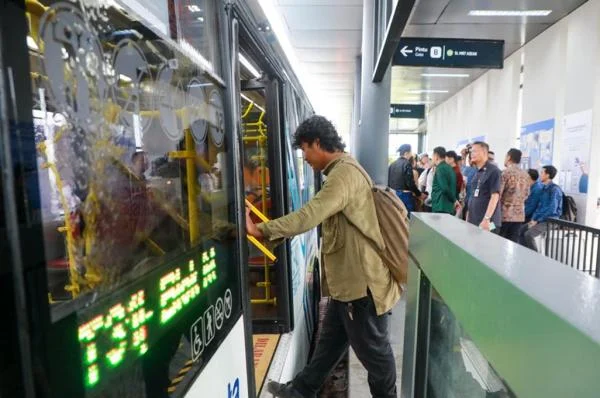
PT Transportasi Jakarta (Transjakarta) has officially announced the temporary suspension of operations at the Kebon Sirih bus stop for services heading toward Kota, effective from Friday, July 17, 2026, at 22:00 WIB. This operational adjustment is scheduled to remain in place until Monday, July 20, 2026, at 05:00 WIB, allowing a window for essential road restoration and infrastructure maintenance. The closure is a direct response to the ongoing development of the Mass Rapid Transit (MRT) Jakarta Phase 2A project, which has necessitated significant structural interventions along the Jalan M.H. Thamrin and Jalan Gajah Mada corridors. As Jakarta continues its ambitious transformation into a city anchored by integrated public transportation, such temporary disruptions have become a necessary component of the long-term vision to alleviate chronic traffic congestion and provide world-class transit facilities.
According to Ayu Wardhani, the Head of the Public Relations and CSR Department at PT Transportasi Jakarta, the decision to close the stop was made in close coordination with the MRT Jakarta project teams and the Jakarta Provincial Transportation Agency (Dishub). The primary objective is to facilitate road repair work in areas impacted by the heavy construction activities associated with the MRT expansion. The Kebon Sirih intersection is one of the most critical junctions in Central Jakarta, serving as a gateway between the primary business districts and the historical administrative centers. Consequently, ensuring the structural integrity of the road surface is paramount for the safety of both Transjakarta buses and private vehicles.
Strategic Timing and Operational Continuity
The timing of the closure, spanning from Friday night through the weekend, was strategically selected to minimize the impact on Jakarta’s massive workforce. By scheduling the most intensive repair work during the weekend, Transjakarta and the project contractors aim to avoid the peak weekday congestion that characterizes the Kebon Sirih and Thamrin areas. During this period, Transjakarta has ensured that commuter mobility remains a priority. Passengers who typically board or alight at the Kebon Sirih stop toward Kota are being redirected to nearby alternative facilities.
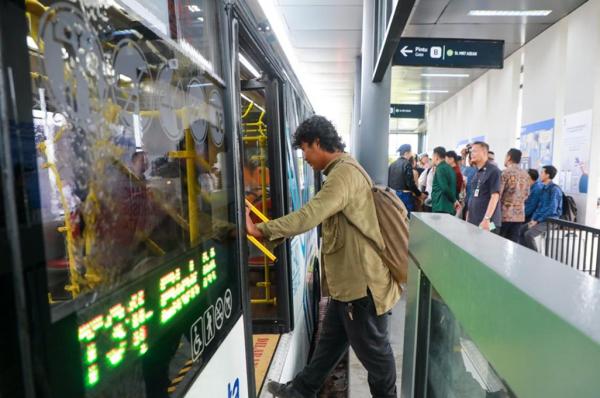
Ayu Wardhani emphasized that despite the temporary closure, the Transjakarta network remains robust and capable of handling the redirected passenger flow. "Transjakarta fully supports the development of integrated public transportation in Jakarta. During the temporary closure of the Kebon Sirih stop toward Kota, we urge our customers to utilize the alternative stops we have prepared so that their journeys remains safe, comfortable, and smooth," Wardhani stated in an official press release on Friday.
The designated alternative stops for passengers heading toward the Kota area are the Bank Indonesia bus stop and the Monumen Nasional (Monas) bus stop. Both facilities are located within walking distance or a short transit distance from Kebon Sirih and will continue to operate at full capacity. These stops are equipped to handle the increased foot traffic and are staffed by field officers ready to assist passengers in navigating the temporary changes. Transjakarta has also updated its digital signage and mobile application, "TJ: Transjakarta," to reflect these real-time operational shifts, ensuring that commuters can plan their routes with precision.
The MRT Jakarta Phase 2A Connection
The necessity of the road repairs at Kebon Sirih is deeply tied to the progress of MRT Jakarta Phase 2A. This phase of the project is a massive engineering undertaking that extends the existing North-South line from Bundaran HI to the Kota area. The construction involves deep tunneling and the creation of several underground stations, including the Thamrin Station, which will serve as a major interchange between the North-South and East-West lines.
The intersection of Jalan M.H. Thamrin and Jalan Kebon Sirih has been a focal point of construction for several years. The process involves the relocation of complex underground utilities—including fiber optic cables, water mains, and high-voltage power lines—followed by the installation of diaphragm walls and station boxes. As the heavy machinery operates and the ground is excavated, the surrounding road surface often requires stabilization and resurfacing to prevent subsidence and ensure a smooth driving experience.

The specific work being conducted over the July 17-20 weekend involves leveling the asphalt and restoring the pavement that has been subjected to heavy loads from construction vehicles. This maintenance is essential not only for the longevity of the road but also for the safety of the Transjakarta fleet. Transjakarta buses are significantly heavier than standard passenger cars, and any irregularities in the road surface can lead to increased wear and tear on the vehicles and a less comfortable experience for passengers.
Enhancing Transit Integration in the Capital
The temporary closure of the Kebon Sirih stop is a microcosm of the larger "JakLingko" integration strategy pursued by the Jakarta Provincial Government. The vision is to create a seamless transit web where Transjakarta (Bus Rapid Transit), the MRT (Heavy Rail), and the LRT (Light Rail) work in tandem to provide a comprehensive mobility solution.
By allowing the MRT construction to proceed efficiently through these temporary closures, Transjakarta is essentially investing in its own future. Once Phase 2A is completed, the Thamrin and Kebon Sirih areas will feature high-capacity underground stations directly connected to refurbished Transjakarta stops. This "intermodal" connectivity is expected to significantly reduce the "last-mile" problem, encouraging more private vehicle owners to switch to public transport.
Data from the Jakarta Transportation Agency suggests that every kilometer of new rail or dedicated bus lane can potentially remove thousands of private vehicles from the road daily. However, the transition period requires patience from the public. The government has acknowledged the inconvenience caused by these adjustments but maintains that the long-term benefits—reduced travel time, lower carbon emissions, and increased economic productivity—far outweigh the short-term hurdles.
Safety Protocols and Public Awareness
Safety remains the highest priority for PT Transportasi Jakarta during this period of infrastructure work. The area around the Kebon Sirih stop will be cordoned off, and specialized traffic wardens will be deployed to manage the flow of buses near the construction zone. Transjakarta has also coordinated with the Jakarta Metropolitan Police (Polda Metro Jaya) to ensure that traffic diversions do not cause gridlock in the surrounding streets, such as Jalan Wahid Hasyim and Jalan Sabang.
Ayu Wardhani expressed the company’s apologies for any disruption to the daily routines of Jakarta’s residents. "We apologize for the inconvenience felt by our customers due to this service adjustment. Transjakarta hopes the community can adjust their travel plans accordingly so that their activities can continue to run smoothly," she added. The company is leveraging multiple communication channels—including social media, radio broadcasts, and physical banners at bus stops—to ensure that the public is well-informed before the closure begins on Friday night.
Analysis of Economic and Urban Impact
From an urban planning perspective, the continuous maintenance and expansion of the Transjakarta-MRT corridor are vital for Jakarta’s status as a global megacity. The Kebon Sirih area is a high-value real estate zone, home to numerous corporate headquarters, government ministries, and the iconic MNC Center. Reliable public transit is the lifeblood of such a district.
Economists point out that infrastructure projects of this scale act as a stimulus for the local economy. While the construction phase might temporarily slow down local traffic, the resulting increase in accessibility typically leads to a rise in property values and retail activity. The road restoration at Kebon Sirih ensures that the "Golden Triangle" of Jakarta remains accessible and attractive to investors and workers alike.

Furthermore, the data-driven approach to these closures—using the weekend for the most disruptive work—demonstrates an evolving maturity in Jakarta’s city management. By analyzing traffic patterns and ridership data, authorities can pinpoint the optimal times for maintenance, thereby balancing the need for progress with the need for daily functionality.
Looking Ahead: The Future of the Corridor
As the Monday 05:00 WIB deadline approaches, Transjakarta teams will conduct a final safety inspection of the restored road surface before reopening the Kebon Sirih stop to the public. This cycle of construction, restoration, and reopening is expected to continue periodically as the MRT Phase 2A nears its completion.
The goal for 2026 and beyond is a Jakarta where public transport is not just an alternative, but the preferred choice for all citizens. The integration of the Kebon Sirih Transjakarta stop with the future MRT Thamrin station will represent a milestone in this journey. For now, the temporary closure serves as a reminder of the city’s ongoing evolution—a necessary step toward a more connected, efficient, and sustainable urban future.
Transjakarta continues to encourage the public to remain updated through official channels. The commitment to providing a "clean, integrated, and reliable" service remains the cornerstone of their operations, even as the city navigates the complexities of massive underground construction. The successful completion of the roadwork this weekend will mark another small but significant step in the larger narrative of Jakarta’s transport revolution.