The passing of Guruh Soekarnoputra, the youngest son of Indonesia’s founding father President Sukarno and Fatmawati, on September 26, 2026, has prompted a renewed public interest in the personal life of the renowned artist and choreographer. Among the figures closely associated with his history is Sabina Guseynova, a professional dancer from Uzbekistan who was married to Guruh for seven years. The union between the Indonesian cultural icon and the Uzbek performer remains one of the most intriguing chapters of Guruh’s life, reflecting a convergence of cross-cultural artistic passions and high-profile social scrutiny.
The Origins of an Artistic Union
The narrative of Guruh and Sabina began not in the corridors of political power, but on an international stage dedicated to the arts. In April 2002, Guruh Soekarnoputra traveled to Pyongyang, North Korea, leading his celebrated dance and performance troupe, Gencar Semarak Perkasa (GSP). The mission was to participate in the prestigious The April Spring Friendship Art Festival, an event that brings together performers from across the globe.
It was within this setting that Guruh first encountered Sabina Guseynova, who was performing as a member of the official Uzbek dance delegation. Observers close to the troupe noted that Guruh, a man deeply immersed in the world of aesthetics, choreography, and music, was immediately captivated by Sabina’s technical proficiency and grace. For a man who had dedicated his life to the preservation and modernization of Indonesian traditional arts, Sabina’s background in classical dance and piano resonated as a shared language of expression.
A Transnational Romance and Wedding Chronology
Following their initial meeting in Pyongyang, the relationship moved quickly. Recognizing the depth of their connection, Guruh facilitated Sabina’s visit to Indonesia to meet the extended Soekarno family. The introduction was a significant event, as it included a meeting with Megawati Soekarnoputri, who at the time was serving as the fifth President of the Republic of Indonesia.
The courtship led to a swift engagement. In September 2002, Guruh traveled to Tashkent, Uzbekistan, to formally request Sabina’s hand in marriage from her family. The timeline of their marriage is documented as follows:
- September 19, 2002: Formal engagement ceremony held in Tashkent, Uzbekistan.
- September 20, 2002: The couple officially wed in a ceremony in Tashkent, adhering to local traditions.
- October 19–20, 2002: A series of grand wedding receptions were hosted in Jakarta, Indonesia.
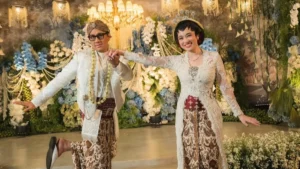
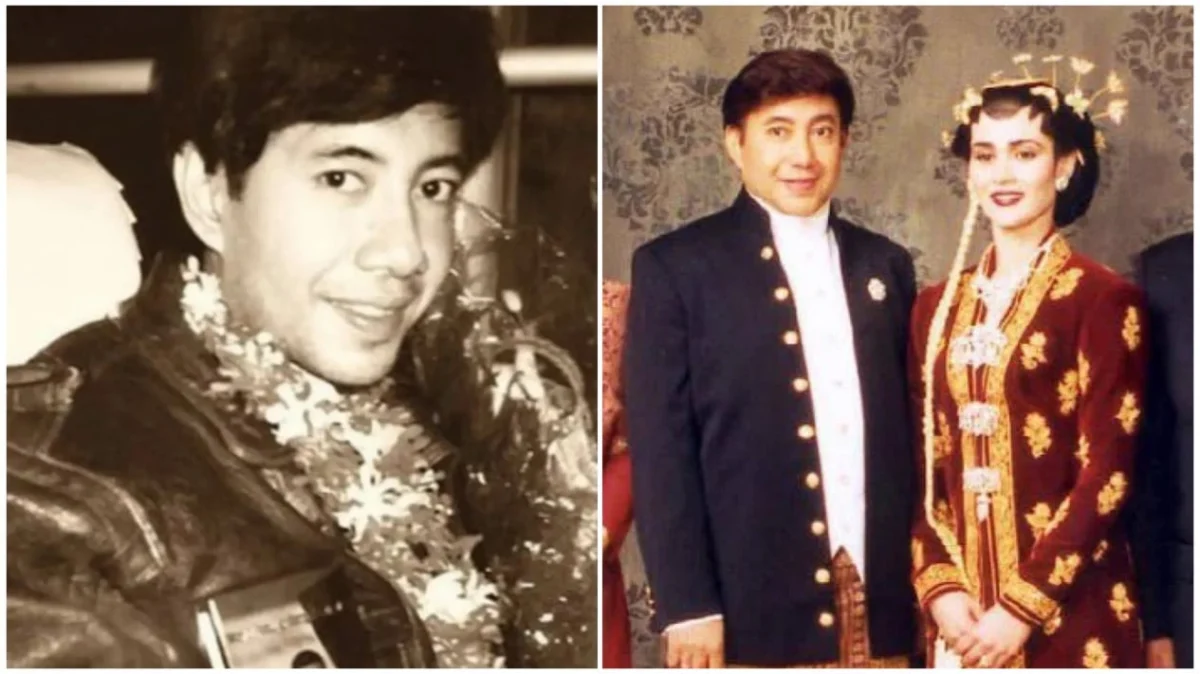
The Jakarta celebrations were held at the family’s residence in the Sriwijaya neighborhood of South Jakarta. The event was a high-society affair, attended by thousands of guests, including prominent political figures, artists, and diplomats. Sabina appeared in traditional Javanese bridal attire, symbolizing her integration into the culture of her husband.
Symbolic Union and Cultural Significance
The marriage was notable for the symbolic nature of the dowry (mas kawin) provided by Guruh. In a gesture that underscored his commitment to his father’s legacy and his personal intellectual values, Guruh presented Sabina with a copy of the Holy Qur’an, the seminal political text Di Bawah Bendera Revolusi (Under the Banner of Revolution), and the autobiography of President Sukarno.
At the time of the wedding, the couple’s age gap became a subject of significant media discourse. Guruh was 49 years old, while Sabina was 23. Despite the 27-year age difference and the vast geographical distance between their origins, the couple appeared to find common ground in their mutual dedication to the arts. Sabina’s lifelong training in classical piano and ballet provided a stable foundation for a partnership that was often described as a meeting of artistic minds.
The Erosion of the Marriage
Like many high-profile marriages that cross cultural and linguistic barriers, the relationship faced internal and external pressures. The couple maintained a relatively private life in Jakarta throughout the mid-2000s, though they were occasionally spotted at major cultural events. However, the union reached its conclusion after approximately seven years. In 2009, the couple opted for a legal separation. Since their divorce, Sabina Guseynova has largely remained out of the Indonesian public eye, maintaining a low profile that contrasts with the intense media interest that characterized their marriage.
Broader Impact and Historical Context
The marriage of Guruh Soekarnoputra and Sabina Guseynova serves as a case study in the intersection of celebrity culture and diplomacy in post-Reformasi Indonesia. Guruh was not merely a celebrity; as the son of the first President, his personal choices were often scrutinized through the lens of national identity.
Sociologists examining the event at the time pointed out that the marriage represented a shift in how the Soekarno family interacted with the global stage. By marrying an artist from Central Asia, Guruh reinforced his image as a cosmopolitan figure who sought to weave international influences into the fabric of his work with GSP.
Furthermore, the marriage provided a rare glimpse into the private life of a man who was otherwise notoriously guarded. While the marriage ultimately ended, it remains a significant footnote in the biography of Guruh Soekarnoputra. It highlighted his relentless pursuit of beauty and artistic perfection, qualities that defined his career as a choreographer and a composer.
Remembering Guruh Soekarnoputra
As the nation mourns the loss of Guruh Soekarnoputra, the resurgence of interest in his marriage to Sabina Guseynova acts as a reminder of his complex legacy. He was a man who lived at the center of Indonesia’s political history while simultaneously carving out a career as an avant-garde artist.
The fact that news outlets and the public are revisiting this chapter nearly two decades later underscores the enduring fascination with the Soekarno family. The story of the Indonesian maestro and the Uzbek dancer is a testament to the unpredictable nature of human connection, transcending borders and cultural divides.
In the wake of his passing, historians and art critics are beginning to compile a comprehensive overview of Guruh’s contributions to Indonesian culture. His work in the 1970s and 1980s, which blended traditional gamelan with Western pop and funk, remains influential. The brief period of his life shared with Sabina Guseynova serves as a reminder that his personal life was as eclectic and daring as the music he composed and the performances he directed.
As the country reflects on his death, the focus remains on his immense artistic output. However, the narrative of his life—including his seven-year marriage to Sabina—adds human depth to the public figure. Whether it was the grand receptions in Jakarta or the quiet intellectual exchange behind the scenes, the union of Guruh and Sabina was a moment in time that captured the imagination of a nation and continues to be a part of the complex, multifaceted story of the Soekarno lineage.
Moving forward, it is expected that further tributes will be paid to Guruh’s contributions to the arts. His influence on Indonesian dance, music, and theater is indelible, and while his marriage to Sabina Guseynova was but one part of a long and storied life, it remains a quintessential element of the broader narrative of a man who spent his life seeking to express the soul of Indonesia through the universal language of art.