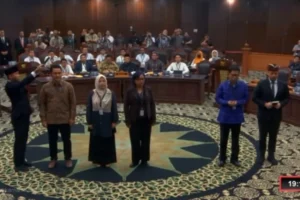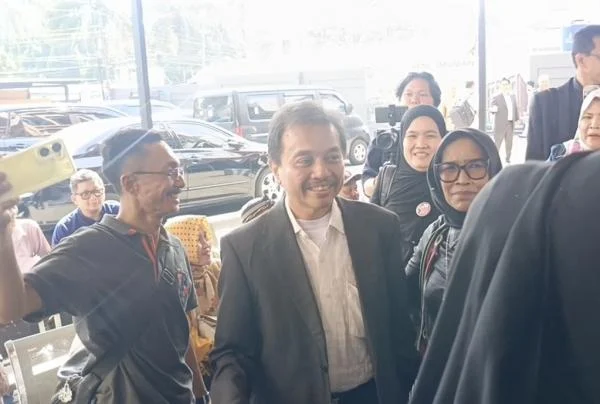
In a significant escalation of his ongoing legal battles, the prominent telematics expert and former Minister of Youth and Sports, Roy Suryo, has officially filed a new pretrial lawsuit against the Metro Jaya Regional Police (Polda Metro Jaya) at the South Jakarta District Court. This latest legal action, registered under case number 118/Pid.Pra/2026/PN JKT.SEL, marks a pivotal moment in the long-standing controversy surrounding allegations of a forged diploma belonging to the 7th President of the Republic of Indonesia, Joko Widodo. Unlike typical pretrial motions that focus on the validity of an arrest or detention, this specific filing is classified as a claim for compensation (ganti rugi), targeting the perceived procedural failures and professional misconduct in the handling of the criminal investigation.
The lawsuit was formally entered into the Case Tracking Information System (SIPP) of the South Jakarta District Court on July 15, 2026. According to the court’s digital records, the petition was made public on Sunday, July 19, 2026, drawing immediate attention from legal observers and the national media. This filing represents the third time Roy Suryo has approached the South Jakarta District Court to challenge the legal processes initiated by state authorities regarding the "fake diploma" narrative, a topic that has remained a flashpoint in Indonesian political discourse for several years.
Detailed Breakdown of the Respondents
Roy Suryo’s legal team has structured the lawsuit to encompass several tiers of the Indonesian law enforcement and prosecutorial hierarchy. The petition identifies two primary groups of respondents. The first group, designated as Respondent I, includes the Chief of the Metro Jaya Regional Police (Kapolda Metro Jaya), specifically citing the Director of General Criminal Investigation (Dirreskrimum), the Head of the Sub-Directorate of State Security (Kasubdit Kamneg), and the specific team of investigators assigned to the case.
Respondent II consists of the Jakarta High Prosecutor’s Office (Kejati DKI Jakarta), specifically naming the Assistant for General Crimes (Aspidum), the Head of the South Jakarta District Attorney’s Office (Kajari Jakarta Selatan), and the assigned team of Public Prosecutors (JPU). By naming both the police and the prosecutors, Roy Suryo is effectively challenging the entire "integrated criminal justice system" chain, alleging that the transition from investigation to prosecution was marred by errors that warrant financial and professional restitution.
Background and Context of the Controversy
The root of this legal friction traces back to the persistent allegations regarding the authenticity of President Joko Widodo’s undergraduate degree from Gadjah Mada University (UGM). While UGM officials, including the university’s rector, have publicly verified the diploma’s authenticity on multiple occasions, a segment of political activists and commentators, including Roy Suryo, have continued to question the documentation through digital forensic analysis and historical comparisons.
Roy Suryo, known for his expertise in telematics, has often provided "technical critiques" of photos and documents related to the President’s academic history. These critiques eventually led to police reports and investigations into the dissemination of potentially misleading information or hate speech. Roy Suryo contends that the subsequent legal pressure exerted upon him by Polda Metro Jaya was not only unwarranted but was conducted in a manner that violated his rights as a citizen, leading to the current demand for compensation.
This pretrial motion follows a series of related legal events. Earlier in July 2026, Roy Suryo’s legal team, led by prominent lawyer Refly Harun, expressed confidence that the courts would eventually rule in their favor. They argued that Polda Metro Jaya had failed to substantiate the elements of the Electronic Information and Transactions (ITE) Law in their previous actions against Roy. This backdrop of perceived investigative overreach forms the foundation of the current claim for damages.
Timeline of Legal Maneuvers
The chronology of Roy Suryo’s recent legal activities suggests a strategic and persistent attempt to hold law enforcement accountable:
- Early 2026: Investigations into Roy Suryo’s statements regarding the President’s diploma intensify, leading to various summons and the filing of case files (BAP).
- July 15, 2026: Roy Suryo officially registers the pretrial lawsuit (118/Pid.Pra/2026/PN JKT.SEL) at the South Jakarta District Court, focusing specifically on compensation.
- July 16, 2026: Public statements from Roy’s legal camp emerge, asserting that the police failed to prove criminal intent or evidence in the ITE-related charges.
- July 19, 2026: The SIPP PN Jakarta Selatan updates the case status, confirming the "compensation" classification and the list of high-ranking respondents.
Parallel to this, Roy Suryo has also been navigating other legal challenges. Recently, he responded to a report filed by the Chairman of "Gibranisti" (a volunteer group supporting Gibran Rakabuming Raka) regarding his own educational background at the Jakarta State University (UNJ). In a move to defend his credibility, Roy publicly displayed his academic transcripts, boasting a high GPA of 3.86, to refute claims that he was unqualified to critique the academic credentials of others.

Legal Mechanisms: The Basis for Compensation
Under the Indonesian Criminal Procedure Code (KUHAP), specifically Articles 77 through 83, the pretrial mechanism is designed to provide a "horizontal" check on the powers of investigators and prosecutors. While most pretrial cases involve the dismissal of a suspect status (penetapan tersangka), the law also allows for claims regarding the "termination of investigation or prosecution" and subsequent "compensation and rehabilitation" for individuals whose legal cases were handled improperly.
In this instance, Roy Suryo is utilizing the "Ganti Kerugian" (Compensation) clause. This is a relatively rare and bold legal move in the Indonesian context, as it requires the petitioner to prove that the state’s legal machinery caused tangible or intangible losses through a process that did not adhere to the principles of due process. By filing this, Roy is not just defending himself against charges but is proactively seeking a court declaration that the authorities acted in error.
Statements and Institutional Reactions
While Polda Metro Jaya has not yet released an official detailed response to the specific filing of case 118, their standard operating procedure in pretrial cases involves a robust defense of their investigative steps. Typically, the police legal bureau (Bidkum) argues that all procedures, from the issuance of the Investigation Commencement Notice (SPDP) to the gathering of evidence, were conducted according to the law.
The Jakarta High Prosecutor’s Office is also expected to maintain that their review of the case files was objective and based on the evidence provided by investigators. However, the involvement of the South Jakarta District Court is crucial, as the court has historically been the venue for landmark pretrial rulings that have occasionally overturned high-profile police decisions.
Legal analysts suggest that Roy Suryo’s strategy is to keep the "fake diploma" issue in the judicial spotlight while simultaneously putting the police on the defensive regarding their investigative methods. By framing the issue as a matter of compensation for "legal mismanagement," he shifts the narrative from his own alleged culpability to the accountability of the state.
Broader Implications and Analysis
The implications of this lawsuit extend beyond the personal grievances of Roy Suryo. It touches upon several critical themes in the current Indonesian socio-political landscape:
- Accountability of Law Enforcement: If the court grants even a portion of Roy’s demands, it would serve as a significant precedent for how the police handle cases involving public figures and sensitive political topics. It emphasizes that investigative power is not absolute and must be backed by solid evidence that can withstand judicial scrutiny.
- The Use of Pretrial as a Strategic Tool: Roy Suryo’s repeated use of the South Jakarta District Court demonstrates how pretrial motions have become a primary tool for political and legal maneuvering in Indonesia. It allows defendants to challenge the narrative of the prosecution before a full trial even begins.
- The Persistence of the "Fake Diploma" Narrative: Despite various institutional clarifications, the fact that this issue continues to fuel high-level lawsuits indicates a deep-seated polarization. The court’s handling of this case will likely be interpreted through a political lens by both supporters and critics of the former administration.
- Freedom of Speech vs. Misinformation: At the heart of the original investigation against Roy Suryo is the tension between an expert’s right to analyze public documents and the state’s interest in preventing the spread of what it deems "hoaxes." This pretrial case on compensation will indirectly address whether the state’s reaction to such critiques was proportionate.
As the South Jakarta District Court prepares to schedule the first hearing for case 118, the public remains divided. Supporters of Roy Suryo view him as a brave whistleblower seeking justice against a heavy-handed apparatus, while his detractors see the lawsuits as a repetitive attempt to remain relevant and obstruct the legal process.
The upcoming proceedings will require the judge to carefully weigh the technicalities of the investigation against the rights of the accused. Regardless of the outcome, the case of Roy Suryo vs. Polda Metro Jaya will undoubtedly be a benchmark in the ongoing evolution of Indonesia’s criminal justice system and its ability to handle cases where law, technology, and high-stakes politics intersect.