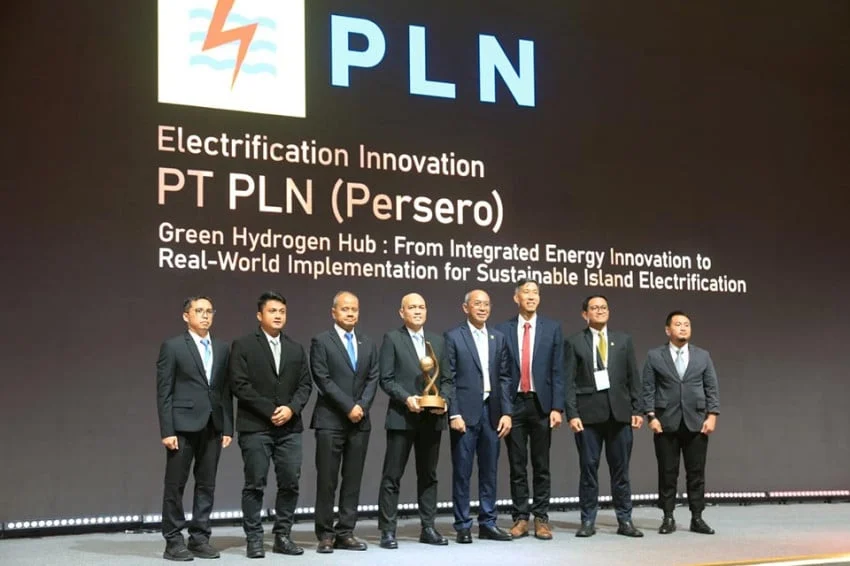
PT PLN (Persero), Indonesia’s state-owned electricity monopoly, has once again cemented its position as a pioneer in sustainable energy transformation and technological innovation. The corporation earned high acclaim at the Danantara Technology Innovation Investment Forum (DTIIF) 2026, held from October 26 to October 28, 2026. The prestigious recognition highlights PLN’s groundbreaking strides in green technology, specifically spotlighting the Green Hydrogen Hub spearheaded by the PLN Research and Development Center (PLN Puslitbang) and the successful deployment of the Green Energy Ecosystem Technopark (GEET) in the remote island of Pulau Rengit.
The award underscores the growing convergence between national strategic investments and practical, grassroots-level infrastructure development. As Indonesia accelerates its commitment to achieving net-zero emissions, initiatives that bridge high-level technological research with tangible improvements in marginalized communities have taken center stage. The accolades received at DTIIF 2026 serve as a testament to PLN’s ongoing multi-pronged strategy: scaling up low-carbon technologies for the future while simultaneously bridging the archipelagic electricity divide today.
Transforming Energy Access: The Pulau Rengit Breakthrough
For the residents of Pulau Rengit, a remote island community constrained by challenging geography and sparse infrastructure, reliable electricity was long considered a luxury rather than a standard utility. Historically, the local population had to navigate severe energy constraints, relying on localized diesel generators that could only supply electricity for approximately 12 hours a day. This severe limitation stifled economic growth, hindered educational advancement, and restricted healthcare delivery on the island.
However, the landscape of Pulau Rengit underwent a permanent structural shift with the implementation of the Green Energy Ecosystem Technopark (GEET). By integrating advanced clean energy technologies tailored for archipelagic challenges, PLN successfully upgraded the island’s power grid. Today, Pulau Rengit boasts a continuous, uninterrupted 24-hour electricity supply entirely driven or supported by clean energy solutions.
This transformation transcends mere infrastructural upgrade; it represents an economic and social emancipation for the island’s inhabitants. With a stable, round-the-clock power supply, local small-to-medium enterprises (SMEs) can extend their operating hours, preserve perishable goods, and utilize modern digital tools. Fishermen and local producers can now process and store their catches more efficiently, significantly reducing waste and boosting household incomes. Furthermore, students can study after sunset without the flickering glow of kerosene lamps, and community healthcare facilities can maintain refrigeration for vital medicines and vaccines at all hours.
The GEET Pulau Rengit project serves as a shining prototype for how advanced power systems engineering can solve the complex logistical hurdles of electrifying Indonesia’s thousands of outer and remote islands. It proves that remote archipelagic regions do not need to rely on carbon-intensive fossil fuel expansions to achieve energy security.
Advancing the Frontiers of Research: The PLN Puslitbang Green Hydrogen Hub
While the GEET project in Pulau Rengit demonstrates immediate, real-world impact, PLN’s recognition at DTIIF 2026 was equally driven by its forward-looking research initiatives. The Green Hydrogen Hub, managed under the auspices of PLN Puslitbang, represents a cornerstone in Indonesia’s long-term decarbonization architecture.

The Hub functions as an advanced epicenter for hydrogen technology capability development, comprehensive research, rigorous testing, and the prototyping of low-carbon energy solutions. As global energy markets increasingly pivot toward hydrogen as a clean energy carrier—particularly for heavy industries, maritime transport, and long-haul aviation—Indonesia’s positioning in this technological race is critical.
The facility managed by PLN Puslitbang plays a pivotal role in building a robust domestic hydrogen research ecosystem. By fostering innovation and technological readiness within a controlled yet scalable environment, the hub bridges the gap between theoretical science and industrial application. It equips Indonesian engineers and researchers with the tools necessary to evaluate green hydrogen production methods, storage safety protocols, and co-firing capabilities in existing thermal power plants.
Through these dual triumphs—the immediate socio-economic upliftment of Pulau Rengit and the strategic horizon-scanning of the Green Hydrogen Hub—PLN has demonstrated a rare institutional agility: the capacity to solve the day-to-day energy poverty of remote citizens while simultaneously engineering the green fuels of tomorrow.
Chronology of the Innovation and Award Cycle
The path to PLN’s triumph at the Danantara Technology Innovation Investment Forum 2026 was paved through years of methodical research, pilot testing, and incremental deployment. Understanding the timeline of these developments illuminates the dedication required to execute such complex national projects:
Phase 1: Conceptualization and Laboratory R&D (2022–2023)
The foundation of the Green Hydrogen Hub was laid during this period as PLN Puslitbang ramped up investments in alternative energy vectors. Recognizing that variable renewable energy (solar and wind) required long-term storage solutions, research teams focused on water electrolysis using renewable electricity to produce green hydrogen. Concurrently, preliminary engineering designs for decentralized, low-carbon microgrids for remote islands began taking shape on the drawing boards.
Phase 2: Prototyping and Field Trials (2024–2025)
The theoretical models transitioned into physical reality. The Green Energy Ecosystem Technopark concept was formulated to bundle multiple renewable sources—such as solar photovoltaic systems, advanced battery energy storage systems (BESS), and smart microgrid controllers—into a single, cohesive deployment package. Pulau Rengit was selected as the primary testbed due to its acute reliance on limited diesel generation. Parallelly, the Green Hydrogen Hub expanded its laboratory testing capabilities, establishing partnerships with domestic and international academic institutions.
Phase 3: Full-Scale Deployment and 24-Hour Operation (Early to Mid-2026)
The GEET system went live in Pulau Rengit, successfully transitioning the island from a 12-hour intermittent power schedule to a robust 24-hour clean energy grid. Concurrently, the Green Hydrogen Hub achieved significant milestones in testing hydrogen purity, compression, and co-firing compatibility.
Phase 4: Recognition at DTIIF 2026 (October 2026)
The culmination of these efforts was showcased at the Danantara Technology Innovation Investment Forum held from October 26 to 28, 2026. A panel of international and domestic technology, investment, and energy experts evaluated submissions based on innovation, scalability, environmental impact, and socio-economic contribution. PLN’s dual submission—combining the macro-vision of the Hydrogen Hub with the micro-impact of the Pulau Rengit Technopark—secured widespread acclaim from the judging panel.
Broader Economic Implications and Strategic Analysis

The accolades awarded to PLN at DTIIF 2026 carry profound implications for Indonesia’s broader macroeconomic landscape and energy transition roadmap.
First, the success of the Pulau Rengit project provides a scalable template for the electrification of Indonesia’s frontier, outermost, and underdeveloped regions (known locally as the 3T regions: Tertinggal, Terdepan, dan Terluar). Indonesia comprises over 17,000 islands, making centralized grid expansion economically unfeasible and environmentally regressive. By demonstrating that decentralized Green Energy Ecosystem Technoparks can reliably deliver round-the-clock power, PLN has unlocked a viable blueprint to achieve 100% national electrification without compromising the nation’s carbon emission reduction targets under the Enhanced Nationally Determined Contribution (ENDC).
Second, the recognition of the Green Hydrogen Hub highlights Indonesia’s ambition to move up the global green technology value chain. Rather than remaining a passive consumer of imported green technologies, Indonesia—through state enterprises like PLN—is actively cultivating domestic intellectual property, technical expertise, and operational standards. This positions the country not only to achieve internal energy self-sufficiency but also to emerge as a competitive exporter of green hydrogen and related technological services within the Southeast Asian region in the decades to come.
Third, the integration of cutting-edge research with practical field implementation signals a maturation of Indonesia’s state-owned enterprise (SOE) sector. Historically, corporate research centers in developing economies often suffered from isolation, producing academic papers that rarely translated into commercial or societal benefits. PLN’s strategy—where laboratory innovations directly solve operational bottlenecks in remote communities—sets a benchmark for applied corporate research in emerging markets.
Official Responses and Institutional Commitment
While specific individual quotes from the forum floor underscore the collaborative nature of the Danantara Technology Innovation Investment Forum, leadership statements from participating entities consistently emphasize a unified vision for Indonesia’s energy future.
Representatives from the organizing bodies of DTIIF noted that submissions this year were judged against unprecedentedly stringent criteria, prioritizing projects that demonstrate immediate climate resilience alongside clear pathways for private-public investment mobilization. The convergence of state-led infrastructure development and private technological investment was cited as the primary engine driving Indonesia’s recent green transition milestones.
PLN management has repeatedly stressed that awards such as the one received at DTIIF 2026 are not the finish line, but rather a validation of a continuous journey. The corporation remains committed to expanding the Green Energy Ecosystem Technopark model to dozens of other isolated island communities across the archipelago, ensuring that geographical isolation no longer dictates socio-economic stagnation. Simultaneously, the Green Hydrogen Hub will continue to scale its testing capacities, preparing the ground for commercial-scale green hydrogen production aligned with the national net-zero emissions target by 2060 or sooner.
Conclusion
The recognition of PT PLN (Persero) at the Danantara Technology Innovation Investment Forum 2026 marks a watershed moment for Indonesia’s energy sector. By successfully marrying cutting-edge scientific research—exemplified by the Green Hydrogen Hub—with immediate, life-changing community infrastructure, such as the 24-hour clean energy grid in Pulau Rengit, PLN has proven that the green transition can be both technologically advanced and socially inclusive. As these models are replicated nationwide, they promise to illuminate remote corners of the archipelago while laying a rock-solid foundation for a sustainable, hydrogen-powered industrial future.