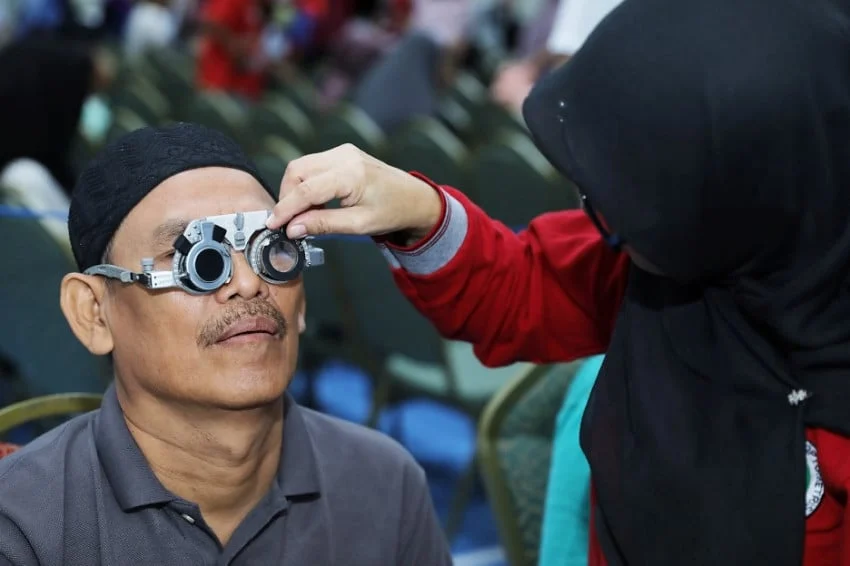
Access to quality healthcare remains a fundamental challenge for many marginalized communities across developing regions, particularly when it comes to specialized medical services such as ophthalmology. Addressing this critical healthcare gap, JEC Eye Hospitals and Clinics joined forces with the Parent Teacher Association (PTA) Secondary Syafana Islamic School to organize a comprehensive social outreach program focused on vision care. Held on Saturday, October 24, 2026, the initiative took place at the Syafana Islamic School Secondary Campus located in Lengkong Kulon, Pagedangan, within the Regency of Tangerang.
Carrying the compassionate theme Seeing Clearer, Sharing Wider, the collaborative social action sought to provide essential eye care services to targeted demographics who otherwise might lack access to professional ophthalmological diagnostics. By combining the medical expertise of a leading eye care institution with the community mobilization efforts of an active educational PTA, the event successfully delivered vital health screenings, corrective eyewear, and educational outreach directly to individuals in need.
Comprehensive Scope and Targeted Beneficiaries
The humanitarian initiative was meticulously planned by the Social Section of the PTA Secondary Syafana Islamic School to maximize its community footprint. Organizers established a target beneficiary pool ranging between 250 and 300 participants, carefully curated to reach vulnerable segments of the local population.
The beneficiaries primarily comprised educators, administrative personnel, and support staff from the Syafana Islamic Boarding School, alongside members of the surrounding local community facing economic hardships, particularly underprivileged groups categorized as dhuafa. Furthermore, the outreach extended its embrace to young students from the Atta’awun Educare campus in Lengkong, ensuring that children from varied socioeconomic backgrounds received early visual assessments crucial for their developmental and educational progress.
Chronology and Alignment with Global Health Movements
The timing of the October 24 event was strategically aligned with the broader global momentum generated by World Sight Day 2026, which was officially observed earlier in the month on October 8. By anchoring the Tangerang social drive to the international Love Your Eyes campaign, the organizers aimed to amplify public consciousness regarding the indispensable value of preventive eye care.
The chronological flow of the day’s activities was structured to ensure every participant received thorough and personalized attention. Upon arrival and registration, attendees underwent preliminary administrative processing managed by PTA volunteers. Subsequently, participants were guided through a systematic screening workflow utilizing advanced diagnostic tools, notably the EyeCheck system, which facilitates efficient and accurate preliminary visual assessments.
Following the diagnostic screenings, individuals identified with refractive errors or other correctable vision impairments were provided with complimentary corrective glasses tailored to their specific prescriptions. The final phase of the participant journey involved targeted educational sessions conducted by medical professionals, designed to instill lifelong habits regarding ocular hygiene and digital wellness.
Addressing the Modern Vision Crisis: Insights from Medical Leadership
The urgency of such community-based interventions was underscored by prominent healthcare leaders. Prof. Tjahjono D. Gondhowiarjo, Senior Director of Development and Education at JEC Eye Hospitals and Clinics, emphasized that widespread public awareness concerning early detection must be actively paired with tangible, barrier-free access to diagnostic facilities.
According to Prof. Tjahjono, refractive errors—such as myopia (nearsightedness), hyperopia (farsightedness), and astigmatism—frequently go unnoticed by affected individuals. These conditions are indiscriminate, impacting both children and adults across various walks of life.
"Uncorrected refractive errors are not merely physical inconveniences; they directly compromise learning comfort, professional productivity, and overall quality of life," Prof. Tjahjono stated. He further noted that visual decline often progresses insidiously, making routine, periodic evaluations a vital necessity rather than an elective luxury. "Therefore, regular eye examinations are critical to identifying visual disturbances at their earliest stages, ensuring that appropriate interventions can be administered promptly. Examinations can generally be scheduled every six months to a year, depending on individual ocular conditions and professional medical recommendations."
Educational Outreach and Digital Era Ocular Health
A cornerstone of the October 24 social program was its heavy emphasis on preventive education. In an era dominated by screens, digital devices, and remote interactions, modern populations face unprecedented strains on their visual systems. The educational seminars conducted during the event addressed several contemporary challenges associated with modern lifestyles.
Experts provided actionable guidance on practicing moderation and wisdom in digital device utilization. Key topics included the implementation of structured eye rest cycles—such as the widely recommended 20-20-20 rule—maintaining optimal reading and viewing distances, and recognizing subtle physiological warning signs, such as chronic headaches, squinting, or sudden shifts in visual clarity. By equipping both students and educators with this foundational knowledge, the event sought to foster a culture of proactive eye health management within academic and domestic environments alike.
Four Decades of Institutional Commitment to Public Health
The collaboration between JEC Eye Hospitals and Clinics and Syafana Islamic School reflects a broader corporate and institutional ethos. Operating as a trusted eye care leader in Indonesia for over four decades, JEC has consistently expanded its operational purview beyond clinical settings to engage directly with grassroots communities.
The organization views such partnerships as an extension of its core mission: bridging healthcare disparities and championing universal access to high-standard ophthalmological services. By uniting with educational institutions like Syafana Islamic School, JEC leverages the multiplier effect of schools acting as community hubs, thereby instilling health consciousness among the younger generation while simultaneously providing immediate relief to society’s most vulnerable members.
"We are delighted to partner with Syafana Islamic School in this noble endeavor," Prof. Tjahjono added, reflecting on the institutional philosophy driving the outreach. "This initiative not only allows us to extend specialized care to those who need it most, but it also serves as a catalyst. We hope this event lays the groundwork for sustainable habits regarding eye health care, inspiring every participant to champion visual wellness within their immediate families and wider neighborhoods."
Broader Implications and Socioeconomic Impact
The implications of the JEC and PTA Secondary Syafana Islamic School collaborative eye examination drive extend far beyond the immediate distribution of corrective eyewear. From a socioeconomic perspective, uncorrected visual impairment represents a hidden tax on productivity and educational attainment.
For school-aged children, clear vision is a non-negotiable prerequisite for literacy, comprehension, and academic engagement. Children suffering from undiagnosed refractive errors are frequently mischaracterized as having learning difficulties or behavioral issues, when in reality, their primary barrier is simply the inability to read text written on a blackboard. By intercepting these issues early—such as through screenings provided to students from Atta’awun Educare and local boarding school attendees—the program directly supports long-term educational equity.
Similarly, for working adults, informal laborers, and elderly members of the dhuafa community, clear sight translates directly into sustained earning capacity and functional independence. Tasks ranging from sewing and crafting to navigating public transport and performing administrative duties all rely heavily on visual acuity. Providing free diagnostic services and custom spectacles effectively removes financial roadblocks that typically prevent marginalized individuals from seeking professional eye care.
Looking Ahead: The Future of Community-Based Healthcare Partnerships
As public health systems continue to recover from historic pressures and adapt to the demands of a digitally saturated society, the model demonstrated in Tangerang offers a blueprint for future health interventions. The synergy between specialized medical providers, educational institutions, and parent-teacher organizations proves that decentralized, community-targeted healthcare delivery can achieve significant impact with high efficiency.
Organizers from both JEC Eye Hospitals and Clinics and the PTA Secondary Syafana Islamic School expressed optimism regarding the future replication of similar programs. By institutionalizing social responsibility and maintaining active dialogue between medical experts and educational stakeholders, initiatives of this nature pave the way for a healthier, more visually aware populace.
Ultimately, the event on October 24, 2026, demonstrated that when institutional capability meets community altruism, the barriers of access can be meaningfully dismantled. Through structured screenings, educational empowerment, and the simple gift of clearer sight, the Seeing Clearer, Sharing Wider initiative has left an indelible mark on the educational landscape and community fabric of Tangerang.