The Ministry of Energy and Mineral Resources (ESDM) has committed to executing an aggressive nationwide crackdown on illegal mining operations and illicit commodity smuggling. This decisive stance comes in direct response to strict directives issued by President Prabowo Subianto, who has positioned the protection of national natural resources as a paramount priority for his administration. Ministry leadership has made it clear that regulatory leniency is a thing of the past, signaling an era of strict enforcement where non-compliant extraction projects face immediate closure.
The policy shift underscores a growing government consensus that unregulated resource extraction and cross-border smuggling represent severe threats to national security and long-term economic stability. By aligning institutional enforcement mechanisms with presidential mandates, the Indonesian government aims to reclaim billions of dollars in lost state revenue, protect vulnerable ecosystems, and restore rule of law across resource-rich regions.
Chronology of Events and the Presidential Directive
The momentum for this sweeping enforcement campaign crystallized during a pivotal Plenary Cabinet Meeting held at the Merdeka Palace in Jakarta. During the high-level gathering, President Prabowo Subianto delivered a strongly worded address regarding the systemic leakage of Indonesia’s strategic commodities. The president explicitly highlighted widespread smuggling operations targeting critical minerals and energy products, including tin, gold, coal, refined fuel products, and heavily subsidized agricultural fertilizers.
President Prabowo characterized these illicit activities in stark, uncompromising terms, describing the unchecked outflow of national wealth as a direct assault on the sovereignty and survival of the state. He emphasized that draining the nation of its natural resources inflicts deep structural damage on the domestic economy, effectively undermining the collective welfare of the populace.
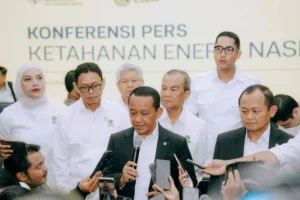
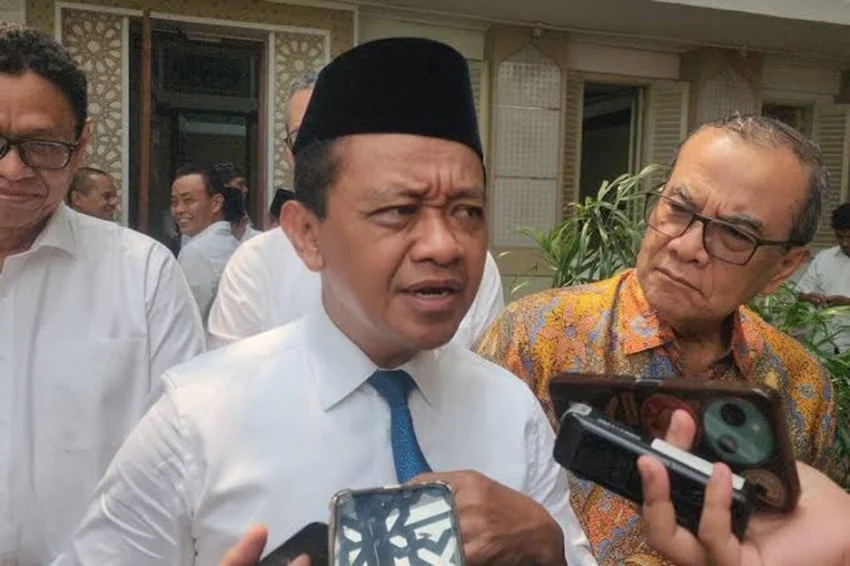
In the wake of this executive directive, Minister of Energy and Mineral Resources Bahlil Lahadalia publicly affirmed his department’s unconditional readiness to execute the policy. Speaking to the press, Bahlil emphasized the clear chain of command and his absolute commitment to enforcing regulatory compliance. As a direct subordinate to the head of state, the minister asserted that any mining enterprise found operating outside the boundaries of the law or depriving the state of its rightful revenues would be shut down without hesitation.
Scale of the Crisis: The Sangihe Case Study and National Losses
To understand the urgency behind the newly announced government crackdown, observers must examine the staggering scale of illegal extraction currently plaguing various Indonesian archipelagos. A prominent example illustrating the severity of the crisis is found in the Sangihe Islands of North Sulawesi, a region historically celebrated for its rich biodiversity and mineral deposits.
Recent field assessments and intelligence reports indicate that unauthorized gold mining operations in Sangihe have proliferated at an alarming rate. Within a mere six-month window, these clandestine operations are estimated to have inflicted a staggering financial loss of approximately IDR 200 billion on the state. This staggering figure accounts only for uncollected royalties, unrecovered tax liabilities, and the direct commercial value of extracted precious metals smuggled out of official distribution channels.
Beyond direct financial losses, the Sangihe case highlights the profound collateral damage associated with unregulated mining. Illicit operators typically bypass environmental impact assessments, discard toxic processing byproducts such as heavy metals directly into local waterways and soil, and disregard basic occupational health and safety standards. The resulting environmental degradation poses an existential threat to local agriculture, marine ecosystems, and the livelihoods of indigenous coastal communities who rely on sustainable resource management.
Broader Economic and Geopolitical Implications
The illicit trade in Indonesia’s natural resources extends far beyond local environmental infractions, functioning as a sophisticated transnational enterprise that distorts global commodity markets. Indonesia holds a commanding position in the global supply chains for critical minerals, including being the world’s leading exporter of nickel and a major producer of tin and thermal coal. Consequently, unregulated extraction and smuggling not only rob the public treasury of essential development funds but also distort fair market competition for legitimate, tax-paying corporations.
From a macroeconomic perspective, the leakage of commodities such as subsidized fuels and fertilizers places an unsustainable fiscal burden on the state budget. Subsidies designed to protect low-income households and domestic farmers are routinely diverted to fuel illegal mining machinery or smuggled across maritime borders for higher profit margins abroad. By cutting off these illicit supply chains, the government anticipates a significant reduction in fiscal waste, allowing public funds to be redirected toward infrastructure development, education, and healthcare initiatives.
Furthermore, international trade partners and institutional investors are increasingly prioritizing Environmental, Social, and Governance (ESG) standards when evaluating emerging market economies. The Indonesian government’s proactive stance in clamping down on illegal mining signals to the global community that Jakarta is serious about enforcing sustainable resource governance. This regulatory cleansing is expected to enhance investor confidence, ensuring that foreign direct investment flows into transparent, legally compliant ventures rather than exploitative black-market operations.
Institutional Challenges and Future Enforcement Strategies
Executing a successful nationwide crackdown on well-established smuggling networks and rogue mining operations requires unprecedented inter-agency coordination. The Ministry of Energy and Mineral Resources cannot achieve these objectives in isolation; the campaign necessitates active collaboration with the Indonesian National Police (Polri), the Indonesian National Armed Forces (TNI), the Maritime Security Agency (Bakamla), and the Directorate General of Customs and Excise.
Future enforcement strategies are expected to leverage advanced geospatial technology, satellite monitoring, and enhanced financial intelligence to track the illicit movement of minerals from pithead to export terminals. By targeting the financial syndicates and logistical masterminds behind the smuggling rings—rather than solely prosecuting low-level miners—authorities hope to dismantle the operational infrastructure that sustains these illegal enterprises.
As the Ministry of Energy and Mineral Resources begins translating presidential rhetoric into tangible regulatory actions, mining concession holders across the archipelago are being put on notice. The era of unchecked resource exploitation is drawing to a close, replaced by a rigorous framework centered on state accountability, environmental stewardship, and the uncompromising defense of national economic sovereignty.