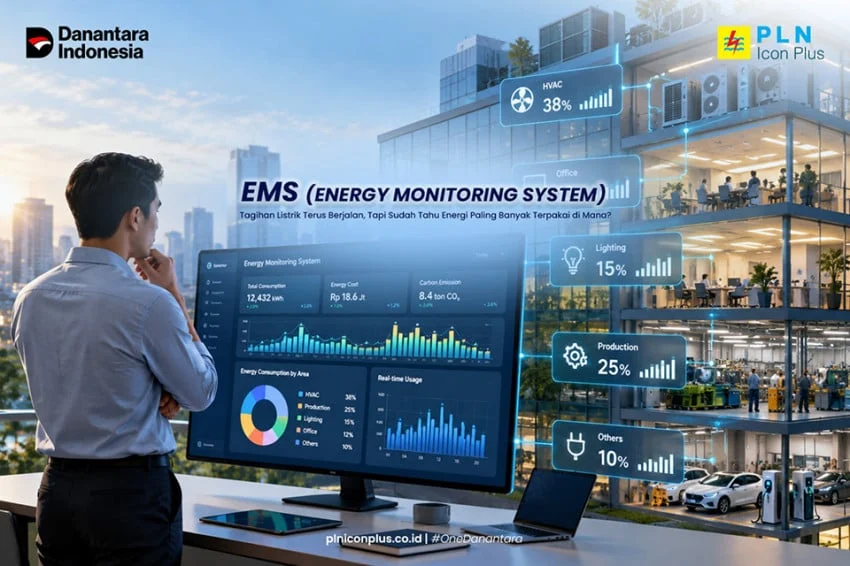
Corporate energy management has transitioned from a routine administrative back-office task into a strategic boardroom priority. As commercial and industrial enterprises expand their operational footprints across multiple regions, managing distributed portfolios of offices, warehouses, manufacturing facilities, and retail branches introduces profound complexities. Traditionally, energy oversight was limited to the reactive processing of monthly utility bills. However, escalating operational expenditures, tightening global sustainability frameworks, and increasingly stringent national regulations have rendered legacy approaches obsolete. Modern enterprises now require deep, real-time visibility into how, when, and where energy is consumed across their entire asset ecosystem.
This paradigm shift is particularly acute in emerging economies experiencing rapid industrialization and urbanization. In Indonesia, the corporate landscape is undergoing a structural transformation driven by both economic imperatives and regulatory mandates. The Indonesian government has intensified its push toward structured, measurable energy governance, compelling corporations to rethink their consumption patterns. At the forefront of this technological and regulatory convergence is the Energy Management System (EMS), a sophisticated digital infrastructure designed to centralize, analyze, and optimize enterprise-wide energy utilization through a single integrated platform.
The Evolving Regulatory Framework for Energy Conservation in Indonesia
The push toward comprehensive energy management is not merely a voluntary corporate pursuit; it is increasingly backed by robust legislative frameworks. The Indonesian government, through the Ministry of Energy and Mineral Resources (ESDM), has established clear legal benchmarks to accelerate national energy conservation goals.
A cornerstone of this regulatory push is the issuance of Ministry of Energy and Mineral Resources Regulation Number 8 of 2025 concerning Energy Management. This regulatory instrument strengthens the implementation of structured energy management practices across designated industrial and commercial sectors, serving as a critical operational framework for Government Regulation (PP) Number 33 of 2023 on Energy Conservation. Under these directives, large energy-consuming entities are legally obligated to systematically monitor their energy efficiency, appoint certified energy managers, and implement systematic conservation plans.
Historically, compliance with such regulations required extensive manual audits, fragmented data collection across disparate regional branches, and cumbersome reporting mechanisms. Enterprises struggled to reconcile data from various utility providers, legacy meters, and diverse operational facilities. This administrative friction often resulted in delayed compliance reporting, undetected energy leaks, and missed opportunities for cost optimization. The advent of advanced digital platforms has transformed this landscape, enabling organizations to automate compliance monitoring while simultaneously capturing actionable operational insights.
The Operational Complexities of Multi-Site Energy Management
For enterprises operating across archipelago nations or vast geographical regions, energy management presents unique logistical hurdles. A retail chain with hundreds of storefronts, a telecommunications provider managing thousands of remote base transceiver stations, or a financial institution overseeing a widespread network of branch offices faces severe visibility gaps.
When energy consumption data remains siloed within individual regional branches or physical utility bills, facility managers lack the comparative analytics needed to identify anomalies. For instance, an air-conditioning system malfunctioning in a branch office in Sumatra may go unnoticed for weeks if management only reviews aggregated corporate utility expenditures. Similarly, peak-hour energy tariffs, reactive power penalties, and inefficient equipment aging often escape detection in the absence of continuous, automated telemetry.
Furthermore, modern corporate governance demands rigorous accountability regarding Environmental, Social, and Governance (ESG) performance. Investors, financial institutions, and global supply chain partners increasingly demand transparent, auditable data concerning corporate carbon footprints and greenhouse gas emissions. Calculating Scope 1, Scope 2, and Scope 3 emissions requires granular data on electricity consumption, fuel combustion, and energy efficiency metrics. Without a centralized digital repository, compiling these metrics for annual sustainability reports becomes a labor-intensive and error-prone endeavor.
Centralized Intelligence: The Role of Advanced Energy Management Systems
To address these systemic challenges, digital solutions such as the Energy Management System (EMS)—specifically platforms developed by technology providers like PLN Icon Plus—have emerged as indispensable tools for corporate sustainability and operational efficiency.
An advanced EMS acts as a centralized digital nervous system for enterprise energy consumption. By integrating Internet of Things (IoT) sensors, smart meters, and building management systems into a unified cloud-based interface, the platform aggregates real-time data from geographically dispersed facilities. Decision-makers no longer need to navigate multiple utility portals or manually process paper invoices; instead, they can access a comprehensive dashboard displaying real-time consumption metrics, historical usage trends, and predictive analytics.
The technical architecture of a modern EMS is designed to handle vast streams of telemetry data securely and efficiently. Key functionalities typically include:
- Real-Time Telemetry and Monitoring: Continuous tracking of voltage, current, power factor, and active energy consumption across individual circuits or equipment groups.
- Automated Smart Meter Integration: Seamless synchronization with digital utility meters to capture high-resolution consumption data without manual intervention.
- Centralized Financial Management: Aggregated billing oversight that simplifies the tracking, validation, and collective processing of multi-site utility expenses.
- Anomaly Detection and Predictive Maintenance: Algorithmic identification of unusual consumption spikes, equipment degradation, or operational inefficiencies before they escalate into costly failures.
By aggregating these data streams, enterprises can transition from reactive cost accounting to proactive energy optimization. Facility managers can benchmark energy performance across different branches, identify underperforming assets, and implement targeted efficiency measures that reduce both operational expenditures and environmental impact.
Empowering ESG Agendas and Carbon Accounting
Beyond immediate cost savings, the deployment of an integrated EMS platform serves as a critical enabler for corporate sustainability strategies. As global capital markets increasingly favor enterprises with strong ESG credentials, the ability to measure, verify, and report environmental performance is a significant competitive advantage.
Corporate greenhouse gas (GHG) accounting relies heavily on accurate data regarding electricity consumption and associated carbon emission factors. An advanced EMS automates the translation of kilowatt-hours consumed into equivalent carbon dioxide ($textCO_2$) emissions. This capability allows sustainability officers to track the organization’s carbon footprint in real-time, evaluate the efficacy of carbon reduction initiatives, and generate auditable reports that align with international standards such as the Greenhouse Gas Protocol and Global Reporting Initiative (GRI).
Moreover, as corporations set ambitious net-zero targets and adopt renewable energy transition pathways, an EMS provides the analytical foundation needed to optimize green energy procurement. Whether an enterprise is installing rooftop solar photovoltaics across its warehouse network or purchasing renewable energy certificates (RECs), the platform provides the granular data required to measure the displacement of fossil-fuel-based electricity and verify compliance with internal sustainability milestones.
Strategic Implications for Indonesian Enterprises
The adoption of comprehensive energy management platforms reflects a broader maturation of corporate governance in Indonesia. As energy tariffs fluctuate and regulatory scrutiny intensifies under the auspices of the Ministry of Energy and Mineral Resources, businesses can no longer afford to treat energy as an inelastic overhead cost.
Industry analysts note that the integration of digital energy platforms yields a multi-layered return on investment. On the financial front, optimized consumption patterns and the elimination of billing discrepancies typically generate immediate operational savings. On the regulatory front, automated data aggregation ensures seamless compliance with Ministerial Regulation No. 8/2025 and PP No. 33/2023, mitigating the risk of administrative penalties or operational audits. On the strategic front, enhanced ESG transparency fortifies investor confidence and positions the enterprise favorably within increasingly sustainability-conscious supply chains.
Looking ahead, the convergence of artificial intelligence, cloud computing, and advanced metering infrastructure will further elevate the capabilities of enterprise energy management systems. Future iterations of EMS platforms are expected to feature autonomous demand-response capabilities, enabling corporate facilities to dynamically adjust their power consumption in response to grid conditions, renewable energy availability, and real-time pricing signals.
Conclusion
The transition toward sustainable enterprise operations requires more than corporate pledges; it demands robust technological infrastructure capable of turning data into actionable intelligence. By consolidating multi-site energy consumption, automating billing processes, and streamlining carbon accounting within a single integrated platform, modern Energy Management Systems empower organizations to navigate complex regulatory landscapes while driving operational excellence. As Indonesian enterprises continue to align with national energy conservation goals and global ESG standards, the deployment of centralized digital energy platforms will undoubtedly remain a cornerstone of modern corporate strategy.