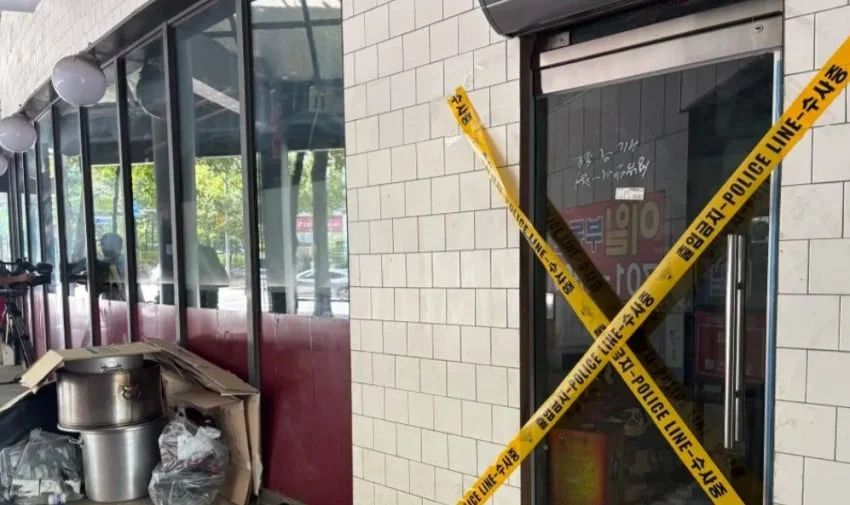
A restaurant located in Seongnam, a major satellite city south of Seoul, South Korea, became the center of an international controversy after it was targeted in a coordinated vandalism attack by a group of Chinese nationals. The establishment, which features the name of Chinese President Xi Jinping, sustained significant property damage during the early morning raid. According to local law enforcement and surveillance footage, the perpetrators meticulously planned the assault before swiftly fleeing South Korea back to mainland China, turning a local civil dispute into a delicate cross-border diplomatic headache.
The incident underscores growing cultural and geopolitical sensitivities involving foreign nationals residing in South Korea, particularly regarding the projection of mainland Chinese political symbols and sensitivities onto foreign soil. As local authorities investigate the breach, questions are mounting over national security, cross-border law enforcement cooperation, and the legal protections afforded to businesses operating in South Korea that utilize controversial or politically charged branding.
Chronology and Details of the Attack
The attack unfolded in the pre-dawn hours of September 24. According to closed-circuit television (CCTV) footage recovered by the Seongnam Police Station, four masked men forced entry into the restaurant. Operating with a degree of coordination that suggested premeditation, the intruders quickly set upon the interior of the dining establishment.
Footage shows the suspects systematically destroying interior furnishings, smashing decorative elements, and spraying lacquer paint across the walls, dining tables, and kitchen equipment. The entire operation lasted only a few minutes, after which the suspects abandoned the scene before local emergency services or law enforcement could be alerted.
Subsequent police investigations revealed that the four perpetrators were Chinese citizens visiting or residing in South Korea. Crucially, immigration records confirmed that the suspects wasted no time following the attack; they traveled directly to a regional airport and boarded flights out of South Korea within hours of the incident, effectively evading immediate apprehension by South Korean authorities.
The Motive and the Owner’s Defense
At the heart of the controversy is the restaurant’s provocative naming choice. The establishment, which specializes in Chinese cuisine, prominently uses the name of China’s top leader, Xi Jinping, in its signage and promotional materials. In the wake of the vandalism, the restaurant’s owner spoke with local South Korean media outlets to clarify the rationale behind the branding, vehemently denying any political alignment, provocation, or hidden agenda.
"I chose the name because I wanted it to be the best Chinese restaurant in South Korea," the owner stated during an interview, emphasizing that the nomenclature was intended as a commercial play for high quality and culinary excellence rather than a political statement. "There was no political intent whatsoever."
Despite the owner’s disavowal of politics, analysts note that the use of a sitting foreign head of state’s name—particularly that of a powerful and polarizing figure like Xi Jinping—carries inherent risks. In an era marked by heightened nationalism and strict controls over the depiction of Chinese leadership abroad, the branding appears to have triggered a visceral reaction among hyper-nationalistic individuals who viewed the restaurant’s name as an offense or a violation of overseas political decorum.
Geopolitical and Cultural Context
The incident occurs against a complex backdrop of shifting diplomatic and societal relations between South Korea and China. While the two nations maintain robust economic ties, public sentiment in South Korea toward China has experienced notable strain in recent years. Polling data consistently indicates growing unfavorable views among the South Korean public regarding China’s foreign policy, economic coercion, and cultural assertions.

Conversely, mainland Chinese nationalism, amplified by strict state media narratives and online platforms, has frequently manifested in intense reactions against perceived slights or disrespect toward China and its leadership, regardless of where they occur globally. Overseas Chinese communities and students have occasionally engaged in clashes or protests in democratic nations like South Korea, the United States, Canada, and Australia regarding issues of national sovereignty, territorial claims, and political loyalty to Beijing.
The decision by the four suspects to target a business using Xi Jinping’s name suggests a motivation rooted in wounded national pride or an ultra-nationalistic interpretation of overseas lese-majesty, whereby the use of the leader’s name by a commercial enterprise without explicit state sanction is viewed as unacceptable. However, legal experts point out that regardless of personal offense, destroying private property in a foreign jurisdiction constitutes a serious criminal offense under South Korean law.
Law Enforcement and International Cooperation Challenges
The rapid departure of the suspects back to China presents a formidable barrier for South Korean investigators. Because the primary suspects have left the country, local police are forced to rely on international legal mechanisms, such as Interpol notices or bilateral judicial assistance treaties, to pursue accountability.
South Korea and China maintain a formal extradition treaty, signed and ratified to facilitate the transfer of fugitives. However, the practical application of this treaty in cases involving property damage of this scale can be legally and diplomatically cumbersome. Extradition proceedings often require extensive diplomatic engagement, proof of dual criminality, and adherence to strict evidentiary standards that can take months or even years to resolve.
Furthermore, diplomatic sensitivities could complicate the pursuit of the suspects. If Chinese authorities perceive the restaurant’s naming convention as provocative or disrespectful, it could dampen Beijing’s appetite for cooperating swiftly with Seoul on extradition requests. Conversely, South Korean law enforcement is under immense domestic pressure to demonstrate that foreign nationals cannot commit crimes on South Korean soil with impunity.
Implications for Local Businesses and Public Safety
The Seongnam vandalism has sparked widespread debate among business owners in South Korea regarding commercial freedom, branding, and security. Small and medium-sized enterprises rely heavily on distinct marketing strategies to stand out in a hyper-competitive culinary market. The incident raises troubling questions about whether businesses must now self-censor their names and themes out of fear of violent blowback from foreign diaspora groups or politically motivated actors.
Business associations in Seoul have called for increased police patrols around foreign-themed establishments and clearer guidelines from the government regarding the protection of commercial properties. Security experts have also urged restaurant and retail owners to upgrade their surveillance systems and implement robust physical security measures, particularly if their businesses incorporate geopolitical or high-profile themes.
Broader Diplomatic Ramifications
As the investigation continues, the incident serves as a stark reminder of how global politics can intersect with daily life at the local level. While Seoul and Beijing strive to maintain stable diplomatic channels, incidents involving grassroots nationalism and cross-border criminality have the potential to inflame public opinion on both sides.
For South Korea, the challenge lies in upholding the rule of law, protecting foreign and domestic business owners alike, and securing accountability through international channels. For China, the case highlights the persistent challenge of managing the behavior of overseas citizens whose expressions of aggressive nationalism can inadvertently damage the country’s soft power and international reputation.
As South Korean authorities press forward with their investigation in cooperation with immigration and international liaison units, the eyes of the public remain fixed on whether justice can be successfully administered across borders for an act of vandalism born of overseas political sensitivity.