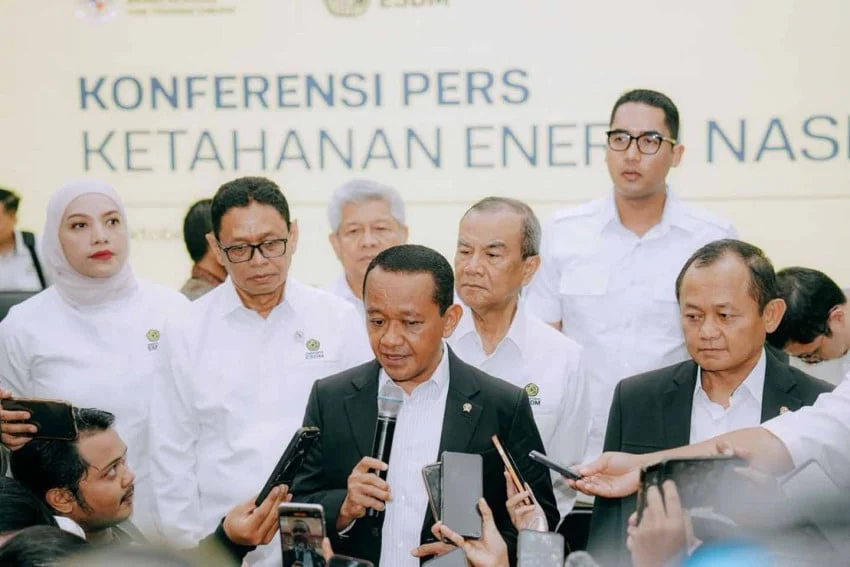
The Government of the Republic of Indonesia has officially implemented a strategic reduction in its pipeline natural gas exports to neighboring nations, redirecting the vital energy resource to secure sufficient supplies for the state electricity company PT Perusahaan Listrik Negara (PLN) and domestic industrial sectors. Coordinating Minister for Downstreaming and Energy Transition, concurrently serving as the Minister of Energy and Mineral Resources (ESDM), Bahlil Lahadalia, formally addressed the policy during a comprehensive press briefing concerning national energy security. Minister Bahlil firmly asserted that the reduction, which amounts to approximately eight percent of the total contracted export volume, remains safely within the minimum threshold established by bilateral and commercial agreements, thereby ensuring that the sovereign action does not constitute a breach of international contract.
The policy adjustment underscores a growing imperative among emerging market economies to balance long-term export commitments with immediate domestic energy security needs. As industrialization accelerates across the Indonesian archipelago and domestic electricity demand climbs, policymakers face mounting pressure to guarantee uninterrupted feedstock for power generation and manufacturing. By curtailing exports rather than defaulting on domestic obligations, the Ministry of ESDM has chosen to navigate the delicate intersection of international trade diplomacy and national economic resilience.
Background Context of the National Energy Landscape and Export Dynamics
To fully comprehend the significance of Minister Bahlil’s recent announcement, one must examine the historical architecture of Indonesia’s natural gas trade. For decades, Indonesia has served as a reliable hydrocarbon supplier to Southeast Asian neighbors, notably Singapore and Malaysia, utilizing extensive subsea pipeline networks originating from major domestic extraction hubs such as the Natuna Sea and the island of Sumatra. These long-term gas sales agreements (GSAs) were forged during eras when domestic consumption was considerably lower and monetization of remote offshore reserves necessitated secure, high-volume export markets.
However, the domestic socio-economic landscape has transformed dramatically over the past two decades. The implementation of ambitious national downstreaming policies—designed to shift the country from an exporter of raw commodities to a producer of high-value refined goods—has triggered a massive surge in domestic energy demand. Energy-intensive industries, including petrochemical plants, fertilizer manufacturers, and mineral processing facilities, rely heavily on stable natural gas supplies to maintain operations. Simultaneously, PLN requires continuous gas inputs to fuel combined-cycle power plants that stabilize regional electrical grids, particularly as the nation gradually phases out older, dirtier coal-fired generation units in line with its carbon reduction commitments.
Chronology of the Energy Security Briefing and Policy Implementation
The sequence of events leading to the reduction in pipeline gas exports unfolded through a combination of scheduled field maintenance operations and proactive governmental intervention. During the weeks preceding the official announcement, several key natural gas extraction facilities in the Natuna Sea and Sumatra regions experienced temporary production declines. These reductions were primarily attributed to mandatory, routine upstream maintenance shutdowns—standard industry procedures designed to ensure the long-term integrity and safety of offshore platforms and subsea pipelines.
Recognizing the potential vulnerability in domestic supply chains, the Ministry of ESDM convened emergency inter-agency assessments involving upstream oil and gas regulatory bodies, state-owned energy enterprises, and major industrial stakeholders. The objective was to evaluate the deficit between projected domestic demand and available supply during the maintenance period. Following these rigorous evaluations, the decision was made to exercise contractual flexibility mechanisms that allow for temporary volume adjustments without violating overarching legal frameworks.
On Monday, October 26, 2026, Minister Bahlil Lahadalia formally unveiled the details of the policy during a widely attended press conference focused on national energy security. Speaking to domestic and international media representatives in Jakarta, Bahlil provided a transparent breakdown of the operational metrics governing the export adjustment, aiming to dispel any diplomatic or commercial concerns regarding Indonesia’s reliability as an energy partner.
Detailed Breakdown of Export Volumes and Contractual Margins
During the high-profile briefing, Minister Bahlil outlined the precise quantitative dimensions of the export reduction. Total baseline pipeline gas exports originating from the Natuna and Sumatra fields stand at approximately 409.55 Million Metric British Thermal Units per Day (MMBTUD). Under the adjustment protocols enacted by the government, an aggregate volume of 31 MMBTUD has been temporarily diverted from export channels to shore up domestic reserves.
"The 31 million [units] that we have cut still resides strictly within the minimum contract threshold," stated Bahlil during the press conference. He elaborated on the legal parameters governing the long-term agreements, emphasizing that international commercial thresholds typically incorporate operational flexibilities designed to accommodate unforeseen upstream maintenance or localized supply disruptions.
According to the Ministry of ESDM’s legal and commercial review, a formal breach of contract would only be triggered if the reduction in contracted supply volumes exceeded ten percent. "And we are currently around eight percent; unless we cut by ten percent, only then would we be in violation of the contract," Bahlil explained, highlighting that the eight percent adjustment provides a safe buffer while successfully fulfilling the immediate shortfall experienced by domestic utilities and industrial consumers.
Reactions and Perspectives from Neighboring Import Partners
The announcement of Indonesia’s export trimming naturally drew immediate attention from regional importing nations, most notably Singapore, which relies on piped natural gas from Indonesian fields to generate a portion of its electricity and power its urban infrastructure. Official statements emerging from Singaporean energy authorities and market analysts sought to reassure domestic stakeholders, noting that the eight percent reduction had been anticipated within diversified energy import strategies.
Singaporean officials and energy sector commentators were quick to point out that imported pipeline gas represents only one component of the nation’s broader energy portfolio, which increasingly incorporates Liquefied Natural Gas (LNG) sourced globally from diverse suppliers across the Atlantic and Middle Eastern markets, alongside expanding investments in regional power grids and solar initiatives. Consequently, initial assessments from importing nations suggested that the localized impact of Indonesia’s 31 MMBTUD reduction would be manageable, accounting for a minor percentage of Singapore’s total aggregate energy requirements.
Nevertheless, diplomatic channels have remained active, with bilateral discussions emphasizing transparency, predictability, and adherence to international commercial norms. Indonesian trade and energy diplomats have reiterated that the supply adjustment is temporary, directly tied to ongoing upstream facility maintenance, and intended to normalize once scheduled maintenance cycles are successfully completed and baseline extraction rates are fully restored.
Domestic Implications for PLN and the National Industrial Sector
Within Indonesia, the decision to redirect 31 MMBTUD of natural gas has been widely welcomed by industrial associations and the management of PLN. The state electricity enterprise has faced mounting operational challenges in balancing grid stability against fluctuating fuel costs and availability. Natural gas serves as a critical bridge fuel, offering cleaner emissions and rapid load-following capabilities compared to traditional fossil fuels, making uninterrupted supply essential for preventing regional brownouts or generation deficits.
Furthermore, the manufacturing and downstream processing sectors have consistently lobbied for prioritized access to domestic hydrocarbons. As Indonesia aggressively pursues its downstreaming agenda—particularly in strategic sectors such as nickel, bauxite, and chemical refining—access to reliable, competitively priced energy is paramount. Industrial leaders have frequently argued that exporting domestic natural gas while local manufacturing plants face feedstock shortages creates an economic paradox that undermines national industrialization goals.
By intervening to secure these supplies, the Ministry of ESDM has signaled a clear policy shift: domestic economic development and energy security take precedence over the maintenance of maximum export volumes, provided such actions remain legally defensible under existing international trade contracts.
Broader Economic Analysis and Future Outlook for Indonesian Energy Policy
The episode highlights broader structural challenges facing Indonesia’s energy sector as it navigates the energy transition. Like many hydrocarbon-producing nations in the Global South, Indonesia is grappling with natural production declines in mature fields while simultaneously facing skyrocketing domestic demand driven by economic growth and population expansion. Attracting new foreign direct investment into upstream exploration and enhanced oil and gas recovery (EOR) technologies remains an urgent priority for the government to reverse output declines and expand total hydrocarbon availability.
Looking ahead, energy economists and policy analysts suggest that similar supply-balancing measures may become increasingly common across the region as climate commitments and resource nationalism intersect. Governments are under mounting pressure to ensure that their domestic populations and industrial bases are insulated from global supply chain volatilities and localized production bottlenecks.
For Indonesia, the successful execution of the eight percent export reduction without triggering international legal disputes or severe diplomatic friction demonstrates a sophisticated approach to energy diplomacy. By operating meticulously within the minimum contractual margins, Jakarta has demonstrated that it can prioritize domestic welfare and industrial resilience while honoring its foundational international commitments. As maintenance operations conclude and upstream fields return to full capacity, the resilience of Indonesia’s energy governance framework will continue to serve as a critical benchmark for regional stability and economic development.