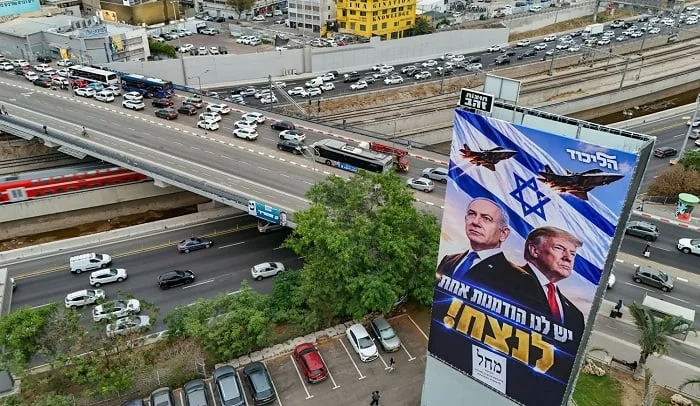
TEL AVIV — Israel finds itself grappling with a profound structural political paralysis following a high-stakes general election that witnessed a surge in voter turnout, yet failed to deliver a decisive majority to either the incumbent ruling coalition or the fragmented opposition bloc. As the dust settles on a fiercely contested electoral cycle, the political landscape is defined by a familiar deadlock, complicated further by a shifting demographic and ideological reality. With neither the right-wing alliance led by Prime Minister Benjamin Netanyahu nor the diverse, Zionist-dominated opposition able to secure the magic threshold of 61 seats in the 120-member Knesset, intense speculation has turned toward a once-unthinkable proposition: could Zionist political factions finally break the historical taboo and partner with Arab-majority parties to form a stable government?
The election, widely characterized by political analysts as one of the most critical in the nation’s modern history, saw an impressive 77.7 percent voter turnout among eligible citizens—the highest participation rate recorded since 1999. This heightened civic engagement was mirrored within the Arab-Israeli sector, which accounts for approximately one-fifth of the country’s total population. Estimates indicate that Palestinian citizens of Israel participated at a rate of roughly 80 percent, defying predictions of widespread voter apathy and signaling a determined effort to leverage political representation for community interests.
Chronology and Current Electoral Tallies
The polling took place on a Tuesday, immediately galvanizing the nation as exit polls rolled in late into the evening. By Wednesday afternoon, with nearly 80 percent of the ballots tallied, the contours of the electoral outcome began to solidify, though final, certified results remain pending.
The incumbent coalition, anchored by Prime Minister Benjamin Netanyahu’s right-wing Likud party alongside its traditional ultra-Orthodox and nationalist allies, secured 54 seats. While formidable, this total falls significantly short of the 61-seat majority required to govern effectively. On the opposing side of the political spectrum, a loose coalition of Zionist parties—championed by former military chief of staff Gadi Eisenkot and encompassing a broad ideological array from Yair Golan’s left-leaning Democrats to Avigdor Lieberman’s hawkish, secular Yisrael Beiteinu—managed to capture 49 seats. Like their rivals, this eclectic opposition bloc lacks the numbers to independently command a parliamentary majority.
Trapped between these two warring camps are the Arab-majority political factions, specifically the Islamist Ra’am party and the broader secular-nationalist Joint List alliance. Together, these entities captured a combined 17 seats, instantly catapulting them into the coveted role of kingmakers. Theoretically, this bloc possesses more than enough leverage to push either the incumbent government or the opposition across the 61-seat threshold, granting them the power to elect a favorable speaker of the Knesset, pass crucial legislation, and cement a functioning administration.
The Path Forward: Procedural Roadmap and Constitutional Deadlines
While the preliminary numbers provide a snapshot of the deadlock, the official mechanics of government formation are governed by strict constitutional protocols managed by the executive branch of the state.
Following the completion of vote counting—expected to be finalized by Friday, with the official, certified results slated for formal publication on November 4—President Isaac Herzog will initiate a series of formal consultations. The head of state will meet individually with the leaders of all elected parliamentary factions to gauge their recommendations for the premiership.
Based on these consultations, President Herzog will task the candidate he deems to have the highest probability of assembling a viable coalition with the official mandate to form a government. Under Israeli basic laws, the designated prime-minister-designate is granted an initial window of 28 days to negotiate coalition agreements and present a cabinet to the Knesset for a vote of confidence. If negotiations stall, the president holds the constitutional authority to grant a single 14-day extension.
Should the primary candidate fail to secure a governing majority within this timeframe, the mandate does not automatically trigger new elections. Instead, the president can transfer the mandate to a different lawmaker, who is then given 28 days to attempt the same feat. If all parliamentary avenues for coalition-building are exhausted, the Knesset is legally dissolved, plunging the country back into another expensive and destabilizing national election cycle, while the outgoing cabinet continues to function in a caretaker capacity.
Background Context: The Evolution of Arab Political Integration
The notion of relying on Arab-majority parties to form or sustain a government in Israel has historically been treated as an absolute red line by the mainstream Zionist political establishment—both on the right and much of the center. For decades, traditional Zionist parties maintained an unspoken yet rigid taboo against including Arab factions in government coalitions, questioning their loyalty to the state’s Jewish character and their positions on the Israeli-Palestinian conflict.
However, this paradigm experienced a historic fracture during the tenure of the short-lived "change government" led by Naftali Bennett and Yair Lapid, when Ra’am, led by Mansour Abbas, broke away from traditional opposition tactics to enter a governing coalition. Abbas argued that pragmatism and direct participation in the levers of power were essential to addressing the socio-economic crises, violent crime rates, and infrastructure deficiencies plaguing Arab towns and cities.
Despite that precedent, the broader political mainstream remains deeply divided. Right-wing factions fiercely reject any political architecture reliant on what they label as non-Zionist or anti-Zionist elements, viewing such partnerships as a threat to national security. Conversely, a faction within the center-left opposition argues that excluding 20 percent of the population’s elected representatives from the democratic process undermines the legitimacy of governance itself.
Implications and Broader Analytical Perspectives
The current political impasse exposes deep ideological fractures within Israeli society that extend far beyond simple parliamentary arithmetic. The near-even split between the Netanyahu-led bloc and the anti-Netanyahu opposition reflects a nation deadlocked not only on governance, but on fundamental questions regarding the judiciary, economic policy, regional diplomacy, and security doctrine.
From an analytical standpoint, the reliance on minority factions as kingmakers introduces profound volatility into the legislative process. If a Zionist-led faction chooses to break the historical taboo and actively court Arab parties, it risks alienating nationalist hardliners within its own ranks, potentially triggering internal defections before a coalition is even sworn in. On the other hand, continuing to exclude Arab parties risks cementing a permanent state of political paralysis, leading to governance by temporary caretaker administrations that struggle to pass vital state budgets or address pressing domestic and international challenges.
As Israel awaits the final certification of election results in early November, all eyes remain fixed on President Herzog’s residence and the backroom negotiations unfolding among party leaders. Whether the political elite can transcend historical dogmas to forge an unconventional governing alliance—or whether the nation is destined to return to the ballot box—remains one of the most compelling and consequential questions in contemporary Middle Eastern politics.