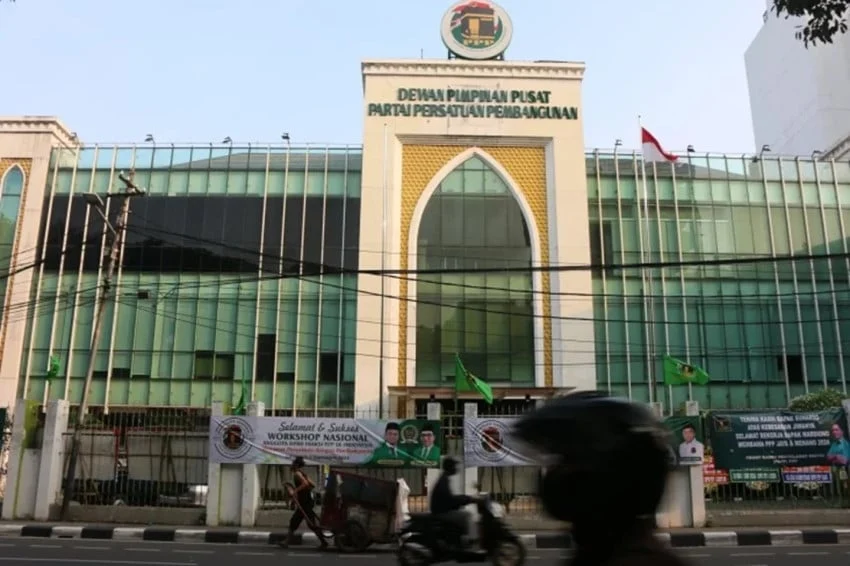
The recent decision by the Central Executive Board of the United Development Party (Dewan Pimpinan Pusat Partai Persatuan Pembangunan or DPP PPP) to dismiss prominent figures, including Deputy General Chairperson Agus Suparmanto and Secretary-General Taj Yasin, has ignited substantial discussion within Indonesian political circles. Headquartered on Jalan Diponegoro in Central Jakarta, the party leadership’s decisive move is increasingly viewed by regional stakeholders and legal representatives as a critical juncture. Rather than signaling purely internal instability, analysts and party insiders suggest this administrative realignment could serve as a vital catalyst for organizational consolidation, structural rehabilitation, and strategic repositioning ahead of the upcoming 2029 general elections.
This leadership overhaul underscores the complex internal dynamics currently shaping one of Indonesia’s historic Islamic political parties. As the political landscape shifts toward the next electoral cycle, party administrators face mounting pressure to resolve internal friction, streamline operational directives, and present a unified front to the electorate. The dismissal of high-ranking officials reflects a calculated, albeit sharp, administrative approach designed to eliminate ambiguity and establish a definitive chain of command within the national headquarters.
Legal and Regional Perspectives on the Administrative Purge
The decision to relieve Agus Suparmanto and Taj Yasin of their respective duties has drawn varied reactions from regional chapters and legal advisors affiliated with the party. Zakirudin Chaniago, legal counsel for the PPP Banten Regional Leadership Council (Dewan Pimpinan Wilayah or DPW), expressed strong support for the central board’s actions. According to Zakirudin, the implementation of strict organizational measures demonstrates a necessary commitment to resolving internal discord decisively rather than allowing factional ambiguity to weaken the party’s institutional integrity.
In public remarks addressing the situation, Zakirudin emphasized that decisive executive action is indispensable for maintaining operational clarity. "In my view, the stance and actions taken by the DPP PPP are extremely precise and clearly far better than adopting an ambiguous position," Zakirudin stated. By cutting through internal indecision, the central leadership has paved the way for the organization to pivot its attention toward pressing political agendas and long-term electoral preparation.
Nevertheless, regional observers have also noted the timing of the restructuring. Zakirudin acknowledged that while the administrative intervention carries considerable merit, it arrives relatively late in the current political cycle. Despite this temporal disadvantage, he maintains that the party retains adequate runway to orchestrate a comprehensive internal recovery. "Although somewhat late, there is still an opportunity for recovery," he added, highlighting the resilience required to mend internal fractures and rebuild grassroots confidence ahead of future legislative contests.
Background Context and the Historical Weight of PPP
To fully understand the gravity of the recent leadership changes at the Jalan Diponegoro headquarters, one must examine the historical trajectory and contemporary challenges facing the United Development Party. Established in January 1973 through the amalgamation of several Islamic political parties—namely Nahdlatul Ulama (NU), Parmusi, PSII, and Perti—PPP has long occupied a foundational space in Indonesia’s democratic landscape. As one of the enduring political entities surviving the Suharto era and transitioning into the reformasi period, the party has traditionally positioned itself as a primary political vehicle for traditionalist and modernist Muslims.
However, recent electoral cycles have proven exceptionally challenging for the organization. In the 2019 general election, PPP narrowly crossed the parliamentary threshold of four percent, securing approximately 13.5 million votes (or 4.52 percent of the national total). The subsequent 2024 general election brought even greater distress, as preliminary and official vote tallies indicated that the party failed to secure the requisite four percent threshold to retain its seats in the national parliament (DPR RI) for the 2024–2029 term. This historic setback triggered profound introspection, widespread evaluation of party management, and demands for comprehensive structural reform from regional cadres across the archipelago.
The inclusion of high-profile figures such as Taj Yasin—commonly known as Gus Yasin, a prominent cleric and former Vice Governor of Central Java—alongside Agus Suparmanto, a former Minister of Trade during the Jokowi administration, underscores the high stakes involved in the current leadership dispute. Gus Yasin’s lineage as the son of the late charismatic NU cleric Maimun Zubair (Mbah Moen) lends him immense moral and cultural authority, particularly within traditionalist Islamic communities. His removal from the secretary-general position highlights the delicate balance the party must strike between political modernization and maintaining its foundational connection to religious leaders and ulama.
Chronology of Internal Tensions and Administrative Decisions
The friction leading up to the recent dismissals did not emerge in a vacuum. Over the past several years, tensions within the DPP PPP have periodically surfaced regarding electoral strategies, coalition alignments, and internal governance. The chronology of events leading to the sweeping administrative changes involves several critical milestones:
- Post-Election Evaluation (Early 2024): Following the disappointing results of the February 2024 legislative elections, wherein PPP failed to meet the parliamentary threshold, local and regional chapters intensified demands for an extraordinary national congress and a complete audit of the party’s central leadership.
- Mounting Policy Disagreements (Mid to Late 2024): Divergences in vision between executive members concerning party positioning, administrative centralization, and regional autonomy created operational bottlenecks within the Jalan Diponegoro office.
- Escalation of Disciplinary Measures (Late 2025 to Early 2026): As efforts to mediate internal factions stalled, the central board initiated formal disciplinary reviews, scrutinizing the performance and compliance of key officeholders.
- Formal Dismissal Announcement (Late October 2026): The DPP PPP officially announced the removal of Agus Suparmanto as Deputy General Chairperson and Taj Yasin as Secretary-General, citing the necessity of enforcing organizational discipline and restoring strategic coherence.
This sequence of events illustrates an organization grappling with the painful realities of electoral defeat and attempting to cauterize internal divisions through decisive, albeit disruptive, administrative restructuring.
Implications of the Shakeup for the 2029 Electoral Cycle
The dismissal of top executives carries profound implications for the party’s rehabilitation and its preparations for the 2029 general elections. Political analysts point out that successfully navigating this transition will require more than mere administrative shuffling; it demands a fundamental re-engagement with the party’s core constituency.
1. Restoring Grassroots Confidence
The removal of senior figures risks alienating specific regional factions and demographic blocs loyal to the dismissed leaders. To counteract potential fragmentation, the remaining central leadership must actively engage regional branches, ensuring that local grievances are addressed transparently. Rebuilding trust from the bottom up is essential for mobilizing volunteers, donors, and voters ahead of 2029.
2. Re-establishing Relations with Religious Authorities
Given Taj Yasin’s deep-rooted connections to the ulama community, his departure raises concerns regarding PPP’s historical identity as a party guided by Islamic scholars. Public statements from figures within the party have emphasized that PPP must continue to seek guidance from ulama rather than alienating them. Reassuring religious leaders that the party remains committed to its ethical and spiritual foundations will be a critical diplomatic task for the new executive team.
3. Administrative Streamlining and Financial Audit
An effective turnaround strategy necessitates a rigorous review of internal finances, communication channels, and policy formulation processes. Eliminating bureaucratic inefficiencies at the central office will allow the party to allocate resources more strategically, focusing on grassroots organizing and candidate recruitment well in advance of the next electoral cycle.
Official Responses and Broad Reactions
Reactions from across the political spectrum reflect both concern and guarded optimism regarding the future of the organization. While some critics argue that frequent internal purges reflect chronic instability within Indonesia’s Islamic parties, supporters maintain that pruning stagnant leadership is a necessary prerequisite for renewal.
Senior party cadres have stressed that the organization must transcend personal ambitions and focus on collective institutional survival. Statements emanating from regional leadership councils indicate a willingness to support structural reforms, provided the central board maintains open channels of communication and respects regional autonomy. Furthermore, external observers note that political parties outside the parliamentary circle often undergo similar cycles of contraction and reinvention as they rebuild their infrastructure away from the immediate pressures of legislative governance.
Conclusion and Future Outlook
The decision by the DPP PPP to dismiss Agus Suparmanto and Taj Yasin marks a watershed moment in the contemporary history of the party. While the move carries inherent risks of deepening internal schisms and alienating key constituencies, regional defenders like legal counsel Zakirudin Chaniago view it as a courageous and timely step toward organizational clarity. By rejecting ambiguity and enforcing administrative discipline, the party leadership aims to clear the ideological and structural debris left in the wake of the 2024 electoral setbacks.
As the organization looks toward the horizon of 2029, its ultimate success will depend on its ability to bridge the gap between administrative restructuring and grassroots reconciliation. Reclaiming its historical identity, healing internal fractures, and maintaining strong ties with the religious community will be the definitive tests for the party as it attempts a comprehensive organizational recovery from its headquarters on Jalan Diponegoro.