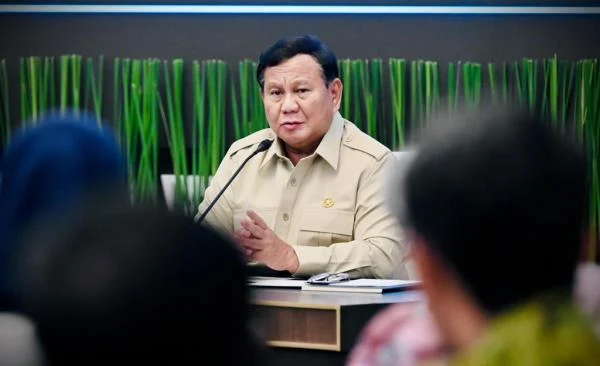
President Prabowo Subianto has issued a stern directive to local government officials, demanding the immediate revocation of eight regional regulations (Peraturan Daerah or Perda) that permit the burning of up to two hectares of land. During a high-level coordination meeting focused on the mitigation of forest and land fires (Karhutla) held at the Presidential Palace in Jakarta on Thursday, September 24, 2026, the President emphasized that such legal loopholes serve as primary catalysts for uncontrollable environmental disasters, particularly in vulnerable peatland regions.
The President’s instruction marks a significant shift in national policy, signaling a transition from localized, lenient agricultural practices toward a more centralized and uncompromising approach to environmental preservation. By labeling the existing regulations as both "nonsense" and "deceptive," the administration has signaled that the era of tolerating "small-scale" burning as a traditional farming method is coming to an end.
The Dangers of the Two-Hectare Loophole
For years, certain regional administrations in Indonesia have maintained regulations that allow local farmers to clear up to two hectares of land using fire, provided they notify local authorities and adhere to specific safety protocols. Proponents of these rules have historically argued that this provides smallholder farmers with a low-cost, effective method for land preparation.
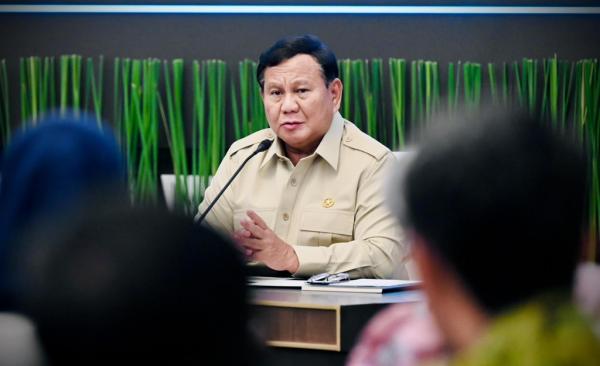
However, President Prabowo challenged the logic behind this, noting that in the context of Indonesia’s geography—particularly the highly flammable peatlands—the notion of "controlled" burning is a fallacy. During the meeting, he posed a rhetorical question to the experts present: "If one person burns two hectares, how do you stop that fire? It is impossible for a single individual to contain a fire that quickly covers an area equivalent to a football field. It is logically inconsistent to permit an activity that carries such a high risk of systemic destruction."
The President’s assessment is supported by environmental scientists who point out that peatland fires do not merely burn the surface; they penetrate deep into the carbon-rich soil, creating underground hotspots that can smolder for weeks or months. These subterranean fires are notoriously difficult to extinguish, often resurfacing miles away from the initial site of ignition, which renders the "two-hectare limit" practically irrelevant once the blaze becomes established.
A Chronology of Escalating Concerns
The issue of Karhutla has been a recurring crisis in Indonesia, with significant spikes occurring throughout the 2020s. The timeline of this year’s crisis reflects the urgency behind the President’s recent statements:
- Early August 2026: Meteorological services reported an early onset of the dry season, compounded by the Indian Ocean Dipole effect, leading to heightened fire risks across Kalimantan and Sumatra.
- September 9, 2026: Authorities in Siak, Riau, successfully prosecuted four individuals for illegal land clearing, highlighting the ongoing tension between law enforcement and local agricultural practices.
- September 13, 2026: The Head of the National Disaster Management Agency (BNPB), Suharyanto, issued a public warning, urging citizens not to hide behind regional regulations to justify land burning, asserting that state-level environmental protection mandates supersede local ordinances.
- September 23, 2026: A major scandal broke in Mempawah, where an elected member of the regional legislative council (DPRD) was linked to land clearing for palm oil cultivation via fire, triggering a police investigation and a public outcry.
- September 24, 2026: President Prabowo convenes the emergency coordination meeting at the Presidential Palace, where he officially calls for the correction of the eight identified regency-level Perdas.
Supporting Data and Environmental Impact
The environmental stakes of this policy shift are immense. Indonesia holds some of the world’s largest tropical peatland carbon stocks. When these areas are burned, they release massive amounts of carbon dioxide, contributing significantly to global greenhouse gas emissions. According to satellite monitoring data from the Ministry of Environment and Forestry, over 60% of fire hotspots detected in recent years have been traced back to areas where land clearing was being prepared for monoculture plantations, such as oil palm or timber.

While proponents of the current laws claim that smallholder farmers are being unfairly targeted, economic analysis suggests that the cumulative impact of thousands of "two-hectare fires" creates a regional haze that disrupts public health, aviation, and cross-border relations. During the 2015 and 2019 fire crises, the economic losses for Indonesia were estimated to be in the tens of billions of dollars, stemming from healthcare costs due to respiratory illnesses, school closures, and the loss of tourism and trade revenue.
Official Responses and Legal Challenges
The directive from President Prabowo places local governments in a difficult position. Regencies that have codified these burning practices into law must now navigate the legal process of repealing or amending their ordinances to align with national environmental standards.
Legal experts note that the hierarchy of laws in Indonesia dictates that local regulations cannot contradict national laws, including the Environmental Protection and Management Law. By identifying these eight specific Perdas, the President has essentially put these local administrations on notice. Failure to comply could lead to the central government taking direct administrative action, potentially through the Ministry of Home Affairs, which holds the authority to annul regional regulations that are deemed to be in violation of higher-level legislation or detrimental to the public interest.
The National Disaster Management Agency (BNPB) and the police have welcomed the President’s stance. For law enforcement agencies, the "two-hectare loophole" has long been a significant hurdle in prosecuting arsonists. Often, suspects would present the regional regulation as a defense in court, claiming their actions were authorized by local law, even if the fire spread far beyond their property boundaries. Clarifying that no such loophole exists will streamline the judicial process and provide police with the mandate to enforce a "zero-burning" policy across the archipelago.

Broader Implications for Sustainable Agriculture
The shift away from fire-based land clearing is expected to accelerate the government’s push for "Zero Burning" agricultural technology. The government has signaled that it intends to increase support for smallholders by providing access to mechanized clearing equipment and training in non-fire land preparation techniques.
However, the transition will not be without its challenges. Smallholder farmers often cite the high cost of manual labor and the unavailability of machinery as the primary reasons they rely on fire. Addressing the systemic causes of these fires requires more than just a change in regulation; it requires a robust economic strategy that makes sustainable farming more profitable and accessible than the "slash-and-burn" method.
As the government moves to strike down these eight Perdas, the focus will now shift to the implementation phase. Environmental NGOs have lauded the move as a long-overdue step toward fulfilling Indonesia’s climate commitments under the Paris Agreement. Yet, they caution that enforcement must be applied uniformly, ensuring that not only small-scale farmers but also large-scale plantation operators are held accountable for their role in the fire crisis.
President Prabowo’s firm stance marks a pivotal moment in Indonesia’s environmental governance. By removing the legal cover that has protected fire-based land clearing for years, the administration is betting that a stricter regulatory environment, combined with better support for sustainable farming, will finally break the cycle of seasonal haze that has plagued the nation for decades. The coming months will be a test of how effectively these central directives can be translated into action at the regency level, and whether the country can finally move toward a fire-free future for its vital peatland ecosystems.