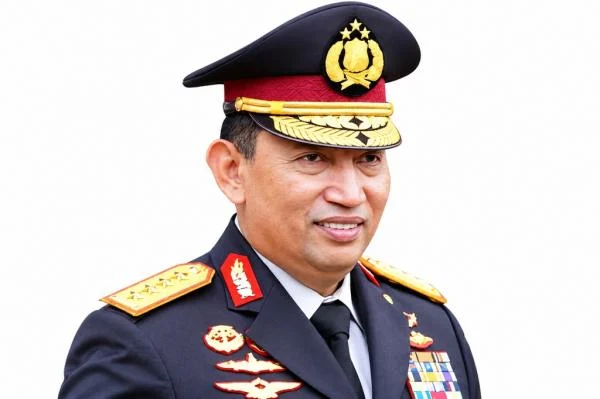
The Indonesian National Police (Polri) is set to conduct a high-profile session of the Professional Code of Ethics Commission (KKEP) on Thursday, November 26, 2026, targeting former National Police Chief General Listyo Sigit Prabowo. This unprecedented disciplinary proceeding centers on grave allegations involving the illicit wiretapping of President Prabowo Subianto and suspected involvement in activities categorized as treason or makar. The case, which has sent shockwaves through the Indonesian political and security establishment, involves multiple high-ranking police officials and marks a significant moment in the country’s modern legal history.
The hearing, scheduled to commence at 09:00 WIB, represents the culmination of an intensive internal investigation conducted by the police’s professional oversight body. Given the gravity of the accusations and the seniority of the subject, the National Police leadership has assembled a panel of five three-star generals (Commissary Generals) to preside over the proceedings. This panel is tasked with evaluating the evidence regarding whether the former Chief of Police breached his professional oath and the established regulations governing the conduct of high-ranking law enforcement officers.
The Chronology of Events and Escalation
The investigation into the alleged wiretapping and treasonous activities gained momentum late in 2026. According to official disclosures, the case originated from a security breach identified within the executive branch, which eventually led to intelligence reports suggesting that sensitive communications belonging to President Prabowo Subianto were being intercepted.
Following these reports, the Attorney General’s Office (Kejagung) became heavily involved, deploying a team of 32 prosecutors to handle the criminal aspects of the investigation. The coordination between the police internal affairs division and the Prosecutor’s Office signals that the scope of the inquiry extends far beyond mere administrative breaches of conduct. The transition from an internal investigation to a full-scale criminal probe involving the Attorney General’s Office underscores the severity of the charges.
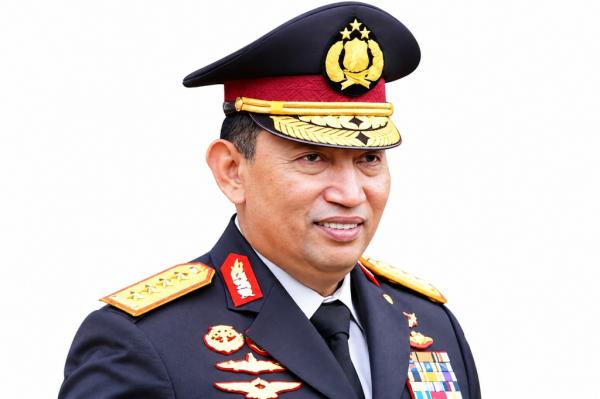
By November 24, 2026, the Karo Penmas of the Public Relations Division of the National Police, Brigadier General Trunoyudo Wisnu Andiko, confirmed the status of the former Chief of Police as a "suspected violator" (terduga pelanggar). This formal designation paved the way for the KKEP hearing. The timeline of the case has been compressed, reflecting the urgency felt by the current government to address perceived threats to state stability and the integrity of the presidency.
Composition of the Ethics Commission
The selection of the KKEP panel is a matter of strategic importance for the Polri. The commission is led by Commissary General Hendro Pandowo, a figure of significant standing within the police force. Notably, Hendro Pandowo is a member of the 1991 graduating class of the Police Academy (Akpol), the same cohort as Listyo Sigit Prabowo.
In legal and professional standards, the inclusion of peers or individuals of equivalent rank on an ethics board is designed to ensure that the process remains rigorous and impartial. By appointing five three-star generals to the panel, the National Police leadership is attempting to project an image of institutional accountability. This configuration aims to mitigate potential accusations of bias or external pressure, ensuring that the former Chief of Police faces a jury of his professional equals.
Legal and Institutional Context
The charges of "makar" or treason in the Indonesian legal context are among the most severe under the Criminal Code (KUHP). Article 104, 106, and 107 of the Indonesian Criminal Code stipulate heavy penalties for anyone found guilty of conspiring to topple the government or undermine the authority of the state. When these accusations are levied against high-ranking law enforcement officials—individuals entrusted with the security of the state—the implications for national security are profound.
The allegation of unauthorized wiretapping further complicates the matter. Under Law No. 11 of 2008 concerning Electronic Information and Transactions (ITE) and its subsequent amendments, the unauthorized interception of electronic information is a criminal offense. The potential involvement of police officers in such activities raises critical questions regarding the oversight of surveillance tools and the extent to which intelligence capabilities may have been diverted for political purposes.

Analysis: Implications for the National Police
The trial of a former National Police Chief is a rare event that forces an institution to grapple with its internal culture, governance, and the boundaries of political neutrality. Historically, the Indonesian National Police has operated as an independent body under the direct authority of the President. The fact that the subject of the investigation is a former Chief of Police suggests a significant shift in the internal accountability mechanisms of the institution.
- Institutional Trust: The willingness of the current police leadership to subject a former Chief to an ethics trial is an attempt to restore public trust. By transparently handling the investigation, the Polri hopes to demonstrate that no officer, regardless of their past rank, is above the law.
- Political Stability: The involvement of the Attorney General’s Office and the nature of the "treason" charges suggest that this case is intimately tied to the stability of the current administration. A successful prosecution could be seen as a necessary cleansing of the security apparatus, while any perceived failure in the trial could exacerbate political tensions.
- Internal Morale: The case inevitably creates friction within the ranks of the National Police. The "Akpol 1991" network and other influential cliques within the force are being tested as the institution navigates this crisis. The leadership must balance the need for justice with the need to maintain order and cohesion among the officers.
Official Responses and Future Outlook
While official statements from the police have remained strictly focused on the procedural aspects of the ethics hearing, the broader political environment remains tense. The 32-member prosecution team from the Attorney General’s Office is reportedly preparing for a lengthy legal battle, indicating that the ethics hearing is only the first of several hurdles the accused will face.
Legal experts have noted that the outcome of the KKEP hearing will serve as a significant indicator of the trajectory of the criminal case. If the ethics commission finds the former Chief guilty of severe professional misconduct, it would likely bolster the prosecution’s case in the civilian courts. Conversely, if the commission exonerates him, it would create a significant legal and political conflict between the National Police and the Attorney General’s Office.
As the proceedings unfold on November 26, the public and observers alike will be watching for signs of procedural transparency. The use of a high-level commission and the involvement of senior-level investigators suggest that the state is prepared to pursue the case to its logical conclusion, regardless of the political cost.
Conclusion
The upcoming ethics hearing for Listyo Sigit Prabowo is more than a disciplinary meeting; it is a critical test of Indonesia’s legal and security institutions. As the nation watches, the outcome will likely define the standards of conduct for high-ranking officials for years to come. Whether this serves as a landmark case for institutional reform or a source of further political instability remains to be seen, but the gravity of the charges—treason and unauthorized surveillance—ensures that this episode will remain at the forefront of national discourse for the foreseeable future. The police’s commitment to holding this hearing in the face of such high-stakes allegations suggests a deliberate effort to reinforce the rule of law within its own ranks, signaling that even the highest offices in the security apparatus are subject to the principles of constitutional accountability.