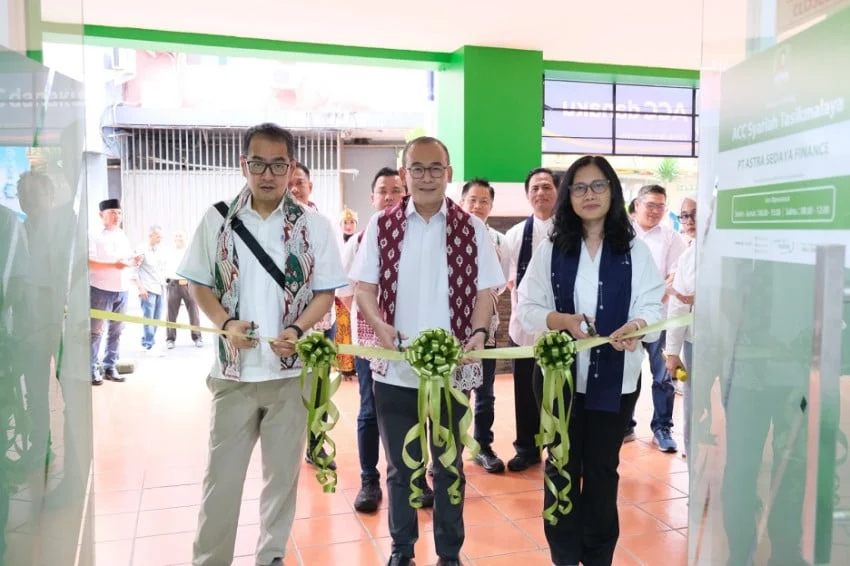
Astra Credit Companies (ACC), a prominent player in Indonesia’s multi-finance sector, has officially reinforced its commitment to bolstering the national Islamic economy by inaugurating its fifth dedicated Sharia branch office. Located strategically in Tasikmalaya, West Java, the new facility represents a significant milestone in ACC’s ongoing corporate strategy to widen the accessibility of ethical, values-based financial services across the archipelago. The grand opening ceremony took place on Tuesday, November 24, 2026, drawing a gathering of top-tier corporate executives, regional management personnel, and local stakeholders.
The newly established ACC Syariah Tasikmalaya branch is situated in a prime commercial hub at Ruko Asia Plaza, along Jalan HZ Mustofa, specifically spanning blocks B9 through B11 in the Tugujaya sub-district of the Cihideung district. This location places the branch at the beating heart of Tasikmalaya’s bustling commercial district, ensuring high visibility and seamless accessibility for both retail and commercial clients seeking comprehensive Islamic financial solutions.
High-Level Attendance and Corporate Representation
The inauguration event was marked by the presence of ACC’s executive leadership team, underscoring the strategic importance of the Tasikmalaya expansion. Among the notable figures in attendance were Chief Operating Officer Devy Santoso Jayadi, Executive Vice President (EVP) of Retail AR Management Dean, and EVP of Retail Operation Jeanny Fransisca Simbolon.
Additionally, the leadership lineup featured the Head of ACC’s Sharia Business Unit (Unit Usaha Syariah/UUS) Wisnu Wardhana, alongside regional operational leaders including Area Sales ACC West Java Rudi Wiseno, Area Operation ACC West Java Thedy Suanda, and Area AR ACC West Java Aryandi Wisnu Dwiputro. The event also highlighted the introduction of the newly appointed branch manager of ACC Syariah Tasikmalaya, who will oversee daily operations and spearhead local market penetration strategies.
Strategic Rationale Behind Choosing Tasikmalaya
The selection of Tasikmalaya as the site for ACC’s fifth Sharia branch is far from accidental. Widely recognized across Indonesia as the "Kota Santri" (City of Islamic Boarding Schools), Tasikmalaya boasts a deeply rooted religious demographic, a strong cultural alignment with Islamic principles, and a thriving regional economy driven by small and medium-sized enterprises (SMEs), textile manufacturing, and local trade.
In his keynote address during the ribbon-cutting ceremony, ACC Chief Operating Officer Devy Santoso Jayadi elaborated on the motivations steering the company toward this West Javan city. He noted that the establishment of the Tasikmalaya branch aligns seamlessly with ACC’s overarching mission to bridge the financial inclusion gap in secondary and tertiary cities outside Indonesia’s primary metropolitan centers.
"Tasikmalaya possesses a unique socio-economic profile defined by a strong religious foundation and dynamic, continuously growing economic potential," stated Jayadi. "This combination creates an exceptionally strategic environment for the cultivation of a healthy, robust, and socially responsible Islamic financial ecosystem. By planting our flag here, we are not merely expanding our physical footprint; we are actively participating in the socio-economic elevation of the local populace through ethical financial instruments."
Fostering Financial Literacy and Inclusion
Beyond commercial expansion, the launch of ACC Syariah Tasikmalaya is positioned as a collaborative catalyst to support initiatives spearheaded by regional governments and the Financial Services Authority (Otoritas Jasa Keuangan/OJK). Indonesia’s financial regulatory bodies have long emphasized the necessity of narrowing the gap between conventional and Sharia financial literacy rates nationwide.
Industry statistics consistently indicate that while public awareness of Islamic finance in Indonesia has risen steadily over the past decade, actual financial inclusion—defined as the active utilization of Sharia financial products—still lags behind conventional alternatives. By establishing physical touchpoints in religiously and culturally receptive regions like Tasikmalaya, ACC aims to demystify Islamic financing, alleviate public skepticism, and drive sustainable economic participation.
"We hope that the presence of this new branch will transcend basic transactional capabilities," Jayadi added. "Our objective is to work hand-in-hand with regional authorities and regulatory bodies to elevate financial literacy and inclusion, thereby unlocking broader, more equitable access to financing for communities that have historically been underserved by conventional banking institutions."
The executive further emphasized that the ultimate measure of success for the Tasikmalaya branch will be its tangible contribution to sustainable regional development. "We expect this office to serve as a reliable conduit for capital, easing the path to economic mobility for local families and entrepreneurs while fostering resilient, long-term growth across the region."
Comprehensive Product Portfolio and Service Offerings
To meet the diverse financial needs of the Tasikmalaya community, ACC Syariah Tasikmalaya rolls out a comprehensive suite of fully compliant Islamic financial products and services. Head of ACC’s Sharia Business Unit Wisnu Wardhana detailed the core offerings available to local consumers during the launch event.
The branch operates under strict adherence to Islamic jurisprudence principles—prohibiting riba (usury), gharar (uncertainty), and maysir (gambling)—while utilizing transparent, contract-based mechanisms such as Murabahah (cost-plus financing) and Mudharabah (profit-sharing).
The primary service pillars at the new branch include:
- Automotive Financing: Comprehensive Sharia-compliant vehicle financing solutions covering both brand-new and pre-owned cars, designed to accommodate personal mobility needs as well as commercial fleet expansions.
- Cash Facility Solutions: Flexible liquidity solutions structured under Islamic financing principles to assist customers facing urgent personal or business capital requirements.
- Hajj Pilgrimage Financing: Dedicated financial planning products structured to assist faithful Muslims in securing their Hajj pilgrimage quotas and managing associated travel costs in a structured, debt-compliant manner.
- Precious Metal (Gold) Financing: ACC’s newly introduced product line enabling customers to acquire gold bullion through secure, structured Islamic financing installments. This offering directly responds to shifting consumer investment trends favoring tangible, inflation-hedge assets over speculative financial instruments.
The introduction of the Precious Metal Financing program is particularly timely. Recent interactive market surveys conducted by ACC revealed a notable shift in consumer sentiment toward wealth preservation, with a vast majority of polled respondents indicating a strong preference for gold investments as a reliable hedge against macroeconomic volatility, outpacing traditional discretionary spending categories such as leisure travel.
Timeline and Evolution of ACC’s Sharia Expansion
The inauguration of the Tasikmalaya branch represents the latest milestone in a calculated, multi-year expansion roadmap executed by Astra Credit Companies through its Unit Usaha Syariah. Over the past several years, ACC has systematically scaled its dedicated Islamic finance operations to capture the burgeoning demand for ethical financial products in Southeast Asia’s largest economy.
The chronological trajectory of ACC’s Sharia branch network expansion underscores this institutional commitment:
- Initial Phase (Foundational Establishment): ACC established the structural framework of its Sharia Business Unit to comply with regulatory mandates requiring conventional financial institutions to carve out dedicated Islamic service windows and independent operating units.
- Network Scaling: Capitalizing on growing consumer demand and supportive macroeconomic tailwinds favoring Islamic banking and finance, ACC began converting and launching standalone Sharia-focused branch offices in high-potential economic corridors.
- Geographic Diversification: Prior iterations of dedicated Sharia branch openings focused on primary economic centers across Java and key outer-island markets, gradually moving toward secondary and tertiary cities characterized by strong demographic alignment.
- Present Milestone (November 24, 2026): The official ribbon-cutting and commencement of operations at the fifth dedicated ACC Syariah office in Tasikmalaya, West Java, cementing the company’s presence in one of the province’s most culturally distinct and economically resilient municipalities.
Broader Market Implications and Economic Impact
The opening of ACC Syariah Tasikmalaya carries significant implications for both the regional economy of West Java and the broader landscape of Indonesia’s national Islamic finance sector.
From a macroeconomic standpoint, Indonesia continues to position itself as a global hub for Islamic economics and finance, supported by the National Committee for Sharia Economics and Finance (KNEKS). However, the realization of national targets hinges heavily on regional implementation—translating high-level state policies into accessible grassroots financial products. By establishing brick-and-mortar operations in regional cities like Tasikmalaya, multi-finance institutions like ACC play an indispensable role in closing the gap between national macroeconomic ambitions and local financial realities.
Furthermore, the integration of diverse financial products—ranging from productive automotive and capital financing to wealth preservation tools like gold ownership and religious milestones such as Hajj financing—demonstrates a holistic approach to consumer well-being. Rather than pushing purely credit-driven consumption, modern Islamic finance models emphasize asset-backed stability and risk-sharing, which inherently promote greater financial resilience among retail borrowers.
As ACC Syariah Tasikmalaya opens its doors to the public, industry analysts will closely monitor its performance as a bellwether for regional Islamic finance adoption in secondary Indonesian cities. If successful, the blueprint established in Tasikmalaya could accelerate further expansion initiatives by ACC into other culturally rich and economically vibrant regions across the country, driving a more inclusive, stable, and equitable financial future for all Indonesians.