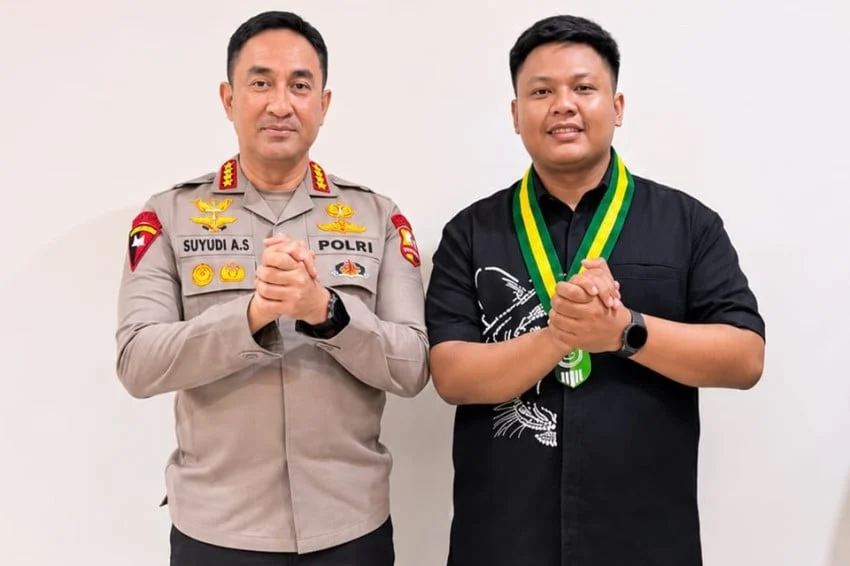
The Pengurus Besar Serikat Mahasiswa Muslimin Indonesia (PB SEMMI) has formally declared its unwavering support for the Indonesian National Police (Polri) in their ongoing investigation into the high-profile allegations of illegal wiretapping targeting President Prabowo Subianto. This stance was articulated by the General Chairperson of PB SEMMI, Achmad Donny, during a high-level youth conference held in Jakarta on Tuesday, November 10, 2026. The event, titled "Negara Harus Berbenah: Indonesia Emas Hancur di Tangan Deep State," served as a focal point for discussions regarding national security, institutional integrity, and the perceived threats posed by shadow actors within the state apparatus.
The Context of the Allegations
The allegations of wiretapping involving the Head of State have sent shockwaves through Indonesia’s political landscape. While specific technical details regarding the interception methods remain classified under active investigation, the scandal has prompted a massive purge within the national security sector. The gravity of the situation was underscored by the recent dishonorable discharge of high-ranking police official Ahrie Sonta, who was dismissed from the force following findings linking him to illegal surveillance activities.
For PB SEMMI, the issue transcends individual misconduct; it represents a fundamental threat to the stability of the nation. Achmad Donny emphasized that the sanctity of presidential communication is a cornerstone of national sovereignty. "PB SEMMI supports the National Police Chief in investigating this matter professionally and transparently until the truth is revealed in its entirety," Donny stated during the conference. The presence of National Police Chief General Suyudi Ario Seto at the event signaled a high level of coordination between law enforcement and civil society organizations in addressing the security breach.
Chronology of the Security Crisis
The unfolding events follow a series of unsettling reports regarding unauthorized data collection and potential breaches of executive privacy. Throughout late 2026, intelligence leaks have become a persistent challenge for the current administration.
- Late October 2026: Initial reports emerge suggesting that sensitive communications from the Presidential Palace were being intercepted by unauthorized entities.
- Early November 2026: Investigative units within the National Police, working in tandem with the State Intelligence Agency (BIN), identify a network of rogue elements allegedly involved in the wiretapping operation.
- November 9, 2026: The official announcement regarding the dishonorable discharge of Ahrie Sonta confirms the severity of the institutional compromise, sending a clear message that the police force is purging its own ranks.
- November 10, 2026: PB SEMMI holds the "Ruang Demokrasi Publik" conference, where the organization officially aligns with the government’s crackdown, framing the effort as a necessary step to protect Indonesia’s "Golden Era" vision from the influence of "deep state" actors.
The "Deep State" Narrative and National Security
The theme of the conference, which explicitly mentioned the term "deep state," reflects growing anxieties among political analysts and student organizations regarding the existence of shadow networks within government institutions. These groups are often accused of pursuing agendas that diverge from the official policies of the executive branch, effectively operating as a "state within a state."
In the context of the wiretapping scandal, the narrative posits that the surveillance was not merely a criminal act, but an attempt to undermine the current administration’s policies—particularly controversial ones such as the proposed comprehensive ban on vaping and electronic nicotine delivery systems. The intersection of this surveillance scandal with the government’s regulatory crackdowns suggests a multi-layered conflict between traditional bureaucratic interests and the President’s reformist agenda.
Implications of the Wiretapping Scandal
The security breach has profound implications for both domestic policy and international relations. Firstly, it undermines public trust in the security apparatus. When a high-ranking official is implicated in spying on the President, the internal checks and balances of the country are brought into question.
Secondly, the incident creates significant political friction. If the "deep state" hypothesis holds, the administration must navigate a minefield of internal sabotage while simultaneously attempting to implement its national agenda. The government’s response—the summary dismissal of those involved—is a clear strategy of "scorched earth" to regain control over the security services.
Thirdly, the economic impact of the associated policy debates, such as the vaping ban, cannot be ignored. The vaping industry has lobbied heavily against such restrictions, and some analysts suggest that the political chaos resulting from the wiretapping scandal might be leveraged by special interest groups to distract from or stall legislative progress on public health initiatives.

Official Response and Public Accountability
General Suyudi Ario Seto’s participation in the conference, despite the ongoing crisis, serves as a calculated move to project stability and resolve. By engaging directly with student leaders and civil society, the National Police is attempting to manage the narrative and prevent the scandal from devolving into widespread civil unrest.
"The police are under immense pressure to prove that they are not only capable of catching criminals but also capable of self-correction," notes an independent political analyst monitoring the situation. "The dismissal of Ahrie Sonta is a signal to both the public and internal elements that no one is above the law, regardless of their rank or tenure."
However, observers remain cautious. The success of the investigation will be judged by whether the authorities can reach the "masterminds" behind the surveillance operation. If the investigation stops at the mid-level officers, public skepticism regarding the true extent of the "deep state" influence is likely to persist.
The Role of Student Organizations
PB SEMMI’s involvement highlights the influential role of student organizations in shaping political discourse in Indonesia. Historically, these groups have served as the "moral conscience" of the nation, often acting as a bridge between the government and the grassroots population. By publicly supporting the police in this specific case, PB SEMMI is signaling that while they remain critical of government policy, they prioritize the integrity of the state over political opportunism.
This support, however, is conditional. Achmad Donny’s insistence on "transparency" implies that the student movement will continue to monitor the progress of the investigation. If the investigation falters or is perceived as a cover-up, the support from these student groups could quickly shift to vocal opposition.
Broader Impact on National Stability
As Indonesia looks toward the future, the stability of its democratic institutions remains paramount. The current crisis is a test of resilience for the Prabowo administration. The ability to excise rogue elements from the intelligence and police apparatus will determine whether the government can govern effectively or whether it will remain bogged down by internal strife.
Furthermore, the public discourse surrounding the "deep state" suggests that the government must address the underlying issues of institutional transparency. If citizens feel that state institutions are being weaponized against their own leaders, the social contract risks being severely damaged.
Looking Ahead
The coming months will be critical. The National Police are expected to present further evidence regarding the scale of the surveillance network. Meanwhile, the administration must balance its aggressive anti-corruption measures with the need for national unity.
The case of the presidential wiretapping is far from over. It has exposed deep-seated vulnerabilities within the Indonesian state apparatus and triggered a necessary, albeit painful, process of institutional reform. Whether this leads to a more secure and transparent government or further political fragmentation remains the defining question of the current political cycle.
For now, the message from the streets, channeled through organizations like PB SEMMI, is clear: the people demand accountability, and they expect the National Police to fulfill their mandate without fear or favor. The "Indonesia Emas" (Golden Indonesia) vision, which envisions the nation as a global powerhouse by 2045, depends heavily on the government’s ability to protect its own foundations from the corrosive influence of illicit surveillance and shadow power structures. As the investigation progresses, the transparency of the process will be the ultimate yardstick by which the success of the administration’s response is measured.