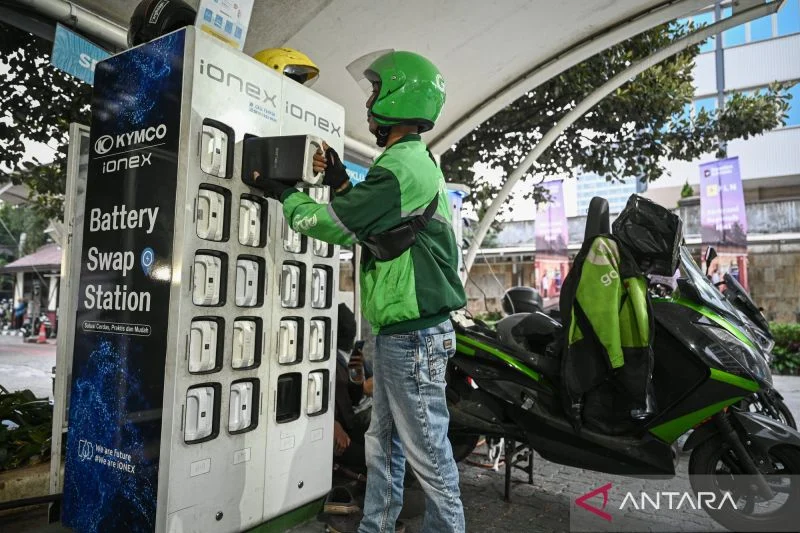
The Indonesian electric motorcycle market is undergoing a structural evolution, increasingly defined by innovative ownership models designed to lower the barrier to entry for prospective buyers. At the forefront of this transformation is the battery-as-a-service (BaaS) model, a system that fundamentally alters how consumers acquire and utilize electric two-wheelers. By decoupling the cost of the lithium-ion battery—traditionally the single most expensive component of an electric vehicle—from the initial purchase price of the motorcycle chassis, manufacturers are effectively reducing upfront retail costs. Based on market data compiled in September 2026, monthly battery subscription tariffs in Indonesia currently range from IDR 84,000 to IDR 250,000, depending heavily on the brand, vehicle model, the number of battery packs utilized, and the specific service tier selected. This pricing structure has ignited widespread interest among urban commuters, ride-hailing fleets, and environmental advocates alike, positioning Indonesia as a dynamic hub for electric mobility adoption in Southeast Asia.
To fully understand the emergence of these subscription models, one must examine the historical context of electric vehicle adoption in the archipelago. In the early phases of the national electric vehicle transition, high upfront costs served as a primary deterrent for mass-market consumers. Traditional internal combustion engine motorcycles could be purchased for a fraction of the cost of their electric equivalents, primarily due to the high manufacturing costs associated with battery cells. Recognizing this bottleneck, automotive regulators, industry stakeholders, and original equipment manufacturers began exploring alternative financial ecosystems. The introduction of battery leasing was heavily influenced by precedents set in neighboring Asian markets and commercial fleet electrification pilots. By shifting the financial burden of battery degradation, maintenance, and initial acquisition from the consumer to the manufacturer or specialized energy service providers, the BaaS model democratized access to sustainable transportation. By September 2026, this system had matured from an experimental niche offering into a mainstream commercial strategy adopted by major industry players such as VinFast, Polytron, and ALVA.
The mechanics of these subscription programs vary widely across different manufacturers, each tailoring their offerings to distinct consumer segments. VinFast, an international entrant with a rapidly growing footprint in the Indonesian market, has emerged as one of the most competitively priced providers under the BaaS framework. The Vietnamese manufacturer offers subscription services tailored for three primary electric motorcycle models: the Evo, the Feliz II, and the Viper. Consumers who opt to purchase these vehicles without the physical battery units can enter into a monthly subscription agreement starting at IDR 84,000 for a single battery pack. For models requiring a dual-battery configuration, the monthly tariff increases to IDR 144,000. All three designated models utilize a convenient dual-slot battery compartment located beneath the seat, which is fully compatible with fast-swapping network infrastructure. This low entry cost has positioned VinFast as a highly attractive option for budget-conscious riders seeking affordable urban mobility solutions without compromising on daily range capabilities.
Meanwhile, local manufacturing giant Polytron has established a robust framework tailored to its popular Fox series of electric motorcycles. Polytron’s subscription structure introduces tiered pricing based on vehicle performance and power output. For the Fox 200 model, the monthly battery rental fee is set at IDR 125,000. For higher-performance models such as the Fox 500 and the versatile Fox R, the monthly fee adjusts to IDR 200,000. Polytron has emphasized that this financial model is specifically engineered to mitigate the initial financial shock associated with electric vehicle ownership. Furthermore, Polytron provides significant consumer protection through a performance guarantee policy, which stipulates that leased batteries will be replaced free of charge if their maximum storage capacity degrades below 85 percent under normal operational usage conditions. This structural safeguard addresses one of the primary anxieties haunting prospective electric vehicle buyers: long-term battery longevity and replacement costs.
Adding to the competitive landscape, domestic electric vehicle innovator ALVA has rolled out its proprietary subscription initiative known as the BEBAS program, an acronym for Berlangganan Baterai Sewa. This program specifically caters to the urban lifestyle models ALVA N3 and the premium ALVA CERVO. Under the ALVA BEBAS framework, the subscription fee for the ALVA N3 utilizing a single battery is established at IDR 150,000 per month, while the dual-battery configuration for the same model increases to IDR 250,000 monthly. Similarly, the high-performance ALVA CERVO, which operates on a dual-battery system, commands a flat monthly subscription rate of IDR 250,000. Crucially, ALVA has structured these rates to be inclusive of applicable value-added taxes, providing pricing transparency for its consumer base. By embedding the battery into a continuous service contract, ALVA ensures that vehicle owners are shielded from the obsolescence of aging energy storage technology, as degraded units remain the responsibility of the service provider.
Analyzing the broader economic implications of these subscription models reveals a complex interplay between upfront savings and long-term recurring expenditures. Industry analysts note that while the BaaS model successfully slashes the initial purchase price of an electric motorcycle—frequently by 30 to 40 percent—consumers must factor these recurring monthly overheads into their total cost of ownership calculations. Beyond the monthly battery subscription fee, riders must account for conventional operational expenses, including electricity costs for home or public charging, routine mechanical maintenance, mandatory vehicle registration taxes, and insurance premiums. Nevertheless, comparative market studies suggest that when fuel savings derived from replacing fossil fuels with subsidized or standard electricity tariffs are factored in, the total cost of operating a subscription-backed electric motorcycle remains highly competitive compared to traditional gasoline-powered alternatives.
Official responses and statements from government bodies and legislative representatives underscore the national strategic importance of these commercial innovations. The Ministry of Industry has repeatedly highlighted that expanding the domestic electric vehicle ecosystem is vital for achieving national carbon neutrality targets. With the total population of registered electric motorcycles in Indonesia approaching the milestone of 280,000 units, regulatory agencies view innovative ownership schemes as a critical catalyst for accelerating adoption rates. Concurrently, the House of Representatives (DPR RI) has actively pushed for the acceleration of the domestic battery manufacturing industry. Lawmakers have stressed that establishing an integrated domestic supply chain—from raw nickel processing to final cell assembly—will eventually reduce reliance on imported components, stabilize subscription tariffs, and insulate local consumers from global supply chain volatility. Furthermore, the Ministry of Education, Science, Technology, and Higher Education has championed motorcycle conversion initiatives to curb energy imports, highlighting how flexible financial models can support both newly manufactured electric vehicles and retrofitted traditional combustion bikes.
The socio-environmental implications of widespread battery leasing extend far beyond individual household economics. From an environmental perspective, lowering the financial barriers to electric vehicle adoption directly translates to accelerated reductions in urban air pollution and greenhouse gas emissions in densely populated metropolitan areas like Jakarta, Surabaya, and Bandung. Furthermore, the BaaS model inherently promotes circular economy principles. Because the batteries remain the legal property of the manufacturer or energy service provider rather than the individual retail consumer, corporate entities are legally and logistically incentivized to establish systematic recycling, repurposing, and second-life energy storage programs once the primary automotive life cycle of a lithium-ion cell concludes. This prevents hazardous electronic waste from entering municipal landfills and ensures that critical raw materials such as lithium, cobalt, and nickel are recovered efficiently.
Despite the clear financial and environmental advantages, prospective buyers are advised to exercise diligence when evaluating competing subscription contracts. Industry experts emphasize that the fine print governing these agreements can vary significantly across brands. Key variables that demand careful scrutiny include mileage caps, penalty fees for late subscription payments, roadside assistance provisions, and the precise diagnostic thresholds required for warranty-covered battery replacements. For instance, while Polytron explicitly guarantees replacement if capacity drops below 85 percent, other brands may utilize different performance baselines or impose specific maintenance schedules as a prerequisite for honoring battery health warranties. Therefore, consumers must carefully calculate their daily commuting distance, evaluate their access to localized charging or swapping infrastructure, and weigh the cumulative long-term cost of monthly subscriptions against the alternative of purchasing a battery outright.
In summary, the proliferation of battery subscription schemes ranging from IDR 84,000 to IDR 250,000 per month marks a maturing phase in Indonesia’s electric vehicle trajectory. By bridging the affordability gap, mitigating consumer anxiety surrounding battery degradation, and aligning with national industrial policies aimed at green energy transition, the BaaS model has redefined urban mobility standards. As manufacturers continue to refine their service offerings and regulatory bodies work to fortify the domestic energy supply chain, electric motorcycles supported by flexible ownership structures are poised to become the dominant mode of sustainable transportation across the archipelago. Consumers stand to benefit immensely from this competitive market, provided they select the ownership tier that best aligns with their individual economic realities and daily transit requirements.