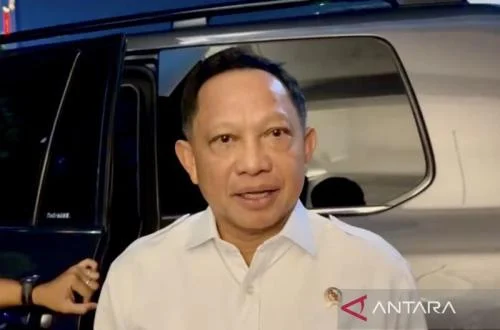
Minister Karnavian articulated his profound disappointment, highlighting the paradox that such incidents continue to occur despite a series of comprehensive anti-corruption programs implemented by the government. "I am concerned, because we have provided retreats for our regional heads, given initial briefings, created more transparent financial systems, and conducted various forms of guidance, including gatherings with the President in Sentul, yet this still happens," Tito lamented to reporters after attending a Plenary Cabinet Meeting at the State Palace. His remarks underscore a crucial dilemma: while systemic improvements and educational efforts are in place, the ultimate bulwark against corruption remains the individual integrity of each official. This sentiment resonates with the broader understanding that no system, however robust, can entirely eliminate the human element of ethical decision-making. The Minister emphasized that the responsibility ultimately reverts to the moral compass of each individual leader, urging them to internalize the lessons from these high-profile arrests. "Secondly, it comes back to the integrity of each person. So, I hope with these OTTs, including the one in Lombok [Barat], other regional heads will be self-aware, introspective, and avoid violations, especially acts of criminal corruption," Tito asserted, signaling a clear message that complacency will not be tolerated.
A Persistent Challenge in Decentralized Governance
The apprehension of Regent Lalu Ahmad Zaini by the KPK brings into sharp focus the enduring problem of corruption among regional heads in Indonesia. Since the advent of decentralization in the early 2000s, which granted greater autonomy and financial control to local governments, the central government has grappled with the unintended consequence of increased opportunities for corruption at the regional level. While decentralization was designed to bring governance closer to the people and foster local development, it inadvertently created new power centers susceptible to abuse. Regents and mayors, with control over significant budgets and extensive development projects, often become targets for corrupt practices, ranging from bribery in procurement processes to illegal levies and kickbacks for permits and licenses. The KPK, established in 2002, has been at the forefront of tackling this issue, earning a reputation for its fearless pursuit of high-ranking officials, including governors, regents, and mayors. Its signature "Operasi Tangkap Tangan" (OTT) or sting operation, where suspects are caught red-handed, has become a potent symbol of its effectiveness and a constant deterrent, albeit one that, as Minister Tito points out, does not entirely eliminate the problem.
Lombok Barat Regency, located on the western part of Lombok Island in West Nusa Tenggara (NTB), is a region with significant tourism potential and ongoing infrastructure development. Such regions, with their dynamic economies and numerous public projects, often present fertile ground for corrupt practices if oversight mechanisms are weak and individual integrity is compromised. The alleged corruption involving Regent Zaini related to the implementation of various projects within the Lombok Barat Regency government, a common modus operandi where public funds allocated for development are siphoned off through inflated project costs, fraudulent bids, or direct bribes.
Chronology of the KPK Sting Operation
The operation that led to the arrest of Lalu Ahmad Zaini unfolded on Monday morning, July 20. The Komisi Pemberantasan Korupsi, acting on intelligence gathered through extensive surveillance and preliminary investigations, launched its coordinated sting operation. This meticulous planning is characteristic of KPK’s OTTs, which are often the culmination of weeks or even months of monitoring suspicious activities. On that Monday, KPK investigators moved swiftly to secure the suspects and evidence.
Regent Lalu Ahmad Zaini, along with "dozens of others" – a term often used by the KPK to indicate a network of individuals involved in the alleged corruption, including private sector actors, civil servants, and middlemen – were apprehended. Initial reports indicated that Zaini was temporarily held at his official residence following the arrest, a common procedure to secure the primary suspect before transportation for further processing. The simultaneous arrests of multiple individuals suggest a broad investigation into a systemic scheme rather than an isolated incident.
In a crucial phase of the operation, KPK investigators successfully seized significant material evidence. This included hundreds of millions of rupiah in cash, believed to be illicit proceeds or bribe money, along with various documents. These documents are vital, often comprising financial records, project contracts, bid proposals, and communication logs, all of which are meticulously analyzed to build a robust case against the suspects. The presence of cash and relevant documents during an OTT is crucial for the KPK, as it strengthens the evidentiary basis for immediate legal action and subsequent prosecution.
Following their initial apprehension and the securing of evidence, Regent Zaini and the other individuals were transported to the KPK’s Red and White Building in Jakarta. Zaini himself arrived at the KPK headquarters on Monday evening. Under Indonesian law, specifically the Criminal Procedure Code (KUHAP), the KPK has a strict 1×24 hour window from the time of arrest to determine the legal status of those caught in a sting operation. This period is used for intensive preliminary questioning to ascertain whether there is sufficient initial evidence to name suspects and proceed with detention, or if individuals should be released. For high-profile arrests like that of a regional head, the KPK typically uses this period to solidify its initial findings before making public pronouncements regarding suspect status.
KPK’s Ongoing War on Graft and Supporting Data
The arrest of Lalu Ahmad Zaini marks the 17th sting operation conducted by the KPK in the current year (assuming the original text’s "2026" was a typo for "this year" or a generic placeholder for the current period), a testament to the anti-graft agency’s relentless efforts. This figure underscores the persistent nature of corruption despite public awareness and legal deterrents. Over its two-decade history, the KPK has successfully prosecuted hundreds of high-ranking officials, including dozens of governors, regents, and mayors. For instance, between 2004 and 2019, the KPK handled 104 cases involving governors, regents, and mayors, demonstrating a consistent pattern of corruption at the regional level.
KPK spokesperson Budi Prasetyo, addressing reporters at the KPK’s Red and White Building, provided further details regarding the allegations against the Lombok Barat Regent. Prasetyo confirmed that Regent Zaini is suspected of receiving money related to the implementation of several projects within the Lombok Barat Regency government. While specific project names or detailed mechanisms of the alleged bribery were not immediately disclosed, such cases often involve practices like bid-rigging, where certain companies are favored in exchange for kickbacks, or mark-ups in project costs, with the difference flowing into the pockets of corrupt officials. These practices not only lead to financial losses for the state but also compromise the quality and timely completion of public infrastructure and services.
The KPK’s legal process following an OTT is stringent. After the 1×24 hour initial detention period, if sufficient evidence is found, the individual is officially named a suspect. This is followed by a formal detention order, and the case proceeds to investigation and eventually prosecution. The primary legal framework for these cases is Law No. 31 of 1999 juncto Law No. 20 of 2001 on the Eradication of Criminal Acts of Corruption, which carries severe penalties, including lengthy prison sentences and hefty fines. A crucial aspect of the KPK’s mandate is also asset recovery, aiming to retrieve state losses incurred due to corruption, often through the seizure of assets acquired through illicit means.
Broader Impact and Implications
The ongoing series of high-profile corruption arrests, particularly involving regional heads, has far-reaching implications for Indonesia’s governance, economy, and public trust.
Erosion of Public Trust: Each arrest of a regional leader chips away at public confidence in local government institutions and the democratic process itself. Citizens often feel betrayed when leaders elected to serve their interests are found to be enriching themselves at the public’s expense. This erosion of trust can lead to apathy, disengagement from political processes, and even social unrest.
Economic Ramifications: Corruption diverts resources meant for public welfare and development. Projects are often delayed, substandard, or entirely abandoned due to siphoned funds. This directly impacts economic growth, infrastructure development, and the provision of essential services like healthcare and education. Moreover, pervasive corruption deters both domestic and foreign investment, as businesses are wary of operating in an environment riddled with uncertainty, illicit costs, and unfair competition. Indonesia’s standing in international indices, such as Transparency International’s Corruption Perception Index (CPI), is directly influenced by such events, affecting its attractiveness as an investment destination.
Political Landscape: The arrest of a regional head can also have significant political repercussions. It can reflect poorly on the political party that nominated or endorsed the individual, potentially impacting their electoral prospects in future elections. It also reignites debates about the integrity of candidate selection processes and the need for stronger vetting mechanisms within political parties.
Calls for Governance Reforms: Such incidents inevitably lead to renewed calls for more robust governance reforms. These include strengthening internal control mechanisms within regional governments, enhancing transparency in public procurement and budgeting through digital platforms, implementing stricter integrity pacts for officials, and improving whistle-blower protection to encourage reporting of corrupt practices without fear of reprisal. The Ministry of Home Affairs, under Minister Tito Karnavian, is expected to intensify its oversight and guidance for regional administrations, potentially implementing more rigorous monitoring protocols and administrative sanctions for those failing to uphold integrity.
Role of Civil Society and Media: In a democratic society, civil society organizations and the media play a crucial role as watchdogs. These arrests often galvanize anti-corruption NGOs to amplify their advocacy for systemic reforms and greater accountability. Investigative journalism also plays a vital role in uncovering potential corruption, complementing the work of law enforcement agencies like the KPK.
The Path Forward: Sustained Vigilance
The apprehension of Lombok Barat Regent Lalu Ahmad Zaini serves as a stark reminder that the fight against corruption in Indonesia is an ongoing, complex battle requiring sustained vigilance and a multi-pronged approach. While the KPK continues its crucial work of enforcement, the emphasis from the central government, as articulated by Minister Tito Karnavian, increasingly points towards cultivating a culture of integrity from within. This involves not only punitive measures but also preventative strategies focusing on ethical leadership, transparent governance, and public participation. The challenge remains to institutionalize integrity to such an extent that individual lapses become exceptions rather than recurring patterns, ensuring that the resources of regions like Lombok Barat are truly utilized for the prosperity and well-being of their communities. The commitment to eradicating corruption must extend beyond high-profile arrests, permeating every layer of public administration to build a more accountable and trustworthy governance system for all Indonesians.