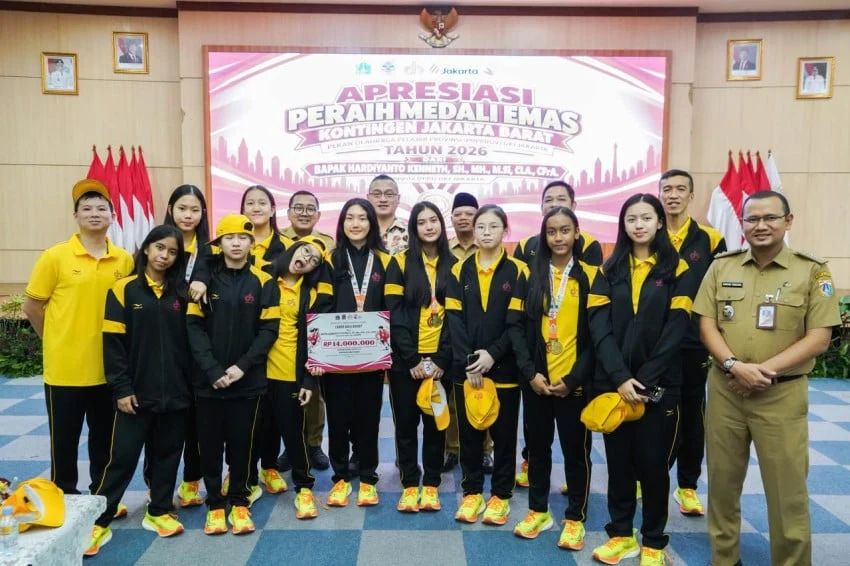
The landscape of youth athletics in Indonesia’s capital underwent a significant shift on September 5, 2026, as the West Jakarta contingent officially secured the General Championship title at the Pekan Olahraga Pelajar Provinsi (Popprov) DKI Jakarta 2026. This victory marks a watershed moment for the region, representing the first time in the competition’s history—dating back to its inception in 2017—that West Jakarta has ascended to the top of the overall medal table. The achievement, which underscores a robust improvement in local sports training infrastructure and grassroots talent identification, was celebrated during a formal ceremony at the West Jakarta Mayor’s Office on Tuesday, September 15, 2026.
A Historic Path to Victory: The 2026 Popprov Chronology
The journey to this historic win began long before the opening ceremony at the Hall A Gelanggang Mahasiswa Soemantri Brodjonegoro in South Jakarta. The Popprov DKI Jakarta 2026, held from August 31 to September 5, served as the primary stage for the city’s top student-athletes to compete across various disciplines.
Throughout the six-day event, the West Jakarta delegation demonstrated exceptional consistency. By the midpoint of the tournament, the momentum had clearly shifted in favor of the Western region, particularly due to high-performance outcomes in team-based sports. The final medal tally confirmed West Jakarta’s dominance: 7 gold medals, 2 silver medals, and 7 bronze medals. This total allowed them to surpass traditional powerhouses, including East Jakarta and South Jakarta, both of which concluded the games with five gold medals each, and North Jakarta, which secured three.
Statistical Breakdown of Success
The strategic success of the West Jakarta contingent was largely attributed to their dominance in high-stakes team events. Analyzing the medal distribution reveals a clear focus on collective discipline:
- Gold Medal Distribution:
- Basketball: Girls’ U-15 team.
- Badminton: Boys’ U-15 and U-18 teams.
- Football: Boys’ U-15 and U-18 teams.
- Sepak Takraw: Boys’ and Girls’ U-18 teams.
The diversity of these victories—spanning court, field, and net sports—indicates a broad-based development program within West Jakarta schools. Unlike regions that may rely on a single high-performing discipline, West Jakarta’s ability to secure gold in both tactical team sports like football and technical sports like badminton suggests a well-rounded athletic curriculum supported by local sports associations.
Institutional Recognition and Incentivization
Recognizing the immense effort required to reach this level of competitive success, Hardiyanto Kenneth, a member of the DKI Jakarta Regional House of Representatives (DPRD) from the Indonesian Democratic Party of Struggle (PDI-P), took proactive steps to acknowledge the athletes. During the ceremony presided over by the Mayor of West Jakarta, Iin Mutmainnah, Kenneth provided financial incentives to the gold medalists.
The bonus structure was meticulously designed to reflect the scale and logistical needs of the respective sports teams. The largest allocation was directed toward the football squads, totaling Rp18 million, acknowledging the high number of personnel required to compete in the sport. The basketball teams received Rp14 million, while the sepak takraw and badminton teams were awarded Rp6 million and Rp5 million, respectively.
In his remarks, Kenneth highlighted that the bonuses were not merely a reward for victory, but an investment in the future of the athletes. "These young individuals are the future of Jakarta’s sports reputation on the national stage," he noted. By incentivizing success, the aim is to ensure that these athletes remain motivated to pursue higher levels of competition, potentially representing DKI Jakarta in the National Student Sports Week (Popnas) or even higher international stages in the future.
Analyzing the Competitive Landscape
The Popprov DKI Jakarta is more than a regional tournament; it acts as a critical pipeline for talent development in the Indonesian sports ecosystem. Since its inception in 2017, the event has sought to bridge the gap between extracurricular school activities and professional athletic pathways.
The rise of West Jakarta in 2026 poses interesting questions regarding the shift in regional sports funding and school-level talent scouting. In previous iterations of the tournament, East and South Jakarta typically commanded the podium. The sudden emergence of West Jakarta suggests that recent investments in local sports facilities and the integration of professional coaching staff into school environments are beginning to yield tangible results.
Furthermore, the narrow margins between the top regions—with East and South Jakarta trailing only by two gold medals—highlight a highly competitive environment. This parity is a positive indicator for the overall health of sports in the capital, as it suggests that the gap between the strongest and weakest districts is narrowing, thereby increasing the overall standard of play across all disciplines.
Socio-Economic Impact and Long-term Implications
The success of the West Jakarta contingent carries broader implications for urban youth development. Participation in team sports at the Popprov level has been linked to higher rates of academic discipline, improved mental health, and social cohesion among students. For the local government, the victory is a validation of the current sports development budget, which prioritizes accessible facilities for student-athletes.
Mayor Iin Mutmainnah, during the ceremony, emphasized the importance of maintaining this momentum. The challenge for the regional administration moving forward will be to retain this talent. Often, student-athletes peak during their teenage years but face a decline in performance as they transition into university or the workforce. To combat this, the collaboration between the DPRD, the local government, and the private sector—as demonstrated by Kenneth’s contribution—is essential to provide a sustainable ecosystem for career development in sports.
The Role of Political and Public Support
The involvement of DPRD members in rewarding student achievement serves as a vital bridge between government policy and public morale. By participating in the celebratory events, political figures signal that youth athletics is a priority on the regional legislative agenda. This engagement provides a platform for athletes to feel valued and recognized by the highest levels of local leadership, which can significantly boost the morale of the entire student-athlete community.
However, critics of sports funding often argue that while bonuses provide immediate satisfaction, long-term success requires structural support, such as improved training camps, sports science integration, and better nutrition programs. The 2026 Popprov victory for West Jakarta provides a baseline for what is possible, but analysts suggest that to remain at the top, the region must shift from rewarding individual event wins to investing in year-round, high-performance training centers.
Future Outlook: Building on the 2026 Momentum
As the dust settles on the 2026 Popprov, the focus for the Jakarta Youth and Sports Agency will inevitably shift toward preparing for the upcoming national qualifiers. The data gathered from this year’s tournament will be instrumental in identifying the top-tier talent that will represent the capital.
For West Jakarta, the title of General Champion is a significant milestone, but it also carries the pressure of maintaining that position in the 2027 season. The success of the current cohort of U-15 and U-18 athletes will serve as a benchmark for the next wave of students. If the region can successfully replicate the support structures and the competitive spirit displayed in 2026, it is likely that West Jakarta will continue to be a dominant force in the coming years.
In conclusion, the victory of the West Jakarta student-athletes at the Popprov DKI Jakarta 2026 is a testament to the effectiveness of grassroots sports development. By fostering a culture of competition and providing the necessary institutional and financial support, the region has successfully elevated its status within the capital’s athletic hierarchy. As these athletes look toward their future, the lessons learned from this historic championship will undoubtedly serve as a foundation for both their personal growth and the continued evolution of youth sports in Jakarta.