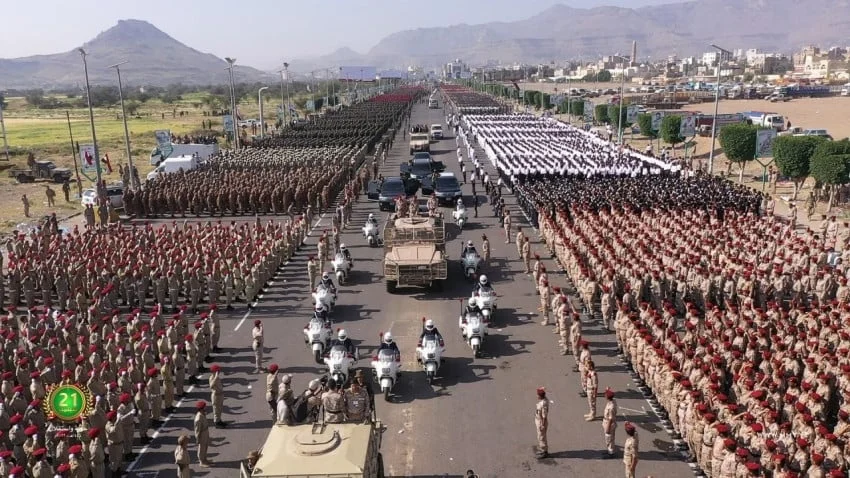
The Houthi movement, an Iran-aligned Ansar Allah group that controls significant portions of Yemen, has formally declared war against Saudi Arabia, signaling a potentially severe escalation of the long-standing conflict in the Middle East. This pronouncement comes amidst an already volatile regional landscape, where Saudi Arabia is simultaneously contending with retaliatory strikes attributed to Iran-backed factions. The declaration underscores the Houthis’ unwavering resolve to challenge the Saudi-led coalition’s military operations and blockade, particularly targeting critical infrastructure within Yemen.
Escalation of Tensions and Houthi Demands
The official declaration was made by Houthi military spokesperson Yahya Saree, who articulated the group’s profound frustration over the persistent blockade of Sanaa International Airport. Saree characterized the ongoing closure of the airport as "unacceptable and intolerable," emphasizing the severe humanitarian consequences for millions of Yemenis who rely on the facility for essential goods and medical supplies. In a defiant statement, Saree vowed to retaliate against the blockade with a "blockade for a blockade" and pledged to "respond to all escalation with escalation." This rhetoric highlights a clear intention to intensify attacks on Saudi targets should the coalition maintain its restrictions on Yemeni air and sea ports.
The Houthis explicitly blamed Saudi Arabia for a series of attacks on Sanaa Airport in the preceding week. In direct response to these alleged strikes, the Houthi forces launched a retaliatory operation targeting Abha International Airport in southwestern Saudi Arabia. This tit-for-tat exchange of hostilities exemplifies the dangerous cycle of violence that has characterized the Yemeni conflict for years, with civilian infrastructure frequently becoming collateral damage or deliberate targets. The Houthi declaration elevates these skirmishes from isolated incidents to a broader, openly declared state of war, signaling a more sustained and aggressive campaign against the Kingdom.
Background of the Yemeni Conflict: A Protracted Proxy War
The current conflict in Yemen, often described as a proxy war, began in late 2014 when the Houthi movement seized the capital city of Sanaa, effectively ousting the internationally recognized government of President Abdrabbuh Mansur Hadi. The Houthis, a Zaydi Shia Muslim group from northern Yemen, had long felt marginalized by the central government and capitalized on a period of political instability following the Arab Spring uprisings. Their rapid territorial gains alarmed Saudi Arabia, which views the Houthi movement as a proxy for its regional rival, Iran, and a direct threat to its southern border security.
In March 2015, Saudi Arabia, leading a coalition of Arab states including the United Arab Emirates, Bahrain, Kuwait, Qatar (until 2017), Egypt, Jordan, Morocco, and Sudan, launched "Operation Decisive Storm." The stated objective was to restore the Hadi government, neutralize the Houthi threat, and prevent Iran from gaining a stronger foothold on the Arabian Peninsula. The coalition initiated an extensive aerial bombing campaign, imposed an air and naval blockade, and later deployed ground forces. This intervention transformed what was initially a civil war into a broader regional conflict with devastating consequences for the Yemeni populace.
A Chronology of Escalation: Key Events Leading to the Declaration
The Houthi declaration of war is the culmination of years of escalating hostilities, marked by numerous cross-border attacks and retaliatory strikes.
- September 2014: Houthi forces seize Sanaa, marking the beginning of their territorial expansion.
- March 2015: Saudi Arabia launches "Operation Decisive Storm," initiating the coalition’s military intervention. The coalition imposes an air and naval blockade on Yemen, citing concerns over arms smuggling to the Houthis.
- 2016-2017: Houthi forces begin launching ballistic missiles and drones into Saudi Arabia, targeting military bases, oil infrastructure, and civilian airports. Saudi Arabia intensifies its air campaign and maintains the blockade.
- November 2017: A Houthi ballistic missile targets King Khalid International Airport in Riyadh. Saudi Arabia intercepts the missile and tightens the blockade, leading to widespread international condemnation over the worsening humanitarian crisis.
- September 2019: Major drone and missile attacks target Saudi Aramco oil facilities in Abqaiq and Khurais, temporarily disrupting global oil supplies. While the Houthis claim responsibility, Saudi Arabia and the United States attribute the attacks directly to Iran. This event significantly raised regional tensions.
- 2020-2021: Houthi attacks on Saudi targets, particularly Abha International Airport and other southern cities, become more frequent. These attacks often involve armed drones and ballistic missiles, prompting continuous Saudi retaliatory airstrikes across Yemen, including Sanaa.
- Late 2021/Early 2022: The specific incidents cited by Yahya Saree occur, involving Saudi-led coalition strikes on Sanaa International Airport, followed by Houthi retaliatory attacks on Abha International Airport. These events directly precede and trigger the formal declaration of war. The Houthi leadership views the sustained targeting of Sanaa Airport and the overall blockade as an act of war, demanding a commensurate response.
The Humanitarian Catastrophe in Yemen: Supporting Data
The protracted conflict and the Saudi-led blockade have plunged Yemen into one of the world’s worst humanitarian crises. The United Nations Office for the Coordination of Humanitarian Affairs (OCHA) and other international bodies consistently highlight the dire situation:
- Food Insecurity: Over 17 million Yemenis, more than half the population, are acutely food insecure, with nearly 2.2 million children under five and 1.3 million pregnant and lactating women acutely malnourished. Famine conditions have been reported in various parts of the country.
- Displacement: More than 4 million people have been internally displaced since the conflict began, living in overcrowded camps with limited access to basic services.
- Healthcare Collapse: Yemen’s healthcare system has largely collapsed due to continuous conflict, lack of funding, and the blockade restricting the entry of medical supplies. Diseases like cholera, diphtheria, and dengue fever have spread rapidly, claiming thousands of lives. In 2021, only about half of health facilities were fully functional.
- Casualties: While exact figures are difficult to ascertain due to the ongoing conflict, estimates suggest hundreds of thousands of deaths from direct fighting and indirect causes such as lack of food, water, and healthcare. The Yemen Data Project estimates tens of thousands of civilian casualties from coalition airstrikes alone.
- Economic Devastation: The Yemeni economy is in ruins, with widespread unemployment, inflation, and a depreciating currency. The blockade severely restricts imports of essential goods, driving up prices and making basic necessities unaffordable for most.
The closure of Sanaa International Airport, a primary point of entry for humanitarian aid and the only viable route for many Yemenis seeking critical medical treatment abroad, exacerbates these conditions. The Houthi declaration directly links the continuation of this blockade to their decision to intensify hostilities.
Official Responses and International Reactions
The Houthi declaration is likely to elicit strong responses from various actors on the regional and international stage.
- Saudi Arabia and the Coalition: Saudi Arabia and its coalition partners have consistently maintained that their operations in Yemen are defensive, aimed at restoring the legitimate government and preventing the Houthis from threatening regional security. They justify the blockade as a necessary measure to prevent the smuggling of weapons from Iran to the Houthi movement. Following previous Houthi attacks, Saudi officials have condemned them as acts of terrorism and violations of international law, asserting their right to self-defense and promising robust retaliation. They are expected to denounce the Houthi declaration as a further act of aggression and an obstacle to peace, while reaffirming their commitment to military operations.
- United Nations and International Community: The UN, which has long advocated for a peaceful resolution to the Yemeni conflict and the lifting of restrictions on humanitarian access, will likely express deep concern over the Houthi declaration. UN Special Envoys for Yemen have repeatedly called for de-escalation, a nationwide ceasefire, and a political solution. International organizations and humanitarian agencies will likely issue urgent pleas for all parties to exercise restraint, protect civilians, and ensure unimpeded access for humanitarian aid. Countries like the United States, United Kingdom, and European Union, which have played varying roles in supporting the Saudi-led coalition or providing humanitarian assistance, will likely call for de-escalation and a return to diplomatic efforts.
- Iran: While Iran denies directly arming the Houthis, it has expressed political support for the movement and condemned Saudi intervention in Yemen. Tehran will likely frame the Houthi declaration as a legitimate response to Saudi aggression and the humanitarian blockade, without explicitly endorsing the declaration of war. Iran often uses the Houthi conflict as a means to project influence and exert pressure on Saudi Arabia, its main regional rival.
Broader Impact and Implications
The Houthi declaration of war against Saudi Arabia carries significant implications for regional stability, humanitarian efforts, and global energy markets.
- Regional Stability: The explicit declaration could lead to a more direct and sustained military confrontation, potentially drawing in other regional actors. It risks widening the scope of a conflict already viewed as a proxy battle between Saudi Arabia and Iran. An intensified conflict in Yemen could destabilize the entire Arabian Peninsula and have ripple effects across the broader Middle East.
- Humanitarian Crisis Worsening: An escalated conflict would undoubtedly worsen Yemen’s already catastrophic humanitarian situation. Increased military operations, potential further restrictions on aid access, and continued targeting of infrastructure would lead to more displacement, food insecurity, and loss of life. The Houthi threat of "blockade for a blockade" could further disrupt vital shipping lanes in the Red Sea, impacting not only Yemen but also international trade.
- Global Oil Markets: Saudi Arabia is the world’s largest oil exporter. Any significant disruption to its oil infrastructure or shipping routes in the Red Sea and Bab el-Mandeb strait, through which a substantial portion of global oil and gas transits, could have immediate and dramatic impacts on international oil prices and global energy security. Previous Houthi attacks on Saudi oil facilities have demonstrated this vulnerability.
- Diplomatic Efforts: The declaration poses a severe challenge to ongoing, albeit fragile, diplomatic efforts to achieve a lasting peace in Yemen. The UN-led peace process has struggled to gain traction, with both sides unwilling to make significant concessions. An open declaration of war suggests a hardening of positions and a diminished appetite for negotiation, at least in the short term. It could further complicate the efforts of mediators to bring the warring parties to the table.
- International Shipping: The Bab el-Mandeb strait, a narrow waterway connecting the Red Sea to the Gulf of Aden and the Indian Ocean, is a critical choke point for global maritime trade, particularly for oil shipments. Houthi threats to target Saudi shipping or impose a "blockade for a blockade" could extend to this vital artery, leading to increased shipping costs, insurance premiums, and potential disruptions to global supply chains.
- Military Posturing: Both sides are likely to ramp up their military posturing. The Houthis will seek to demonstrate their capacity to inflict damage on Saudi targets, potentially with more sophisticated weaponry if supplied by external actors. Saudi Arabia and the coalition will likely respond with intensified air campaigns, aiming to degrade Houthi military capabilities and protect their own territory. This could lead to a more destructive phase of the conflict.
The Houthi movement’s formal declaration of war against Saudi Arabia marks a perilous turning point in the Yemeni conflict. It underscores the deep-seated grievances surrounding the blockade and signals a renewed commitment to a confrontational approach. The international community faces an urgent imperative to de-escalate tensions, facilitate humanitarian access, and reinvigorate diplomatic efforts to prevent further devastation and regional instability. The consequences of this declaration will reverberate far beyond the borders of Yemen, impacting regional security, global trade, and the lives of millions.