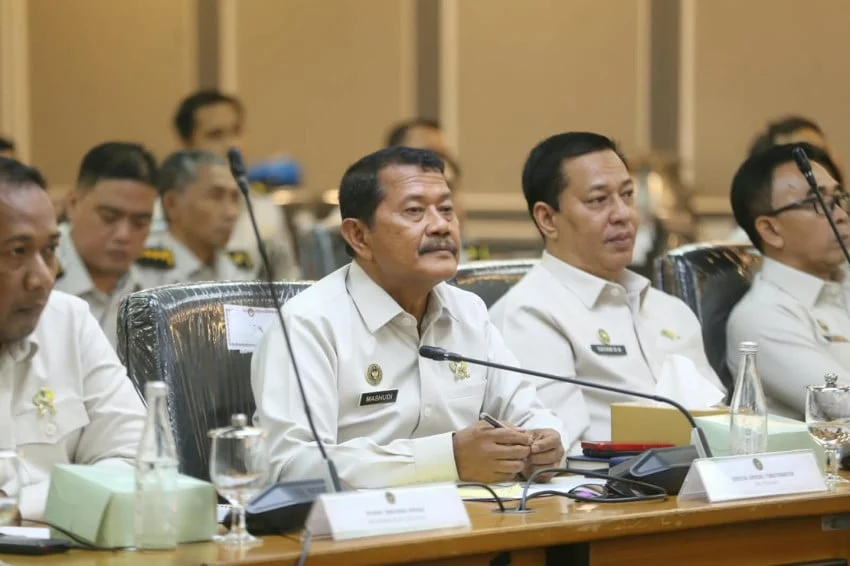
The integrity of Indonesia’s correctional system faces a critical juncture following revelations of illicit luxury amenities discovered within the Class IIA Correctional Facility in Cibinong, West Java. During a high-stakes hearing at the Parliament Complex in Senayan, Jakarta, on Monday, September 28, 2026, member of Commission XIII of the House of Representatives (DPR), Yanuar Arif Wibowo, issued a stern ultimatum to the Director General of Corrections at the Ministry of Immigration and Corrections, Mashudi. The legislator explicitly demanded that Mashudi step down from his position if he proves unable to execute a comprehensive and systemic reform of the internal correctional apparatus, which has long been plagued by allegations of corruption and preferential treatment for wealthy inmates.
The Catalyst: Ombudsman RI Investigative Findings
The controversy erupted following an intensive investigation by the Ombudsman of the Republic of Indonesia. The oversight body uncovered evidence of non-standard, luxury-grade facilities within the Cibinong prison complex. These amenities, which starkly contrast with the austere conditions mandated for inmates under the national correctional code, included high-end furniture, climate control systems, and electronics that are strictly prohibited under current Ministry regulations.
The Ombudsman’s report highlighted that these facilities were not merely isolated infractions but suggested a sophisticated level of collusion between inmates and prison staff. The presence of such items indicates a failure in oversight protocols, as contraband of this nature would require systemic cooperation to enter a secure facility. The discovery has reignited public outrage regarding the "unequal justice" narrative that frequently surrounds the Indonesian prison system, where socioeconomic status often dictates the quality of life behind bars.
Legislative Pressure and the Demand for Accountability
During the hearing, Yanuar Arif Wibowo expressed profound dissatisfaction with the Ministry’s existing disciplinary measures. He argued that temporary suspensions—the standard administrative response to such scandals—are insufficient to deter future misconduct. "If the investigation confirms that prison officials facilitated these violations, simple suspension is not enough. They must be permanently dismissed," Yanuar stated.
The lawmaker further emphasized the necessity of a criminal investigation. He urged the authorities to explore potential legal violations, specifically pointing to the possibility of bribery, extortion, and abuse of power. "If there is a criminal element in the interaction with inmates—whether it involves bribery or extortion—the process must proceed to the legal system. The culture of impunity must end if we are to restore public trust in the correctional system," he added.
Contextualizing the Correctional Crisis
This incident is not an isolated occurrence but rather a symptom of a persistent structural issue within the Indonesian penal system. Over the past decade, several high-profile cases have exposed the existence of "VIP cells" across various facilities. In 2023 and 2024, similar reports surfaced regarding facilities in Bandung and Jakarta, leading to repeated promises of reform from the Ministry.
The recurring nature of these scandals suggests a failure in the Ministry’s internal control mechanisms (Inspektorat Jenderal). Historically, the Ministry has struggled with the "dual-pressure" dynamic: managing severe overcrowding in facilities—which often exceeds 200% of capacity—while simultaneously preventing wealthy inmates from exploiting the system. Data from the Ministry of Law and Human Rights (before the recent ministerial restructuring) indicated that corruption within the ranks of correctional officers remains one of the primary obstacles to maintaining security and order.
Timeline of the Recent Developments
- Early September 2026: Reports emerge from whistleblowers regarding the influx of unauthorized luxury goods into the Class IIA Cibinong facility.
- Mid-September 2026: The Ombudsman of the Republic of Indonesia conducts a surprise inspection (sidak), documenting the existence of the unauthorized luxury cells.
- September 25, 2026: Initial reports of the investigation findings are leaked to the media, prompting a public outcry and demands for government transparency.
- September 28, 2026: The House of Representatives Commission XIII convenes a Hearing (RDP) with the Ministry of Immigration and Corrections. Yanuar Arif Wibowo formally issues the ultimatum to Director General Mashudi.
- Ongoing: The Corruption Eradication Commission (KPK) signals its intent to monitor the internal disciplinary process, with potential for an independent probe if administrative sanctions are deemed inadequate.
Data-Driven Analysis of Systemic Vulnerabilities
The Indonesian correctional system is currently managing a population of over 270,000 inmates in facilities originally designed to hold less than 150,000. This overcrowding creates a "black market" economy within prisons. According to academic research on penal reform in Southeast Asia, when staff-to-inmate ratios are skewed, officers are susceptible to the influence of "privileged" inmates who provide financial incentives in exchange for better living conditions, mobile phone access, and unmonitored visitation.
The Cibinong incident underscores a failure in the "Digital Monitoring" programs that the Ministry had touted as a solution to reduce face-to-face interaction between staff and inmates. The fact that high-end furniture and electronics were installed suggests that the internal security perimeter was compromised at multiple levels, including procurement, logistics, and guard duty.
Reactions and Official Responses
While Director General Mashudi has pledged to conduct a thorough internal review, his initial response during the hearing was perceived by several commission members as overly defensive. Mashudi noted that the Ministry has already initiated an internal audit to identify the specific officials responsible for the security breach. He committed to a "zero-tolerance" policy, stating that the Ministry would cooperate fully with any law enforcement agencies—including the KPK and the National Police—should the case involve criminal corruption.
However, the skepticism from the DPR remains high. Members of Commission XIII have indicated that they will form an oversight task force to monitor the progress of the investigation, ensuring that the probe does not conclude with "light" penalties for senior officials.
Implications for the Ministry of Immigration and Corrections
The establishment of the Ministry of Immigration and Corrections as a standalone entity—separate from the broader Ministry of Law and Human Rights—was intended to streamline management and enhance accountability. The Cibinong scandal serves as the first major "stress test" for this new administrative structure.
- Administrative Reform: The Ministry is now under intense pressure to overhaul its recruitment and rotation policies for prison wardens. There is a growing consensus that the "cronyism" often found in local warden appointments contributes significantly to the lack of discipline.
- Legal Implications: If the KPK steps in, it could lead to a precedent-setting trial. Unlike standard internal investigations, a KPK probe would focus on the "proceeds of crime," potentially leading to asset forfeiture for both the inmates involved and the corrupt officials who facilitated them.
- Public Trust: The perception that the rich can "buy" their way out of a prison sentence is a direct threat to the legitimacy of the rule of law. Continued failure to address these disparities may lead to a broader loss of confidence in the judicial process, which could have ripple effects on the stability of the correctional system at large.
Conclusion: The Road Ahead
The ultimatum delivered by Yanuar Arif Wibowo is a clear signal that the legislature is losing patience with incremental change. For Director General Mashudi, the coming weeks are critical. The demand for his resignation is not merely political rhetoric but a reflection of the systemic frustration regarding the failure to sanitize the correctional sector.
Whether the Ministry chooses to engage in a superficial "house cleaning" or pursues a deep, structural transformation—including the implementation of more rigorous technological monitoring and stronger anti-corruption frameworks—will determine the future of his tenure. As the KPK continues to monitor the situation, the Class IIA Cibinong facility remains a focal point for what many hope will be a turning point in how Indonesia manages its prison population, ensuring that justice remains uniform, regardless of an individual’s financial status. The outcome of this case will likely serve as the benchmark for how the new Ministry handles internal accountability moving forward.