Bencana Alam dan Keutamaan Syahid dalam Islam: Menjawab Pertanyaan Korban Gempa, Banjir, dan Longsor
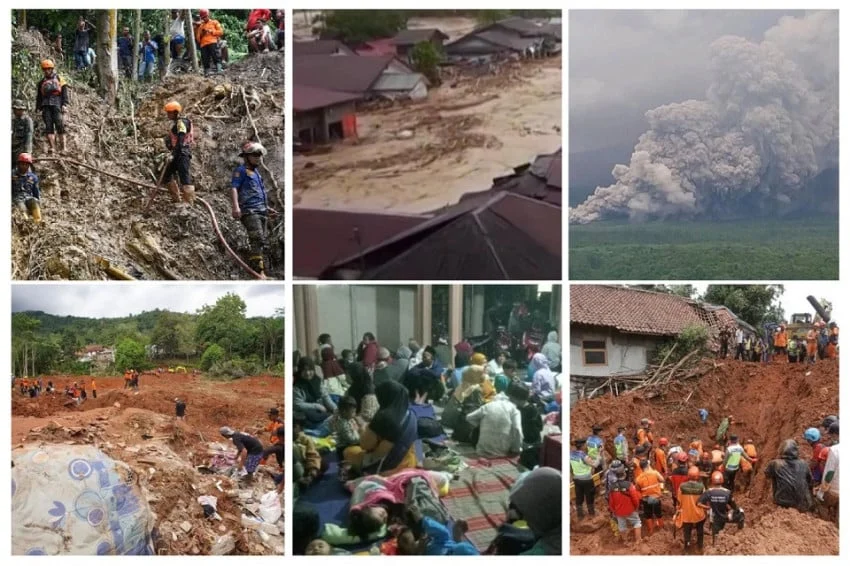
Natural disasters such as volcanic eruptions, earthquakes, forest fires, flash floods, and massive landslides regularly cause catastrophic losses of life, infrastructure, and economic stability across various regions of the world. In disaster-prone areas, particularly nations situated along active seismic belts like the Ring of Fire, the recurrence of such calamities brings profound sorrow and collective mourning to communities. Amidst the immediate emergency response, search-and-rescue operations, and humanitarian aid distribution, deeper philosophical and theological questions invariably arise among the surviving family members and the broader community. Specifically, within the Islamic perspective, believers frequently ask whether individuals who perish as a result of sudden and devastating natural disasters are granted a special spiritual status, particularly the esteemed designation of mati syahid (martyrdom).
While Islamic theology does not classify every form of mortality as martyrdom, authoritative teachings transmitted through the traditions of Prophet Muhammad (Peace Be Upon Him) explicitly outline specific categories of death that confer the immense spiritual rewards associated with martyrdom, even though the deceased did not perish on a traditional battlefield. Among these recognized conditions are individuals who die from being crushed under collapsing buildings or structural debris, those who perish due to drowning, and those afflicted by sudden, catastrophic plagues or internal ailments. These prophetic guidelines provide immense spiritual solace to grieving families, framing tragic loss within a framework of divine grace, mercy, and ultimate honor in the hereafter.
Understanding the Categorization of Martyrdom in Islamic Tradition
To comprehend how contemporary natural disaster victims fit into classical Islamic jurisprudence and theological discourse, scholars examine two primary types of martyrdom recognized in Islamic traditions: Syahid Dunia wal Akhirat (martyrs in this world and the hereafter) and Syahid Akhirat (martyrs in the hereafter only).
The first category traditionally applies to combatants who lose their lives while fighting in the cause of God to defend their faith and community. In this worldly life, they receive specific rulings regarding their funeral rites—they are buried in the garments they fell in, without undergoing the ritual washing (ghusl). The second category, however, encompasses individuals who die from specific causes outlined by Prophet Muhammad, such as epidemics, internal diseases, drowning, being crushed by structural collapses, or losing their lives in fires. While these individuals undergo standard Islamic funeral washing and shrouding, they are promised the divine reward and status of a martyr in the afterlife.
This distinction is crucial for contextualizing the experiences of natural disaster victims. When an earthquake triggers structural collapses, or when a flash flood overwhelms residential areas, the victims do not face death through conventional means; rather, they are overtaken by catastrophic environmental forces beyond human control. Islamic scholarship views these tragic events not merely as random occurrences, but as trials that, when endured with patience, can elevate the spiritual standing of the deceased.
Prophetic Traditions on the Categories of Martyrdom
The theological foundation for recognizing non-combatant martyrdom is derived from several well-documented sayings (hadiths) of Prophet Muhammad. These texts serve as the primary legal and spiritual reference for Islamic scholars when addressing contemporary tragedies.
One of the most authoritative narrations is recorded in the authentic collections of Sahih al-Bukhari and Sahih Muslim, narrated by Abu Hurairah (May Allah be Pleased with Him), in which the Prophet stated: "The martyrs are five: the one who dies of plague, the one who dies of a disease of the stomach, the one who drowns, the one who dies under debris, and the martyr in the cause of Allah."
This foundational narration explicitly establishes that physical trauma resulting from structural failure (such as being crushed under debris) and asphyxiation through water (such as drowning during floods) are direct pathways to the spiritual reward of martyrdom.
Furthermore, another comprehensive narration reported by Abu Dawud and An-Nasa’i, transmitted through Jabir bin ‘Atik (May Allah be Pleased with Him), expands this categorization significantly. The Prophet Muhammad stated: "There are seven types of martyrs other than those killed in the cause of Allah: the one who dies of the plague is a martyr; the one who dies of a stomach disease is a martyr; the one who drowns is a martyr; the one who dies of pleurisy or a chest disease is a martyr; the one who burns to death is a martyr; the one who dies under debris is a martyr; and the woman who dies during childbirth is a martyr."
These canonical texts collectively demonstrate that Islam recognizes the immense physical and psychological trauma associated with sudden, overwhelming disasters. By grouping victims of structural collapse, drowning, and fires alongside other severe trials, the prophetic tradition offers a profound theological reassurance that innocent lives lost to sudden calamities are met with divine honor and elevated spiritual ranks.
Relating Classical Prophetic Categories to Modern Natural Disasters
Applying these classical textual categories to contemporary natural disasters reveals a direct alignment between the causes of death specified by Prophet Muhammad and the realities faced by victims of modern environmental catastrophes.
In the case of massive earthquakes, volcanic eruptions, or severe landslides, buildings, residential homes, and public infrastructure frequently collapse. Individuals trapped beneath tons of concrete, earth, or rock fall directly under the classification of shahibul hadm—those who perish from being crushed beneath falling debris. The sheer velocity and destructive power of these events leave little to no time for escape, mirroring the suddenness implied in the prophetic texts.
Similarly, catastrophic flooding, tropical storms, tsunamis, and overflowing rivers frequently trap populations in rapidly rising waters. Victims who succumb to these aquatic surges are categorized as al-ghariq—those who perish by drowning. The inclusion of drowning as a form of martyrdom emphasizes the inherent terror and helplessness experienced by victims, which is met with divine recompense.
Moreover, wildfires, whether caused by extreme drought, volcanic heat, or human activity, frequently devastate entire communities, trapping residents before they can evacuate. Those who perish in these infernos are explicitly covered under the prophetic designation of individuals who die from burns (al-hariq). Additionally, the outbreak of waterborne or vector-borne diseases in the chaotic aftermath of large-scale disasters echoes the inclusion of plagues and internal illnesses within the traditional martyrdom framework.
By synthesizing these correlations, religious authorities consistently reassure affected populations that loved ones lost to natural disasters are regarded with immense dignity, theological grace, and the promise of an elevated standing in the hereafter.
The Broader Socio-Religious Implications for Disaster-Prone Communities
The recognition of natural disaster victims as attaining the status of martyrs carries profound sociological, psychological, and theological implications for communities regularly facing environmental hazards. Countries situated along major geological fault lines and tropical convergence zones experience immense psychological burdens due to the perpetual threat of natural calamities.
From a psychological perspective, grief management and trauma recovery among surviving relatives are deeply influenced by religious and cultural beliefs. Knowing that a loved one who died in a sudden flash flood or earthquake is spiritually honored provides a vital coping mechanism. It shifts the narrative of loss from meaningless tragedy to a framework of divine destiny, patience (sabr), and ultimate spiritual elevation. This theological framing helps mitigate existential despair and fosters collective resilience among survivors.
Furthermore, Islamic theology does not view the acknowledgment of martyrdom as an excuse for fatalism or environmental negligence. Alongside discussions of spiritual rewards, contemporary Islamic discourse increasingly emphasizes the concept of ecological stewardship, disaster preparedness, and proactive risk reduction. Religious leaders and environmental scholars frequently advocate for tobat ekologi (ecological repentance), urging societies to halt environmental degradation, deforestation, and unsustainable land use that exacerbate the severity of natural disasters.
Scholars argue that while accepting the decree of God brings peace to the hearts of the bereaved, human responsibility dictates that communities must actively implement robust early-warning systems, earthquake-resistant construction standards, and sustainable environmental management to minimize loss of life. The combination of spiritual solace for victims and practical responsibility for the living forms a comprehensive approach to handling the recurring challenges of natural disasters in vulnerable regions.