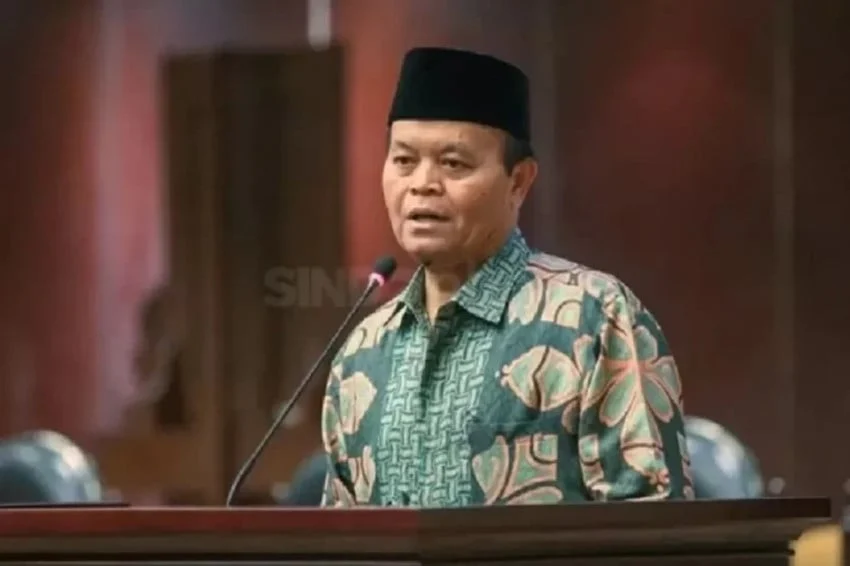
The landscape of Indonesian parliamentary leadership underwent a significant development as Hidayat Nur Wahid, a prominent senior politician from the Prosperous Justice Party (PKS), officially tendered his resignation from his high-profile position as the Deputy Speaker of the People’s Consultative Assembly of the Republic of Indonesia (MPR RI). The unexpected departure of one of the legislative body’s most veteran figures immediately drew intense public interest and sparked widespread discussion across political circles in Jakarta. The formal acknowledgment of his resignation was announced directly by MPR RI Speaker Ahmad Muzani following a closed-door leadership meeting at the parliamentary complex.
The announcement, which quickly reverberated through national media outlets, marks a pivotal moment for both the PKS faction and the broader coalition dynamics within the national legislature. As the legislative machinery prepares to process the vacancy according to established constitutional frameworks and internal parliamentary bylaws, political analysts and observers alike have begun dissecting the potential ramifications of this transition. With Hidayat Nur Wahid stepping down from his leadership role within the MPR RI, questions regarding the underlying reasons for the resignation, the timeline of succession, and the future strategic positioning of PKS within the national assembly have taken center stage.
Official Confirmation and Leadership Meeting
The confirmation of Hidayat Nur Wahid’s resignation was officially delivered to the public by MPR RI Speaker Ahmad Muzani on Tuesday, October 11, 2026. Speaking through an official statement released via his verified social media channels following the conclusion of a crucial leadership session, Muzani detailed the formal proceedings that took place earlier in the day.
According to the MPR Speaker, the leadership board of the assembly convened to evaluate internal administrative matters and review incoming official correspondence. During this session, the collective leadership formally addressed the resignation letter submitted by Hidayat Nur Wahid.
"The leadership meeting of the MPR RI today has officially received the letter of resignation submitted by Hidayat Nur Wahid from his position as the Deputy Speaker of the MPR RI," Ahmad Muzani stated in his official release.
Muzani further emphasized that the institution would handle the transition with strict adherence to administrative compliance. He noted that the leadership board is obligated to navigate the procedural steps mandated by prevailing laws, government regulations, and the internal rules of procedure governing the People’s Consultative Assembly. This ensures that the vacancy is addressed transparently and within the legal parameters required for high-ranking state institutions.
Background and Profile of Hidayat Nur Wahid
To understand the weight of this resignation, one must examine the extensive political footprint of Hidayat Nur Wahid within the Indonesian legislative ecosystem. Born in Klaten, Central Java, HNW has long been recognized as a foundational pillar of the Prosperous Justice Party, having served in various critical leadership capacities both within his party and across high-profile state institutions.
Before his tenure as Deputy Speaker of the MPR RI, Hidayat Nur Wahid built a reputation as a charismatic intellectual and a disciplined statesman. He famously served as the Speaker of the People’s Consultative Assembly during the transitional reform era from 2004 to 2009, a critical period during which Indonesia consolidated its democratic institutions following the fall of the New Order. His leadership during those formative years earned him widespread respect across the political spectrum for his commitment to constitutionalism and parliamentary diplomacy.
Over subsequent legislative terms, HNW transitioned into various leadership roles within the House of Representatives (DPR RI) and the MPR RI, consistently winning re-election from his electoral district in Jakarta. As one of the longest-serving senior legislators from PKS, his presence in the parliamentary leadership provided the party with substantial leverage, institutional memory, and a direct line of communication with other major political factions. His active participation in legal and constitutional discourse—including recent commentary welcoming progressive rulings from the Constitutional Court regarding the protection of disaster victims—underscored his ongoing relevance in shaping national policy and legislative oversight.
Chronology of Events and Procedural Next Steps
The unfolding of events leading up to the public announcement followed a precise administrative timeline standard within Indonesian state institutions. While the formal receipt of the resignation letter occurred on Tuesday, October 11, 2026, internal preparations and political consultations within PKS had reportedly been underway in the preceding days.
Following the formal receipt of the letter by the MPR leadership board, the administrative machinery of the secretariat-general has initiated the protocol required for leadership replacements. Under the legal framework governing the structure and composition of the MPR, DPR, and Regional Representative Council (DPD)—commonly known as the MD3 Law—any vacancy in the leadership council of the MPR must be filled by a representative hailing from the same political party faction that previously held the seat.

Consequently, the process does not open the position to cross-party competition; rather, PKS retains the prerogative to nominate a replacement from its internal ranks. The timeline for this succession involves several distinct phases:
- Internal Party Deliberation: The central executive board of PKS must convene to evaluate potential candidates to succeed Hidayat Nur Wahid, ensuring that the chosen individual possesses the necessary legislative experience and political standing to fulfill the duties of Deputy Speaker.
- Formal Nomination: Once a candidate is selected, PKS will issue an official state nomination letter addressed to the leadership of the MPR RI.
- Plenary Processing: The MPR leadership will table the nomination during a scheduled plenary session for formal ratification.
- Oath of Office: The newly appointed Deputy Speaker will take the official oath of office, administered by the leadership of the Supreme Court, before formally assuming duties.
Parliamentary experts anticipate that this entire administrative cycle could take several weeks, depending on the internal consolidation speed of the PKS faction and the alignment of the parliamentary calendar.
Political Implications and Reactions
The departure of a senior figure like Hidayat Nur Wahid from the apex of the MPR leadership has naturally generated considerable speculation regarding the underlying motivations and broader political implications. While neither HNW nor the PKS leadership has immediately released an exhaustive explanatory statement detailing personal or strategic reasons for the resignation, political analysts have begun mapping out potential scenarios.
In modern Indonesian politics, high-level resignations from legislative leadership are exceedingly rare and typically signify one of three possibilities: internal party rotation strategies aimed at preparing senior cadres for executive or upcoming regional roles, shifts in coalition alignment and legislative bargaining power, or personal considerations relating to health and academic pursuits.
Given PKS’s historical identity as a disciplined opposition and check-and-balance force within the national legislature—while concurrently engaging constructively in various state affairs—the transition at the MPR leadership level could signal a recalibration of the party’s cadre deployment strategy. Senior figures within PKS may be shifting focus toward strengthening grassroots party infrastructure or preparing for upcoming national consolidation initiatives.
Reactions from other political factions represented in the MPR have been measured and respectful. Leaders from major coalition parties, including members of the ruling government coalition and opposition blocs alike, have expressed confidence that the transition will not disrupt the legislative agenda of the assembly. The MPR currently holds critical mandates, including overseeing potential constitutional amendments, conducting joint sessions of the legislature, and maintaining institutional stability ahead of upcoming national policy milestones.
Broader Impact on the People’s Consultative Assembly
The People’s Consultative Assembly occupies a unique position in the Indonesian constitutional framework. Unlike the House of Representatives, which focuses heavily on daily lawmaking and budgetary oversight, the MPR serves as the guardian of the state ideology (Pancasila) and the 1945 Constitution, possessing the specific authority to amend the constitution and inaugurate the President and Vice President.
The smooth functioning of the MPR leadership collective—which comprises a Speaker and several Deputy Speakers representing the proportional distribution of major political parties—is vital for maintaining consensus-based decision-making, known historically as musyawarah mufakat. The exit of a seasoned parliamentarian like Hidayat Nur Wahid temporarily alters the institutional experience baseline within the leadership council.
However, because the institutional mechanisms for replacement are explicitly outlined in the MD3 Law, systemic continuity is guaranteed. The incoming successor will inherit a well-established portfolio of responsibilities, including civic education programs regarding the four pillars of nationality (Empat Pilar Kebangsaan), international parliamentary diplomacy, and internal administrative governance.
Conclusion and Outlook
As the dust settles on the initial announcement made by Ahmad Muzani, all eyes remain fixed on the central executive board of the Prosperous Justice Party. The naming of Hidayat Nur Wahid’s successor will serve as a strong indicator of PKS’s legislative strategy moving forward into the latter half of the current parliamentary term.
For Hidayat Nur Wahid himself, stepping down from the demanding executive duties of the MPR leadership does not signify a complete departure from public service. Given his decades-long dedication to national politics, legal advocacy, and educational endeavors, he is widely expected to continue contributing to public discourse as a senior statesman and senior legislator within the broader parliamentary ecosystem. The upcoming weeks will reveal the final administrative resolution of this resignation and the identity of the new face joining the leadership summit of the People’s Consultative Assembly.