The landscape of human resources within the Indonesian National Police (Polri) has undergone a significant structural shift following the official enforcement of Undang-Undang Nomor 5 Tahun 2026 on the Third Amendment of Law Number 2 of 2002 regarding the Indonesian National Police. Taking effect on June 17, 2026, this legislative update introduces a modernized framework governing the service tenure and retirement age limits for police personnel across various operational ranks. The implementation of this policy aims to optimize organizational efficiency, retain institutional knowledge, and align police service regulations with the evolving demands of modern national security and public administration.
Under the previous statutory framework governed by the 2002 legislation, the general retirement age for all police personnel was uniformly capped at 58 years old, regardless of rank or specialized expertise. The newly enacted legislation transitions away from a one-size-fits-all approach, establishing a tiered retirement system based on rank classifications and operational specialties. While this legislative reform has been welcomed by institutional planners seeking to maximize leadership continuity, it has simultaneously triggered public debate and legal scrutiny, culminating in ongoing judicial review proceedings before the Constitutional Court.
Comprehensive Breakdown of Retirement Age Limits by Rank
The cornerstone of the legislative amendment is articulated within Article 30, paragraph (5) of UU No. 5/2026, which reorganizes maximum service periods according to specific hierarchical categories. The updated statute delineates retirement age caps clearly across different tiers of the police force:
- Tamtama (Enlisted personnel) and Bintara (Non-commissioned officers): The maximum retirement age is established at 59 years old.
- Perwira Pertama (Junior officers): The maximum retirement age is established at 60 years old.
- Perwira Menengah (Mid-ranking officers): The maximum retirement age is established at 60 years old.
- Perwira Tinggi (High-ranking general officers): The maximum retirement age is established at 60 years old.
A notable nuance within the high-ranking officer category applies specifically to four-star generals—those holding the pinnacle rank of General. While their baseline retirement age remains capped at 60, the statute allows for a potential service extension of up to one additional year. However, institutional stakeholders emphasize that this extension is not granted automatically upon an individual reaching retirement age. Instead, it is contingent upon critical organizational needs and must be formally authorized through a Presidential Decree (Keputusan Presiden). This mechanism ensures that top-tier strategic leadership can be maintained during critical periods of national security governance without establishing an entitlement system.
Provisions for Special Expertise and Functional Positions
Beyond the standard rank-based parameters, the 2002 police law amendment incorporates targeted flexibility to address specialized operational requirements. Modern policing increasingly relies on advanced technical competencies, ranging from cybercrime forensics and financial intelligence to counter-terrorism analysis and specialized forensic medicine.
To prevent the premature loss of irreplaceable human capital, Article 30, paragraph (7) of the new law empowers the Chief of the Indonesian National Police (Kapolri) to propose service extensions for personnel possessing rare or critical technical skills. Such extensions are capped at a maximum of one year and must be officially endorsed through a Presidential Decree, ensuring adherence to overarching public administration and civil service regulations.
Furthermore, the legislation addresses the unique career paths of personnel assigned to functional positions—such as specialized investigators, forensic experts, and educators within police educational institutions. Under the transitional and permanent clauses of the new law, members occupying designated functional roles are exempt from the standard retirement age caps outlined in paragraph (5). Their retirement timelines are instead synchronized with the specific statutory regulations governing functional civil servants and specialized state apparatus professionals.
Transitional Provisions and Phased Implementation
The transition from a blanket retirement age of 58 to the newly structured tiered system required careful legislative drafting to prevent administrative chaos and manage personnel expectations. Consequently, UU No. 5/2026 introduces comprehensive transitional rules specifically tailored for officers approaching the end of their active service windows when the law took effect on June 17, 2026.
For personnel who had already attained 56 years of age at the time of the law’s promulgation, their service tenure falls directly under the new statutory framework. Meanwhile, officers who were 57 years old when the legislation went live are granted transitional extensions permitting them to remain in active service until reaching 59 years of age. Similarly, personnel slated to turn 58 years old during the course of 2026 are eligible for service extensions up to age 59 under specific transitional guidelines.
These grandfathering clauses and transitional buffers were designed by lawmakers to provide a predictable runway for both human resource planners and individual officers, ensuring that senior personnel whose career trajectories were abruptly altered by the new legislation are granted equitable adjustments rather than immediate, disruptive separations from service.
Chronology of Legislative Enactment and Institutional Justification
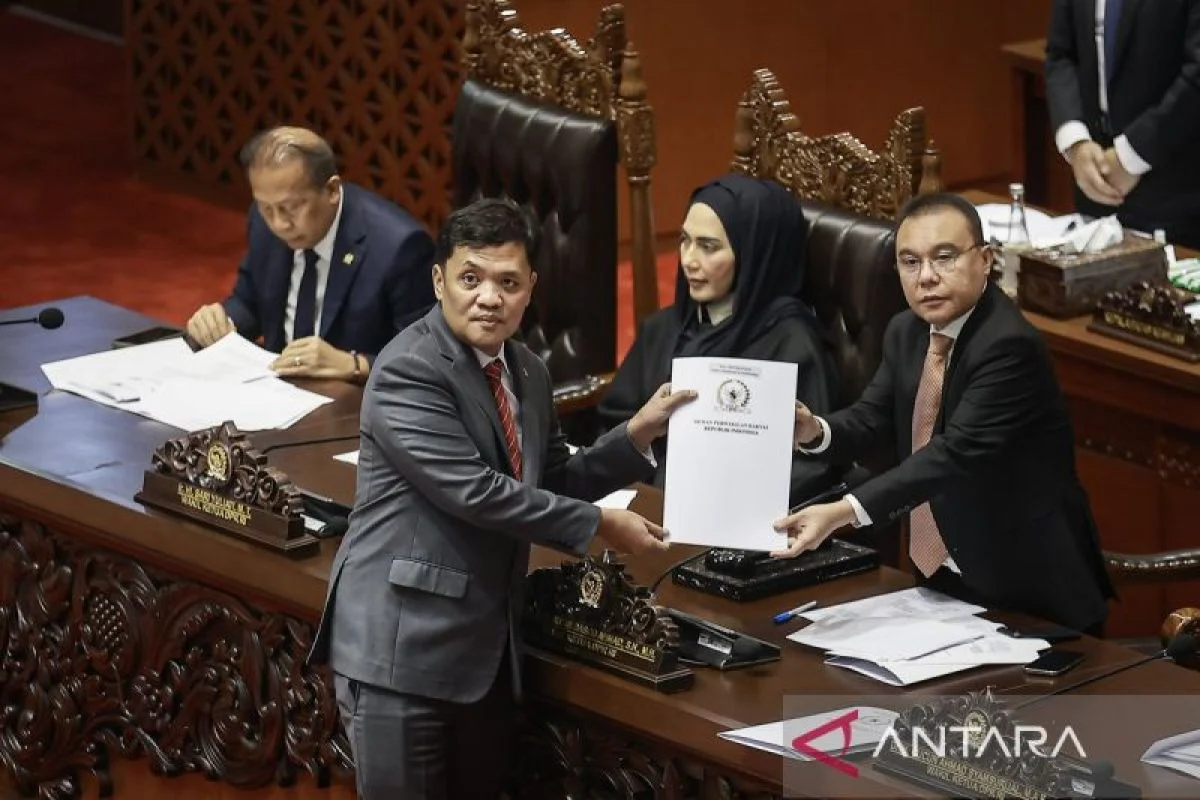
The pathway to the enactment of the police law amendment followed a rigorous legislative journey through the national parliament. The process gained substantial momentum during legislative sessions in early 2026, culminating in a parliamentary plenary approval where the House of Representatives (DPR) formally ratified the bill into law. Proponents of the legislation, including government representatives and parliamentary leaders, defended the constitutional and administrative validity of the changes, maintaining that adjustments to retirement parameters are standard state prerogatives designed to enhance bureaucratic efficiency and institutional readiness.
Defenders of the policy, including statements issued by representatives of the Ministry of Law, emphasized that the statutory adjustments do not violate higher-tier constitutional provisions or fundamental principles of administrative law. Instead, they argued that modernizing the retirement framework reflects the increasing complexity of police duties, longer national life expectancy rates, and the necessity of retaining experienced commanders to guide institutional reform and complex internal security operations.
Legal Challenge at the Constitutional Court
Despite legislative justifications, the structural overhaul of police retirement ages has faced significant legal pushback. Civil society elements and legal petitioners formally challenged the constitutionality of the new statute, leading the Constitutional Court (Mahkamah Konstitusi) to register and review the matter under Case Number 362/PUU-XXIV/2026.
On October 7, 2026, the Constitutional Court convened its inaugural hearing to review challenges directed specifically against Article 30, paragraph (5) and the accompanying transitional provisions of UU No. 5/2026. The core argument brought forward by the petitioners centers on the disparity in retirement age caps based on hierarchical rank. The plaintiffs contend that a uniform retirement threshold should apply across all strata of the police force, advocating for a maximum retirement age set universally at 58 years old to prevent perceived systemic inequalities within the civil service structure.
During the preliminary hearing session, the panel of Constitutional Court justices provided procedural guidance and formal recommendations to the petitioners regarding the substance and formal presentation of their judicial review application. In accordance with standard procedural rules, the court granted the petitioners a strict window of 14 working days to refine, substantiate, and resubmit their legal briefs.
As the judicial review remains in the preliminary examination phase, legal experts confirm that the ongoing proceedings do not suspend the enforcement of the statute. Consequently, UU Nomor 5 Tahun 2026 remains fully operational, and the Indonesian National Police continues to administer personnel retirements and service extensions in strict accordance with the updated statutory parameters until a definitive, legally binding ruling is handed down by the Constitutional Court.
Implications for Institutional Development and Human Resource Management
The long-term implications of the 2026 police law amendment extend deeply into the institutional architecture of the internal security apparatus. By retaining experienced officers in upper management and specialized technical roles for an additional one to two years, the organization expects to mitigate leadership gaps and capitalize on decades of accumulated operational expertise. This retention strategy is particularly critical as law enforcement agencies worldwide confront sophisticated transnational crimes, digital transformation challenges, and complex domestic security mandates.
Conversely, internal critics and career-planning analysts have pointed out potential bottlenecks that these extended service caps might introduce regarding career mobility for mid-tier junior officers. When senior personnel remain active longer, promotional pathways for lower-ranking officers can experience temporary stagnation, requiring careful human resource management by Polri leadership to maintain institutional morale and ensure a steady pipeline of upward mobility for rising talent.
Ultimately, the successful implementation of the retirement age adjustments under UU No. 5/2026 will depend on transparent administrative execution, rigorous oversight of service extension approvals, and the final judicial outcome delivered by the Constitutional Court. As Indonesia continues to balance professionalization within its security sector with constitutional oversight, the resolution of these legal and administrative questions will set a vital precedent for civil-military and state-apparatus governance in the years ahead.