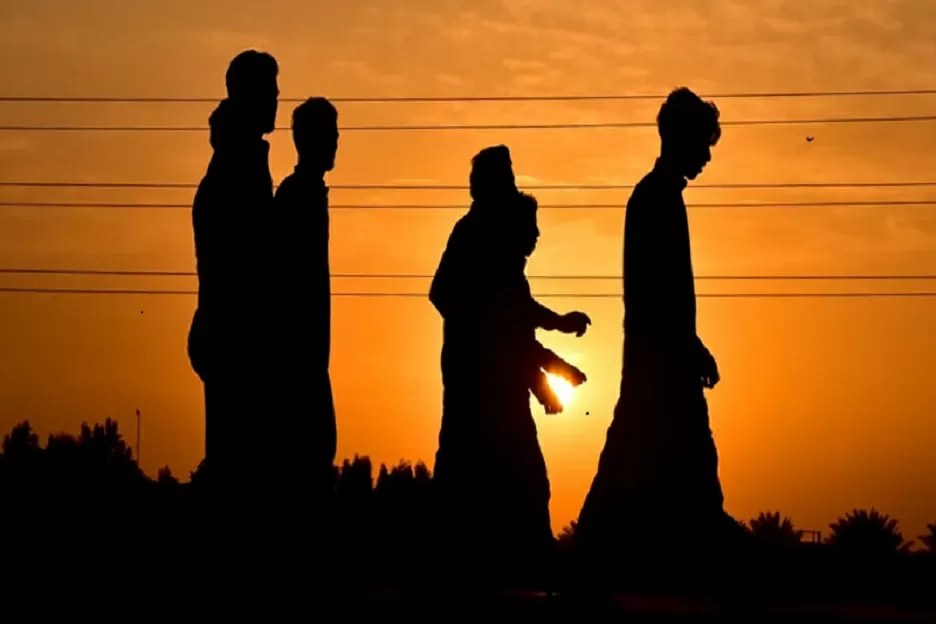
In an era defined by rapid technological advancement, hyper-connectivity, and shifting social dynamics, the fundamental interpersonal ethics of Islam are increasingly fading from daily public life. While contemporary Muslims often emphasize grand acts of worship, ritualistic piety, and institutional religiosity, the basic interpersonal virtues—the foundational akhlak—that were meant to characterize the daily routine of every believer are frequently overlooked. According to recent religious discourse by scholars and community leaders, this erosion of foundational manners threatens the moral fabric of modern Muslim communities.
To understand the scope of this modern moral shift, contemporary Islamic studies often look back at the traditional framework taught by early Islamic authorities. Recently, in a widely noted lecture series, Ustaz Azzam ad-Dasuqi, S.Pd.I, a prominent educator and outreach specialist, highlighted at least five foundational adab (manners) and noble character traits that must manifest in the daily life of every Muslim. He cautioned that if these basic principles continue to disappear from mainstream social interactions, the current social and moral condition of the global Muslim community risks severe degradation.
The systematic loss of these five core values prompts a critical examination of how modern life has transformed religious practice from a holistic way of living into a compartmentalized routine. Below is a comprehensive analysis of the five foundational Islamic ethics identified by religious scholars, alongside their historical context, psychological implications, and relevance to contemporary society.
The Evolution of Islamic Ethics in Modern Society
To contextualize the current state of Islamic manners, sociologists and theologians point to a broader cultural shift over the last century. Urbanization, the rise of digital communication, and the fast-paced nature of modern economies have fundamentally altered how individuals interact with one another. Traditional communities, where neighbors knew one another and public spaces fostered communal trust, have largely been replaced by dense, anonymous urban environments.
In these modern settings, the practice of public ethics has often retreated behind closed doors or been restricted to digital spaces. Researchers in Islamic sociology note that while mosque attendance and religious literacy have seen high engagement in many parts of the world, public interactions—such as driving etiquette, pedestrian courtesy, and workplace camaraderie—frequently lack the foundational compassion and grace emphasized in classical Islamic texts.
Ustaz Azzam ad-Dasuqi’s discourse serves as a timely reminder that Islamic ethics are not merely abstract theological concepts, but practical, everyday tools designed to maintain social cohesion. The five specific pillars of daily interaction outlined in his teachings provide a diagnostic framework for evaluating the health of modern Muslim communities.
1. The Power of a Simple Smile: Cultivating Positive Energy
The first foundational ethic highlighted is the habit of smiling among fellow believers. In the Islamic tradition, facial expressions are not viewed as trivial psychological reactions, but as intentional acts of charity that carry spiritual and social weight.
This principle is anchored in a well-known narration recorded in Jami at-Tirmidhi (Hadith No. 1879), where the companion Abu Dzar radhiyallahu ‘anhu reported that the Prophet Muhammad shallallahu ‘alaihi wasallam said: "Your smile for your brother is charity." In another authentic narration, believers are explicitly warned not to belittle any good deed, even if it is merely meeting one’s fellow Muslim with a cheerful and open face.
From a modern psychological perspective, the emphasis on smiling aligns closely with contemporary findings in behavioral science and emotional intelligence. Psychological studies consistently demonstrate that facial expressions directly influence emotional states through facial feedback loops. Furthermore, non-verbal cues such as a genuine smile release oxytocin and endorphins, reduce cortisol levels, and immediately lower perceived social threat barriers.
In modern urban environments—where stress, anonymity, and guardedness often dominate public transit and corporate offices—the intentional act of smiling acts as a powerful counter-cultural statement. It fosters a welcoming psychological environment, reduces interpersonal friction, and builds baseline trust among strangers. When Muslims neglect this practice, public spaces can become cold and utilitarian, contradicting the prophetic vision of a warm, interconnected brotherhood and sisterhood.
2. Spreading the Greeting of Peace (Salam): Fostering Collective Unity
The second vital pillar of Islamic social ethics is the active dissemination of the greeting of peace—"Assalamu’alaikum"—coupled with genuine verbal and non-verbal acknowledgment of others.
The theological weight of this practice is underscored by a canonical narration in Sahih Muslim (Hadith No. 81), where the Prophet Muhammad stated: "You will not enter Paradise until you believe, and you will not believe until you love one another. Shall I not guide you to something that, if you do it, you will love one another? Spread peace (salam) among yourselves."
Historically, the early Muslim community in Medina utilized the greeting of peace as a foundational mechanism to dissolve tribal friction, socio-economic divides, and historical animosities. The command is universal; it is not restricted to individuals one already knows, but extends to all fellow Muslims, regardless of social status, wealth, or prior acquaintance.
In contemporary society, the practice of spreading salam has often been reduced to a conditional formality—exchanged exclusively within tight-knit social circles, mosque environments, or online chat groups. Modern social habits frequently see individuals pass one another in apartment buildings, elevators, and neighborhood streets in complete silence, avoiding eye contact due to urban fatigue or social suspicion.
Sociological analyses of modern cities indicate that the decline of neighborhood greetings correlates directly with rising feelings of isolation and a breakdown of community resilience. By reviving the widespread practice of salam, modern Muslims can actively rebuild localized support networks, dismantle social stratification, and cultivate a tangible culture of mutual security and care.
3. Emotional Intelligence and Humility in Daily Discourse
While the initial focus centers on visual and verbal acknowledgments, the broader framework of foundational Islamic ethics requires a holistic approach to communication. This includes active listening, speaking with gentle words (qawlan kariman), and avoiding harmful speech such as backbiting, gossip, and arrogance.
In the context of modern media consumption and online interactions, the preservation of respectful discourse has become exceptionally challenging. Social media algorithms are frequently designed to reward outrage, polarization, and sharp rhetoric, directly undermining the prophetic model of calm, measured, and reflective communication.
Religious scholars emphasize that basic adab requires individuals to regulate their emotional responses during disagreements, prioritizing communal harmony over winning arguments. This involves returning to the prophetic tradition of speaking only when beneficial or remaining silent, a principle that is deeply needed in today’s hyper-opinionated public square.
4. Rebuilding Mutual Support and Altruism
The fourth dimension of foundational Islamic character involves active mutual assistance and empathy for the struggles of others. Islamic ethics views society not as a collection of isolated individuals competing for scarce resources, but as a single organism where the pain of one part affects the whole.
In contemporary economic landscapes driven by hyper-individualism and capitalism, communal solidarity is often sidelined in favor of personal achievement. However, foundational Islamic teachings mandate regular check-ins on neighbors, supporting the vulnerable, and sharing resources without the expectation of immediate reciprocation.
When communities experience economic hardship or social disruption, the presence of these foundational ethics serves as an essential social safety net. Charitable giving (sadaqah) and voluntary assistance (ta’awun) function most effectively when built upon a daily culture of mutual awareness and care, rather than sporadic, institutionalized philanthropy alone.
5. Honoring Commitments and Maintaining Integrity
The fifth pillar revolves around trustworthiness, punctuality, and the fulfillment of promises—qualities that are central to the prophetic title of Al-Amin (The Trustworthy) bestowed upon Muhammad even before his prophethood.
In modern professional and personal environments, the erosion of basic integrity—manifested in broken contracts, casual dishonesty, and lax time management—carries immense economic and social costs. Islamic ethics positions honesty not merely as a smart business strategy, but as a core component of religious faith. The hypocrisy of a person is measured, in prophetic traditions, by their failure to keep promises, betraying trusts, and lying when speaking.
Reintegrating this standard of unwavering integrity into modern corporate work, academic settings, and family life is viewed by analysts as essential for restoring the moral credibility of Muslims in the global arena.
Broader Implications and Socio-Religious Analysis
The discussion surrounding the disappearance of these five foundational ethics points to a deeper crisis of prioritization within contemporary religious education. Across many Muslim-majority societies and minority diasporas alike, institutional curricula frequently prioritize ritual mechanics and advanced jurisprudence over fundamental character development.
While rituals are undeniably central to Islamic practice, classical scholars have long maintained that acts of worship are ultimately training grounds designed to produce refined moral character. When ritual is divorced from ethics, religious observance can become performative, leading to deep disconnects between public piety and private integrity.
Experts in religious studies suggest several actionable steps to reverse these trends:
- Curricular Reform: Islamic educational institutions, from elementary madrassas to higher learning universities, must reintegrate comprehensive courses on adab and behavioral ethics alongside traditional theological studies.
- Community Leadership Modeling: Imams, community leaders, and public figures must model foundational manners—such as warm greetings, approachability, and humility—in their public engagements.
- Conscious Habit Formation: Individuals must consciously practice daily micro-interactions, viewing smiling, greeting strangers, and maintaining honesty as deliberate spiritual exercises rather than passive social customs.
Conclusion
The fading of foundational Islamic ethics in modern society presents a clear challenge to contemporary believers. As the world grows increasingly complex, digitized, and fast-paced, the timeless simplicity of smiling, spreading peace, speaking with kindness, supporting neighbors, and maintaining absolute integrity remains as urgent as ever.
Reclaiming these five essential adab is not merely an exercise in nostalgia for early Islamic history; it is a vital, forward-looking strategy to humanize modern spaces, heal social fragmentation, and restore the holistic beauty of Islamic teachings in everyday life.