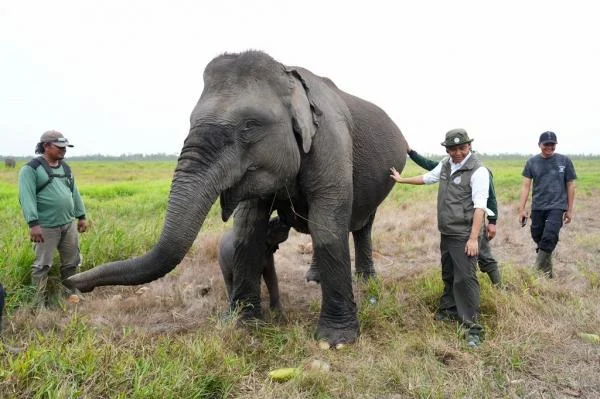
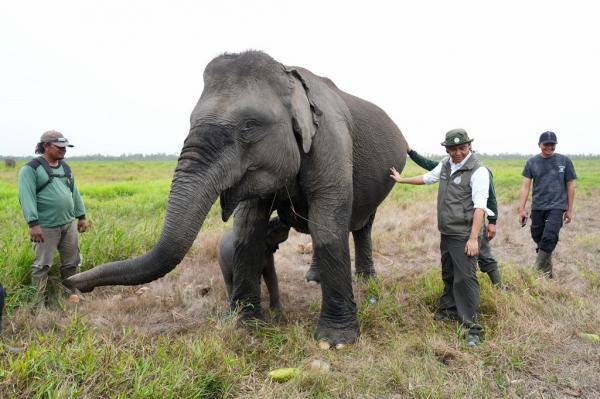
The Indonesian government has officially elevated the status of wildlife protection within its national framework for combating forest and land fires, known locally as Karhutla. Minister of Forestry Raja Juli Antoni, speaking during a visit to the Padang Sugihan Elephant Conservation Center in South Sumatra on September 17, 2026, underscored that the devastation caused by wildfires extends far beyond human populations, profoundly impacting the nation’s fragile biodiversity. As fire management strategies evolve, the administration is increasingly prioritizing the silent victims of these ecological disasters—wildlife species that lack the means to signal for help or escape rapidly encroaching flames.
The Vulnerability of Biodiversity in Fire-Prone Landscapes
The ecological significance of Indonesia’s forests cannot be overstated. As a global biodiversity hotspot, these regions house critically endangered species, including the Sumatran elephant, the orangutan, and the Sumatran tiger. Minister Raja Juli Antoni highlighted the inherent disparity between human responses to disaster and the plight of animals trapped in burning habitats.
"The impact of Karhutla is not restricted to human settlements; it ravages the habitats of living creatures that are fundamentally vulnerable to fire," Minister Antoni stated during his visit to the SM Padang Sugihan area. He noted that unlike human communities, which possess communication infrastructure, emergency protocols, and the mobility to evacuate, wildlife remains trapped by the rapid spread of infernos. "These creatures cannot sound an alarm or transmit an SOS signal when they are in distress. They are caught in a cycle of destruction that they cannot influence or escape," he added.
Chronology and Recent Developments in Fire Suppression
The urgency of the Minister’s statement follows a period of heightened activity in fire suppression efforts across the Indonesian archipelago, particularly in the Sumatra region. On September 17, 2026, reports emerged regarding a significant firefighting operation in Muara Enim, South Sumatra. Personnel from the Brimob (Mobile Brigade Corps) of the South Sumatra Regional Police utilized advanced "X-Fire" technology to extinguish approximately 80 hectares of burning land.
This operation serves as a microcosm of the broader national challenge. Throughout the 2026 dry season, the government has intensified its monitoring of "hotspots" identified via satellite imagery. The deployment of specialized police and military units to assist the Ministry of Forestry reflects a shift toward a more aggressive, multi-agency approach to fire containment. While tactical suppression remains the primary focus, the Ministry of Forestry is now integrating environmental and zoological impact assessments into their post-fire reports to better understand the loss of fauna.
Policy Shifts and the Accountability of Corporations
The government’s stance on fire prevention has hardened significantly under the current administration. President Prabowo Subianto recently issued a stern ultimatum to corporations and industrial entities, warning that the government would show "no mercy" to those found responsible for starting fires, whether intentionally or through gross negligence.
"We will revoke all their permits. There will be no leniency," President Prabowo emphasized in recent deliberations regarding the national fire response. This hardline approach is intended to serve as a deterrent against the common practice of "slash-and-burn" agriculture, which, while prohibited, continues to be a primary driver of large-scale wildfires. By linking corporate accountability directly to land permits, the government aims to force a paradigm shift in how private sector entities manage their concessions.

Analyzing the Environmental and Economic Implications
The destruction of wildlife habitats by Karhutla carries long-term consequences that extend into the economic and social spheres. The loss of keystone species disrupts ecosystem services—such as pollination, seed dispersal, and natural forest regeneration—that are vital for the health of Indonesia’s carbon sinks.
Economic Impact
- Loss of Ecosystem Services: The degradation of peatlands and forests reduces the land’s capacity for carbon sequestration, directly undermining national climate change mitigation goals.
- Tourism Revenue: Protected areas and conservation centers like Padang Sugihan are critical for ecotourism. Persistent fire threats discourage tourism and jeopardize local livelihoods dependent on wildlife conservation.
- Restoration Costs: Rehabilitating a burned landscape requires decades of investment, far exceeding the immediate costs of fire suppression.
Ecological Impact
The immediate loss of wildlife is often documented through carcass recovery, but the long-term impact involves the fragmentation of wildlife corridors. When fires destroy connectivity between forest patches, populations become isolated, leading to genetic bottlenecks and increased human-wildlife conflict as animals are forced into human-occupied areas in search of food and water.
Strengthening Conservation and Emergency Response
The Ministry of Forestry is currently evaluating new protocols for wildlife rescue during fire events. This includes:
- Real-time Monitoring: Integrating satellite-detected hotspots with biological surveys to identify "high-risk" areas where endangered species are concentrated.
- Rapid Response Wildlife Units: Developing mobile teams equipped to tranquilize and relocate displaced wildlife from fire-affected zones.
- Water Management: Maintaining hydrology in peatlands, particularly around conservation zones, to ensure the land remains moist and resistant to ignition.
Minister Raja Juli Antoni’s focus on the "vulnerable" nature of wildlife is a call to integrate animal welfare into the national security framework. By treating wildlife protection as an essential pillar of Karhutla management, the government is acknowledging that environmental health is inseparable from national resilience.

Challenges to Implementation
Despite the political rhetoric and increased enforcement, the Indonesian government faces significant hurdles. The vastness of the terrain, combined with the extreme climate conditions of the El Niño-influenced dry season, makes total prevention an elusive goal. Furthermore, the economic pressures on smallholder farmers often lead to the use of fire as a cheap land-clearing method, creating a complex socio-economic issue that cannot be solved by enforcement alone.
The integration of local communities into the fire prevention narrative is viewed by experts as the next logical step. By providing communities with alternatives to fire-based land clearing and educating them on the economic value of biodiversity, the Ministry hopes to reduce the human-induced ignitions that threaten both the forests and the animals residing within them.
Conclusion: A New Standard for Forest Stewardship
As the 2026 dry season progresses, the dual-track strategy of strict corporate enforcement and enhanced wildlife protection marks a significant evolution in Indonesia’s environmental policy. Minister Raja Juli Antoni’s remarks serve as a reminder that the cost of forest fires is not merely calculated in hectares lost or carbon emitted, but in the permanent silencing of the nation’s natural heritage.
With the combined efforts of the Ministry of Forestry, the National Police, and the strong executive backing from the President, the government is signaling that the era of impunity for those who endanger Indonesia’s biodiversity is coming to an end. The path forward requires a persistent commitment to technological innovation, aggressive enforcement, and an unwavering focus on protecting the voiceless inhabitants of the nation’s vast and irreplaceable rainforests.