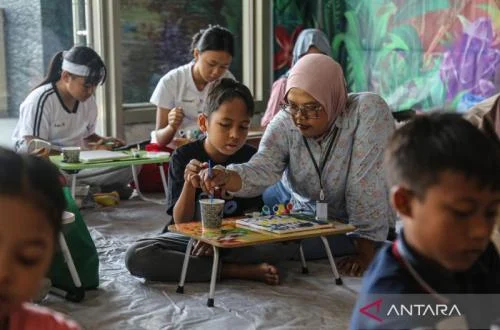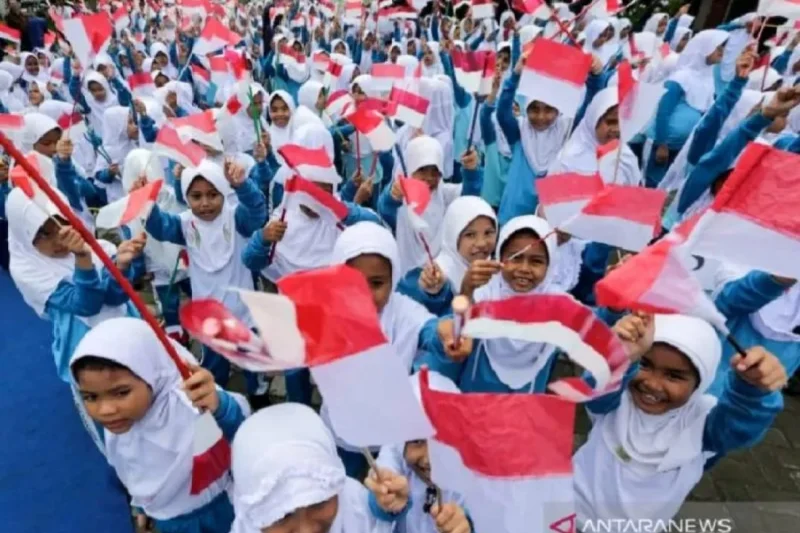
The 42nd commemoration of National Children’s Day (Hari Anak Nasional – HAN), observed annually on July 23, stands as a pivotal moment for the Indonesian government and society to reassess and reinforce the fulfillment of child rights and protections. Beyond its ceremonial roots, the 2026 observance serves as a strategic checkpoint for the nation’s progress toward the "Indonesia Emas 2045" vision, a roadmap aiming to transform the country into a developed nation by its centenary. With the 2026 theme "Sayang Anak, Lindungi dan Bangun Masa Depan" (Love Children, Protect and Build the Future), the government emphasizes that the safety, health, and education of the younger generation are not merely social obligations but essential investments in the country’s long-term geopolitical and economic stability.
The Historical and Legal Genesis of National Children’s Day
The origins of National Children’s Day are deeply rooted in Indonesia’s post-independence legislative evolution. The commitment to child welfare was first institutionalized through the 1945 Constitution (UUD 1945), specifically Article 28B, Paragraph (2), which explicitly states that every child has the right to live, grow, and develop, while receiving protection from violence and discrimination. This constitutional mandate provided the bedrock for more specific statutory developments in the following decades.
A significant turning point occurred on July 23, 1979, with the enactment of Law Number 4 of 1979 concerning Child Welfare. This legislation was the first of its kind to categorize children as a vulnerable group requiring specific state intervention to ensure their physical, mental, and social well-being. Recognizing the importance of this legislative milestone, the government under President Soeharto issued Presidential Decree Number 44 of 1984, officially designating July 23 as National Children’s Day.
Since then, the legal framework has undergone several major overhauls to align with international standards, such as the United Nations Convention on the Rights of the Child, which Indonesia ratified in 1990. The introduction of Law Number 23 of 2002 on Child Protection, later strengthened by Law Number 35 of 2014, shifted the paradigm from mere "welfare" to a comprehensive "rights-based" approach. These laws expanded the definition of protection to include safeguards against exploitation, trafficking, abandonment, and systemic discrimination, ensuring that the state, local governments, families, and the community share the burden of responsibility.
Chronology of National Child Protection Legislation
- 1945: The Constitution of Indonesia establishes basic rights for children under Article 28B.
- 1979: Law No. 4 of 1979 is passed on July 23, focusing on child welfare.
- 1984: Presidential Decree No. 44 officially establishes July 23 as National Children’s Day.
- 1990: Indonesia ratifies the UN Convention on the Rights of the Child.
- 2002: Law No. 23 of 2002 is enacted, providing a modern framework for child protection.
- 2014: Law No. 35 of 2014 updates the 2002 law, introducing harsher penalties for child abusers and clearer mandates for regional governments.
- 2016: Government Regulation in Lieu of Law (Perppu) No. 1 of 2016 (later Law No. 17 of 2016) introduces chemical castration for repeat sex offenders against children.
Strategic Theme for 2026: Love, Protection, and Future-Building
The 2026 theme, "Sayang Anak, Lindungi dan Bangun Masa Depan," reflects a multi-dimensional approach to child development. According to officials from the Ministry of Women’s Empowerment and Child Protection (KemenPPPA), the term "Love" (Sayang) in the theme refers to the quality of parenting and the emotional environment in which a child is raised. Data from the Indonesian Child Protection Commission (KPAI) suggests that a significant percentage of child behavioral issues and susceptibility to external threats stem from a lack of emotional security within the family unit.
"Protection" (Lindungi) addresses the immediate need to shield children from physical and digital harm. In an era where internet penetration among Indonesian minors is nearly universal, the scope of protection has moved beyond physical violence to include cyberbullying, online grooming, and exposure to inappropriate content. Finally, "Build the Future" (Bangun Masa Depan) focuses on providing equitable access to high-quality education and healthcare, particularly in remote and underdeveloped regions (3T areas).
Key Initiatives and 2026 Commemoration Highlights
National Children’s Day 2026 was marked by several high-impact government initiatives designed to address specific gaps in child welfare and legal justice.
One of the most notable actions was taken by the Ministry of Immigration and Correction (Kemenimipas), which granted sentence reductions (remissions) to 1,050 children currently held in juvenile correctional facilities (LPKA). This move is part of a broader shift toward restorative justice, emphasizing rehabilitation over retribution for minor offenders. By reducing detention periods, the government aims to reintegrate these children into society and provide them with a second chance at education and vocational training.
In the border regions, such as Sebatik, North Kalimantan, the government prioritized the distribution of Child Identity Cards (Kartu Identitas Anak – KIA). For children in border zones, the KIA is more than just an ID; it is a "gift" that ensures their recognition as citizens, facilitating their access to state health services and subsidized education. This initiative highlights the government’s commitment to ensuring that children in the furthest reaches of the archipelago are not left behind.
Furthermore, state-owned enterprises have taken an active role in the celebration. Transjakarta, for instance, organized educational tours for children to familiarize them with public transportation systems. This initiative aims to foster a generation that is not only mobile but also environmentally conscious and supportive of sustainable urban infrastructure.
Challenges in the Digital Age and Modern Protection
While legislative frameworks are robust, the implementation of child protection in Indonesia faces contemporary hurdles, particularly regarding digital safety. As of early 2026, data indicates that the digital divide is narrowing, but the "protection gap" remains wide. Children are increasingly exposed to "digital exploitation," including the unauthorized use of their data and the proliferation of online gambling and predatory grooming.
Experts suggest that the next phase of Indonesian child protection must involve the tech sector. Collaborative efforts between the Ministry of Communication and Digital Affairs and global social media platforms are being intensified to create "child-friendly" digital zones. The 2026 HAN serves as a call to action for parents to become "digital mediators," moving away from restrictive monitoring toward open communication about online risks.
Economic and Social Implications: The 2045 Vision
The emphasis on National Children’s Day is inextricably linked to Indonesia’s demographic dividend. With roughly 30% of Indonesia’s population consisting of children, the quality of their development today will determine the country’s economic trajectory in two decades. Stunting remains a critical concern, though rates have shown a steady decline due to national programs focusing on maternal nutrition and early childhood health.
Economists argue that for every dollar invested in early childhood development—ranging from nutrition to preschool education—there is a significant return in terms of future productivity and reduced social welfare costs. By ensuring that children are protected from the trauma of violence and exploitation, the state is effectively safeguarding its future human capital. A child who grows up in a safe, nurturing environment is statistically more likely to innovate, lead, and contribute to a stable workforce.
Restorative Justice: A Paradigm Shift
A significant portion of the 2026 HAN discussions focused on the "Restorative Path" for children in conflict with the law. Instead of traditional punitive measures, the Indonesian legal system is increasingly adopting a restorative justice model. This model involves mediation between the offender, the victim, and the community to repair the harm caused by the offense.
The Ministry of Law and Human Rights has advocated for this approach to prevent the "criminalization" of youth. By keeping children out of adult prisons and focusing on community-based rehabilitation, the state aims to break the cycle of recidivism. The 2026 HAN highlights that a child’s mistake should not define their entire future, provided there is a framework for accountability and growth.
Conclusion: A Collective Responsibility
National Children’s Day 2026 is a reminder that the protection of children is not the sole responsibility of a single ministry or agency. It requires a synergy between the government, the private sector, educational institutions, and, most importantly, the family. The cultural shift toward making child protection a "daily habit" rather than an annual event is the ultimate goal of the 2026 commemorations.
As Indonesia moves closer to its 2045 goals, the success of the nation will be measured not just by its GDP or infrastructure, but by the safety and happiness of its youngest citizens. The theme "Sayang Anak, Lindungi dan Bangun Masa Depan" is more than a slogan; it is a national mandate to ensure that every Indonesian child, regardless of their background or location, has the opportunity to dream and the security to achieve those dreams. The ongoing efforts in legal reform, digital safety, and social inclusivity demonstrate a nation that is maturing in its understanding of what it means to truly protect its future.