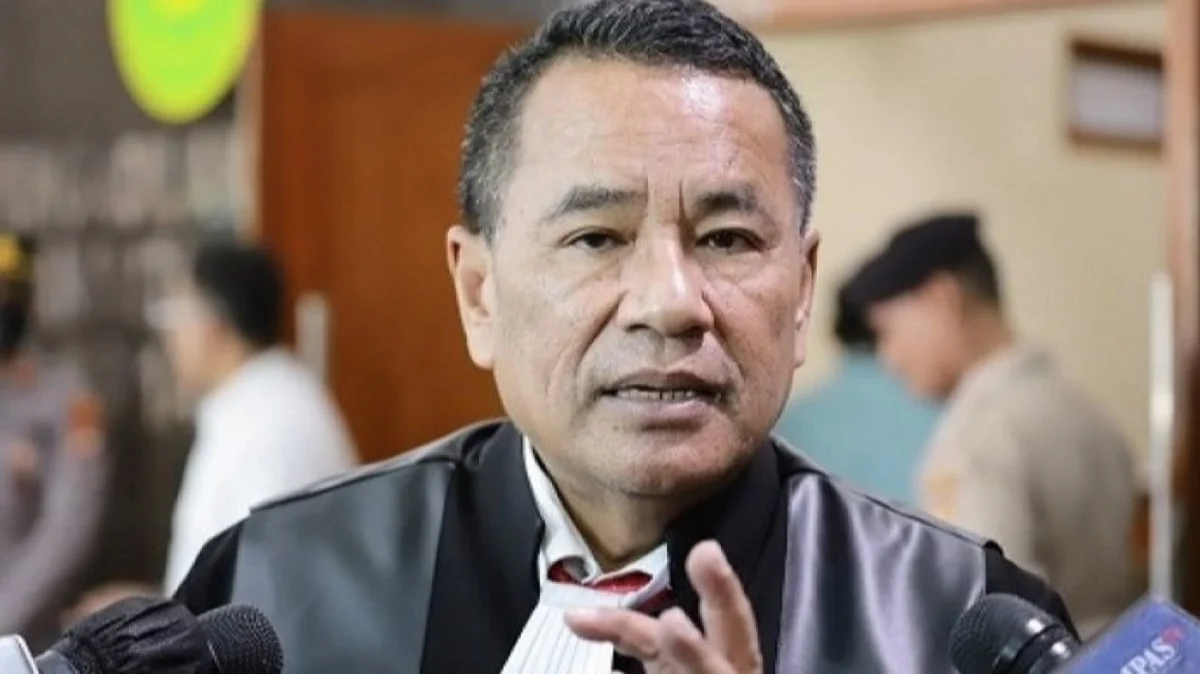
The Indonesian legal landscape has been thrust into a state of intense debate following a series of candid revelations by Hotman Paris Hutapea, one of the country’s most prominent and flamboyant defense attorneys. In a recent public appearance, the lawyer—frequently dubbed the "Bling-Bling Lawyer" due to his penchant for luxury—detailed a practice he claims is a "public secret" within the legal profession: the systematic marking up of legal fees to cover what are euphemistically termed "lobbying" or "field" costs. Speaking on a widely viewed digital platform on Thursday, July 23, 2026, Hotman Paris explained that the figures presented on official invoices to clients often bear little resemblance to the actual professional fees retained by the legal counsel. Instead, these inflated sums are frequently used to facilitate various "arrangements" necessary to navigate the complexities of the Indonesian judicial system, particularly when representing high-net-worth individuals or foreign entities.
The disclosure has sent ripples through the Indonesian Advocates Association (PERADI) and the broader legal community, as it touches upon the sensitive intersection of professional ethics, transparency, and the perennial struggle against judicial corruption. According to Hotman, the practice is especially prevalent when dealing with international clients who may not be able to provide cash payments for informal expenses and therefore require such costs to be formalized under the umbrella of "legal fees" on an official invoice. This revelation comes at a precarious time for the attorney, who has recently been under the spotlight for his involvement in matters related to the former Junior Attorney General for Special Crimes (Jampidsus), Febrie Adriansyah, adding a layer of political gravity to his statements.
The Mechanics of the Legal Fee Mark-Up
In his explanation, Hotman Paris provided a hypothetical yet illustrative breakdown of how these financial arrangements are structured. He suggested a scenario where a lawyer’s genuine professional fee might be 1 billion IDR. However, the invoice sent to the client would reflect a total of 5 billion IDR. The discrepancy of 4 billion IDR is then categorized as "field costs" or "lobbying fees." Hotman asserted that this is not an anomaly but rather a "Standard Operating Procedure" (SOP) for many practitioners in the field.
The use of the term "lobbying" in a legal context is inherently controversial. While in many jurisdictions lobbying is a regulated activity involving the influencing of legislation, in the context of Indonesian litigation, the term often carries a more localized connotation involving informal negotiations with various stakeholders in the justice system. By labeling these as "field costs," law firms can justify the outflow of large sums of money that would otherwise be difficult to account for in a standard audit. Hotman noted that foreign clients, who are often subject to strict corporate governance and anti-bribery laws in their home countries (such as the U.S. Foreign Corrupt Practices Act or the UK Bribery Act), frequently prefer these costs to be bundled into a single, official invoice labeled as "Legal Fees" to maintain a veneer of compliance.
Background and Professional Context of Hotman Paris Hutapea
To understand the weight of these statements, one must consider the position Hotman Paris occupies in Indonesian society. With a career spanning several decades, he has represented a diverse array of clients, ranging from multinational corporations in complex commercial disputes to high-profile celebrities in criminal cases. He is known for his aggressive litigation style and his ability to command the media’s attention, often using social media to pressure authorities or sway public opinion.
However, his career has not been without friction. His public persona often clashes with the traditional, more reserved image of the legal profession. His latest revelation is seen by some as an act of radical transparency—an attempt to expose the "dirty laundry" of the industry—while others view it as a cynical admission of practices that undermine the integrity of the rule of law. The timing of his comments is particularly notable, occurring as the Indonesian judiciary undergoes a period of intense scrutiny following several high-profile graft cases involving judges and court officials.
The Jampidsus Connection and Current Controversies
The backdrop to Hotman’s disclosure is a complex web of legal and political tension. Reference has been made to his recent visibility regarding the situation involving Febrie Adriansyah, the former Jampidsus. Adriansyah’s tenure was marked by the prosecution of several massive corruption cases, including those involving state-owned insurer Jiwasraya and the tin mining industry. The Jampidsus office became a focal point of national attention when reports emerged of alleged surveillance of Adriansyah by members of the National Police’s elite counter-terrorism unit, Densus 88.
Hotman Paris’s involvement in discussions surrounding these events has placed him at the center of a power struggle between different branches of law enforcement. Critics argue that by discussing "lobbying fees" and "field costs" now, Hotman may be signaling the existence of deep-seated informal networks that operate behind the scenes of these major prosecutions. Whether these statements are intended as a defense mechanism or a broader critique of the system remains a subject of intense speculation among political analysts in Jakarta.
Ethical and Legal Frameworks Under Scrutiny
The Indonesian Advocates Act (Law No. 18 of 2003) and the Indonesian Code of Ethics for Advocates provide the primary legal framework for the conduct of lawyers in the country. Article 21 of the Advocates Act stipulates that an advocate is entitled to receive a fee for legal services rendered to their client, the amount of which is determined by an agreement between the two parties. However, the law also demands that advocates act with integrity and maintain the honor of their profession.
Legal experts point out that while "success fees" are common and legal, the practice of "marking up" invoices to hide the true destination of funds could potentially violate several statutes. If "lobbying fees" are found to be a euphemism for bribes paid to judicial officers, both the lawyer and the client could face charges under the Anti-Corruption Law. Furthermore, misrepresenting the nature of fees on an invoice could be seen as a form of document forgery or fraud, and could lead to tax evasion charges if the "field costs" are used to reduce the taxable income of the law firm.
Responses from the Legal Community and Regulatory Bodies
While official statements from the Indonesian Advocates Association (PERADI) have been cautious, several senior members of the legal community have expressed concern. There is a fear that Hotman’s "SOP" claim paints the entire profession with a broad brush, suggesting that ethical practice is the exception rather than the rule.
"The integrity of the advocate is the cornerstone of the justice system," stated a representative from a prominent legal watchdog group. "If the public and international investors believe that legal outcomes in Indonesia are bought through ‘lobbying fees’ hidden in invoices, it devastates our efforts to build a transparent and predictable legal environment."
Conversely, some practitioners, speaking on the condition of anonymity, suggest that Hotman is merely vocalizing a reality that many choose to ignore. They argue that the systemic issues within the police, the prosecution, and the courts often force lawyers into a position where they must navigate informal channels to ensure their clients receive a fair hearing or to expedite sluggish bureaucratic processes.
Implications for Foreign Investment and the Rule of Law
The mention of foreign clients "wanting it that way" is particularly damaging to Indonesia’s international reputation. For years, the Indonesian government has worked to attract foreign direct investment (FDI) by promising a more stable and transparent legal climate. The Omnibus Law on Job Creation was a significant part of this effort, aimed at reducing red tape and streamlining regulations.
However, revelations of institutionalized "mark-ups" suggest that the "hidden costs" of doing business in Indonesia remain high. International compliance officers and general counsel for multinational corporations may view these statements as a significant red flag. If a law firm admits to marking up fees by 400% to cover "field costs," it becomes nearly impossible for a foreign corporation to satisfy its internal audit requirements or comply with international anti-money laundering (AML) standards.
Analysis: The Path Toward Reform
The disclosure by Hotman Paris serves as a catalyst for a much-needed conversation regarding the transparency of legal billing and the ethics of advocacy in Indonesia. To address the issues raised, several steps may be necessary:
- Mandatory Billing Transparency: Implementing regulations that require detailed breakdowns of legal expenses, moving away from "lump sum" billing that can easily hide illicit payments.
- Strengthening Ethical Oversight: Empowering the honorary councils of advocate organizations to conduct random audits of law firm financial records when there are suspicions of ethical breaches.
- Judicial Reform: Addressing the root cause—the perceived need for "lobbying"—by continuing to purge corruption from the courts and the prosecution service.
- Whistleblower Protection: Encouraging younger lawyers to report unethical practices within their firms without fear of professional retaliation.
Conclusion
As the public continues to digest the implications of Hotman Paris’s comments, the focus remains on how the relevant authorities will respond. Will this lead to a formal investigation into the billing practices of major law firms, or will it be dismissed as another provocative statement from a lawyer known for his theatricality?
Regardless of the immediate outcome, the "4 billion IDR mark-up" has become a potent symbol of the challenges facing the Indonesian legal system. It highlights the gap between the formal law as written in the statutes and the "law in action" as practiced in the corridors of power. For a nation striving to cement its place as a leading global economy, the transition from a system of "lobbying" to one based on merit and transparent legal process remains one of its most critical hurdles. Hotman Paris may have intended to simply share a "public secret," but in doing so, he has inadvertently set the stage for a potentially transformative debate on the future of justice in Indonesia.