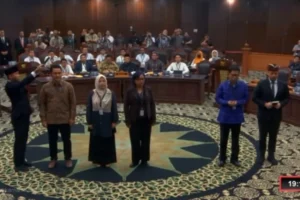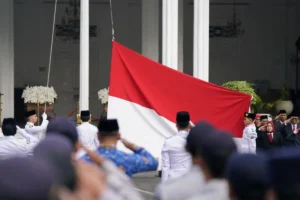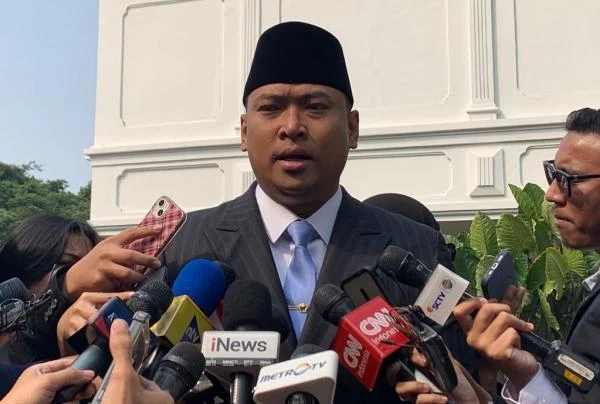
The newly inaugurated Head of the National Nutrition Agency (Badan Gizi Nasional or BGN), Sudaryono, has officially issued a stern warning against any forms of graft or financial misconduct within the implementation of the Free Nutritious Meal (Makan Bergizi Gratis or MBG) program. Speaking to the press at the State Palace in Jakarta on Wednesday, July 22, 2026, Sudaryono emphasized that the agency would maintain a "zero tolerance" policy toward corruption, misappropriation of funds, and any "hanky-panky" activities that could jeopardize the integrity of the government’s flagship social initiative. He called upon the Indonesian public to monitor the agency’s performance and offered a solemn pledge to uphold the mandate with the highest level of accountability, noting that the program is funded by taxpayers and must directly benefit those in need.
Sudaryono’s appointment comes at a critical juncture for the Prabowo Subianto administration, as the National Nutrition Agency prepares to scale up one of the most ambitious social welfare programs in the nation’s history. The Free Nutritious Meal program is designed to provide daily healthy meals to tens of millions of Indonesians, including school children, toddlers, pregnant women, and breastfeeding mothers. Given the massive budgetary allocation required for such an undertaking, concerns regarding transparency and potential leakage have been at the forefront of public discourse. Sudaryono addressed these concerns head-on, stating that his primary mission is to ensure that every rupiah spent is accounted for and reaches its intended destination without being diverted by "petty thieves" or corrupt officials.
Strengthening Governance and Digital Accountability
A core component of Sudaryono’s strategy for the BGN is the total overhaul of its internal governance and administrative systems. He acknowledged that traditional, manual processes often create loopholes that can be exploited for illicit gain. To combat this, the BGN chief announced plans to transition toward a fully digital recording and reporting system. By digitizing the supply chain and the distribution of meals, the agency aims to create a "paper trail" that is both transparent and easily auditable by state institutions such as the Audit Board of Indonesia (BPK) and the Financial and Development Supervisory Agency (BPKP).
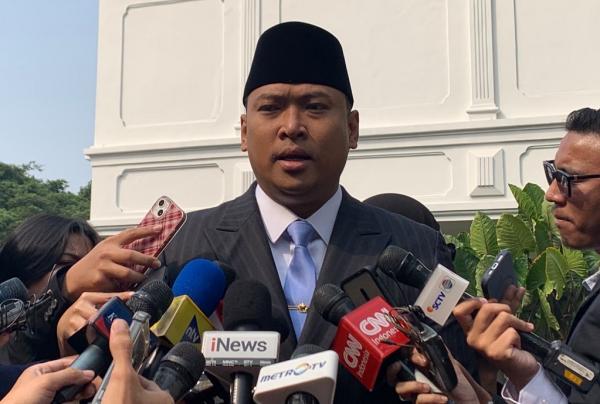
"The things that are not yet transparent, we must make transparent," Sudaryono remarked during his address. He highlighted that "hiding" financial data or operational details would no longer be permitted under his leadership. The goal is to create a system that is "bright as day," where the public and oversight bodies can verify the quantity and quality of meals being served. This shift toward digitalization is expected to include real-time monitoring of food procurement from local farmers, the operational costs of "Service Units" (Satuan Pelayanan), and the delivery logistics to schools and community centers across the archipelago.
Institutional Transition and Leadership Change
Sudaryono was appointed by President Prabowo Subianto to replace Nanik S. Deyang, who resigned from the position due to health-related reasons. The transition is seen as a strategic move by the President to place a trusted and energetic leader at the helm of the BGN. Before taking this role, Sudaryono had served in various capacities within the government, including a tenure as Deputy Minister of Agriculture, where he gained significant experience in food security and supply chain management. His background is expected to be instrumental in navigating the complex logistical challenges of sourcing nutritious ingredients from Indonesia’s diverse agricultural sectors.
In addition to the leadership change, Vice President Gibran Rakabuming Raka has reportedly held high-level meetings with Sudaryono to reinforce the administration’s expectations. The Vice President specifically requested that the MBG program be shielded from the "culture of corruption" that has occasionally plagued large-scale government projects in the past. Sudaryono’s "zero tolerance" declaration is viewed as a direct response to these executive directives, signaling a unified front at the top levels of government regarding the sanctity of the nutrition program.
Conflict of Interest Prevention: The "No Kitchen" Policy
One of the more unique aspects of Sudaryono’s inaugural statement was his clarification regarding personal and family interests. To avoid even the appearance of a conflict of interest, Sudaryono explicitly stated that neither he nor any members of his family own or operate any "MBG kitchens" or catering businesses involved in the program. This preemptive disclosure aims to silence potential critics who might worry about nepotism in the awarding of government contracts.

The MBG program relies on thousands of localized "Service Units" that act as central kitchens for specific districts. By distancing himself and his family from the operational side of the supply chain, Sudaryono intends to set a standard for all BGN employees and local officials. He emphasized that the procurement of food and the management of these kitchens must be done through fair, competitive, and transparent processes that prioritize local cooperatives and small-to-medium enterprises (SMEs) rather than politically connected elites.
The Economic and Social Scale of the MBG Program
The Free Nutritious Meal program is not merely a social safety net; it is a massive economic driver. Initial budgetary estimates for the full implementation of the program suggest an annual requirement of approximately IDR 71 trillion to IDR 400 trillion, depending on the phase of rollout and the number of beneficiaries reached. For the 2025-2026 fiscal cycle, the government has already carved out significant portions of the State Budget (APBN) to ensure the program’s sustainability.
The program targets several key demographics:
- School-aged Children: From preschool to high school, ensuring that students have the caloric and micronutrient intake necessary for cognitive development.
- Toddlers and Infants: Aiming to intervene during the "First 1,000 Days of Life" to prevent permanent developmental issues.
- Pregnant and Breastfeeding Women: Reducing maternal mortality and ensuring healthy fetal development.
- The Elderly: Providing nutritional support to vulnerable seniors who may lack access to consistent, healthy meals.
By targeting these groups, the BGN aims to tackle Indonesia’s persistent stunting rate, which, according to the Indonesia Nutritional Status Survey (SSGI), remains a significant hurdle to achieving the "Golden Indonesia 2045" vision. The government hopes to bring the stunting rate down below 14% in the coming years, a goal that Sudaryono described as a "national imperative."

Supporting Local Agriculture and the Multiplier Effect
Beyond health, Sudaryono highlighted the program’s potential to revitalize the rural economy. The BGN plans to source eggs, milk, vegetables, and rice directly from local farmers and cooperatives. This "farm-to-table" approach for schools is expected to create a massive "multiplier effect," providing a stable market for millions of small-scale producers.
"We want the money to circulate in the villages and districts," Sudaryono explained. By decentralizing the procurement process, the BGN aims to reduce logistics costs while simultaneously empowering local communities. This strategy also serves as a safeguard against corruption; when the community sees that their local farmers are providing the food for their own children, they are more likely to act as informal "watchdogs" for the program’s integrity.
Broader Implications and Public Trust
The success of the National Nutrition Agency under Sudaryono’s leadership will likely be a benchmark for the overall success of the current administration. Large-scale social programs in Indonesia have historically faced challenges ranging from data inaccuracies to local-level extortion. Sudaryono’s focus on "copet-copetan" (a colloquial term for petty theft or skimming) suggests a granular awareness of how budgets can be eroded by small, systemic leakages.
Market analysts and social observers suggest that if the BGN can successfully implement a corruption-free MBG program, it will significantly boost public trust in government institutions. Furthermore, a well-nourished younger generation is expected to lead to higher productivity and lower healthcare costs in the long term, positioning Indonesia as a more competitive global economy.

As Sudaryono begins his tenure, the eyes of the nation are on the National Nutrition Agency. His plea for public prayers and his hardline stance on corruption reflect the high stakes involved. The transition from manual to digital, the exclusion of personal interests, and the commitment to total transparency are the pillars upon which Sudaryono hopes to build a legacy of health and integrity for the Indonesian people. The coming months will be a testing ground for these promises as the agency moves from administrative setup to the nationwide distribution of millions of meals daily.