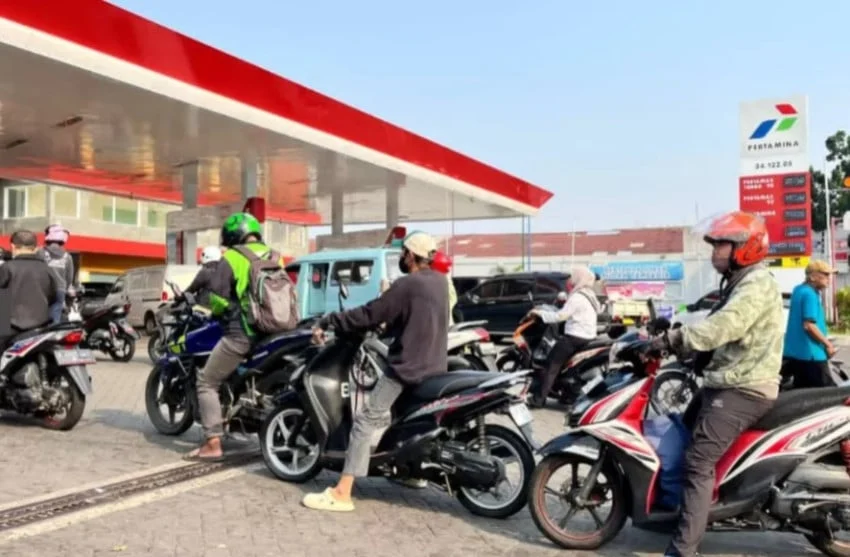
The Indonesian government is currently formulating a series of strategic fiscal maneuvers within the State Budget (APBN) to mitigate the economic repercussions of a significant surge in global crude oil prices, which have once again breached the psychological threshold of USD 100 per barrel. Despite the mounting pressure from international energy markets, the administration has reaffirmed its commitment to maintaining energy subsidies, ensuring that the retail price of Pertalite—the nation’s most widely used subsidized fuel—remains unchanged for the time being. This policy direction aims to shield domestic consumption and maintain macroeconomic stability amidst a volatile geopolitical landscape that has disrupted global supply chains.
Finance Minister Purbaya Yudhi Sadewa, speaking at the Ministry of Finance headquarters in Jakarta on Friday, July 24, 2026, emphasized that the protection of public purchasing power remains the government’s top priority. The Minister revealed that following a high-level cabinet meeting, President Prabowo Subianto issued a direct mandate to the fiscal authority to conduct rigorous simulations. These simulations are designed to test the resilience of the APBN against various oil price trajectories, ranging from sustained triple-digit figures to potential further escalations. The objective is to determine how much fiscal space remains to absorb the rising costs of energy imports without jeopardizing the country’s deficit targets or developmental programs.
Geopolitical Tensions and the Return of Triple-Digit Oil
The recent spike in global oil prices is largely attributed to renewed instability in the Middle East, specifically a series of targeted attacks on commercial tankers in the Red Sea. Market analysts point to these maritime disruptions as a primary driver for the surge in Brent Crude and West Texas Intermediate (WTI) benchmarks. The Red Sea serves as a critical artery for global trade, particularly for the transport of energy from the Persian Gulf to European and Asian markets. When security in these waters is compromised, insurance premiums for shipping rise, and many vessels are forced to take longer, more expensive routes around the Cape of Good Hope, leading to immediate supply-side inflationary pressure.
For Indonesia, a net importer of oil, the return of USD 100 per barrel presents a dual challenge. On one hand, it increases the cost of importing refined petroleum products; on the other, it necessitates a larger allocation of state funds for energy subsidies and compensation to state-owned enterprises like Pertamina. The government’s current fiscal architecture was built on a much lower Indonesian Crude Price (ICP) assumption, meaning a sustained period of high prices could create a significant "fiscal gap" that must be managed through either efficiency measures, reallocation of spending, or increased revenue from other sectors.
The Presidential Directive: Strategic Fiscal Simulations
During the latest cabinet sessions, President Prabowo Subianto reportedly underscored the importance of proactive rather than reactive governance. By requesting multiple scenarios for the state budget, the President aims to ensure that Indonesia is not caught off guard by external shocks. Finance Minister Purbaya noted that the simulations cover several variables, including the exchange rate of the Rupiah against the US Dollar, as the cost of oil is dollar-denominated. A weakening Rupiah combined with high oil prices, often referred to as a "twin pressure," could exponentially increase the burden on the APBN.
The simulations being conducted by the Ministry of Finance involve:
- The Baseline Scenario: Assuming oil prices stabilize near USD 100 per barrel for the remainder of the fiscal year.
- The Stress Scenario: Factoring in a potential climb toward USD 115 or USD 120 per barrel if geopolitical tensions escalate further.
- The Mitigation Scenario: Identifying non-essential spending categories that can be deferred to provide more "room to breathe" for energy subsidies.
"We are constantly monitoring the data. The President wants us to be ready for the worst-case scenario while hoping for the best. Our focus is to ensure that the subsidy remains targeted and that the state budget remains a reliable shock absorber for the people," Purbaya added.
Maintaining the Pertalite Subsidy: A Social and Economic Necessity
The decision to keep Pertalite prices steady is a calculated move to prevent a spike in inflation. In Indonesia, fuel prices have a direct and profound impact on the Consumer Price Index (CPI). When fuel costs rise, the cost of logistics and transportation follows suit, which in turn drives up the prices of basic commodities, particularly food. For a large segment of the population, especially those in the lower-to-middle income brackets and small-to-medium enterprise (SME) owners, affordable fuel is essential for daily economic activity.
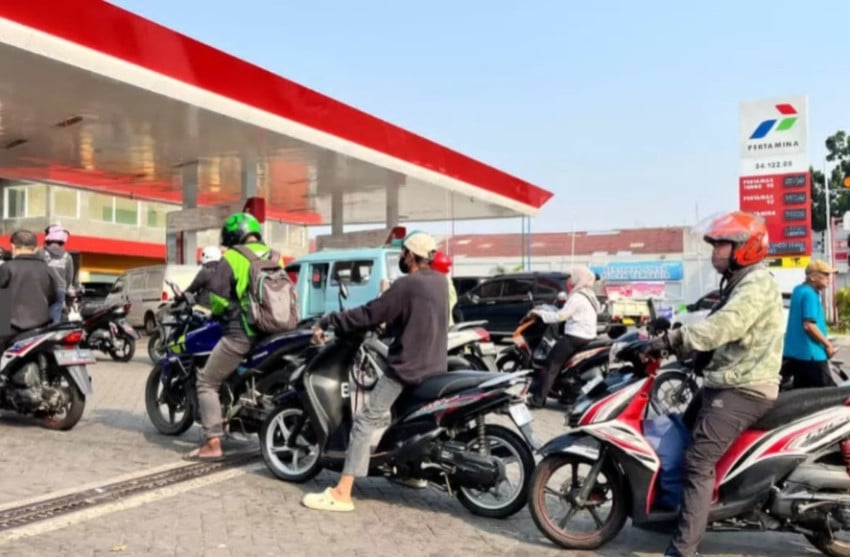
Historically, adjustments to subsidized fuel prices in Indonesia have been met with significant public concern and have occasionally led to social unrest. By choosing to absorb the price difference through the state budget, the government is prioritizing social stability and the momentum of post-pandemic economic growth. However, this commitment requires Pertamina to continue its role as the primary distributor of subsidized fuel, often requiring the government to pay out massive "compensation" sums to the company to cover the difference between the market price and the regulated retail price.
The Fiscal Impact and the Role of the APBN
The APBN functions as the primary tool for economic redistribution and protection in Indonesia. However, the surge to USD 100 per barrel tests the limits of this tool. According to recent data from the Ministry of Energy and Mineral Resources, every USD 1 increase in the ICP can add trillions of Rupiah to the state’s subsidy and compensation burden. When the actual price deviates significantly from the budget’s initial assumptions, the government must seek approval from the House of Representatives (DPR) for budget adjustments or utilize the "salso" (excess budget balance) from previous years.
Economists suggest that while the government has sufficient reserves for now, a long-term stay at USD 100 per barrel might force a re-evaluation of other major projects. The Prabowo administration has several flagship programs, including large-scale infrastructure development and social welfare initiatives, which also require substantial funding. Balancing these priorities with a ballooning energy subsidy bill will be the defining challenge for the fiscal team in the second half of 2026.
Broader Implications for the Energy Transition
The current crisis also highlights Indonesia’s continued vulnerability to global fossil fuel markets, underscoring the urgency of the national energy transition strategy. While the government is focused on immediate price stabilization, there is an increasing call from environmental and economic experts to accelerate the shift toward renewable energy and electric vehicles (EVs).
If Indonesia can reduce its reliance on imported oil through the adoption of domestic biofuels (such as the expansion of B35 or B40 biodiesel programs) and the electrification of public and private transport, the "shock" of global oil price hikes would be significantly dampened. The Ministry of Finance has indicated that part of the long-term simulation includes incentives for energy efficiency to reduce the total volume of subsidized fuel consumed annually.
Expert Reactions and Market Outlook
Financial analysts in Jakarta have reacted cautiously to the news. While the commitment to keep Pertalite prices stable is welcomed by the consumer sector, there are concerns regarding the widening budget deficit. "The government is walking a tightrope," said a senior economist from a leading national bank. "They need to protect the poor, but they also need to maintain fiscal discipline to keep international investors confident in the Rupiah and Indonesian bonds."
Market observers believe that oil prices will remain volatile as long as the situation in the Red Sea remains unresolved. Any further disruption to the Suez Canal or the Strait of Hormuz could send prices even higher. Consequently, the Indonesian government’s "simulation-based" approach is seen as a prudent step in navigating an unpredictable global economy.
As the Ministry of Finance continues to crunch the numbers, the public remains watchful. For the millions of motorcyclists and small business owners who rely on Pertalite every day, the government’s promise of price stability provides a much-needed sense of security in an era of global uncertainty. The coming months will be a crucial test of Indonesia’s fiscal resilience and its ability to protect its domestic economy from the storms of international geopolitics.
In conclusion, the Indonesian government is taking a proactive stance by preparing for various economic contingencies while holding the line on fuel subsidies. The next steps will involve a detailed presentation of these budget simulations to the President and eventually to the DPR, where the final roadmap for the 2026 fiscal year will be solidified. For now, the message from the Ministry of Finance is clear: the state budget will continue to serve as a shield for the people, even as the global energy landscape remains fraught with risk.