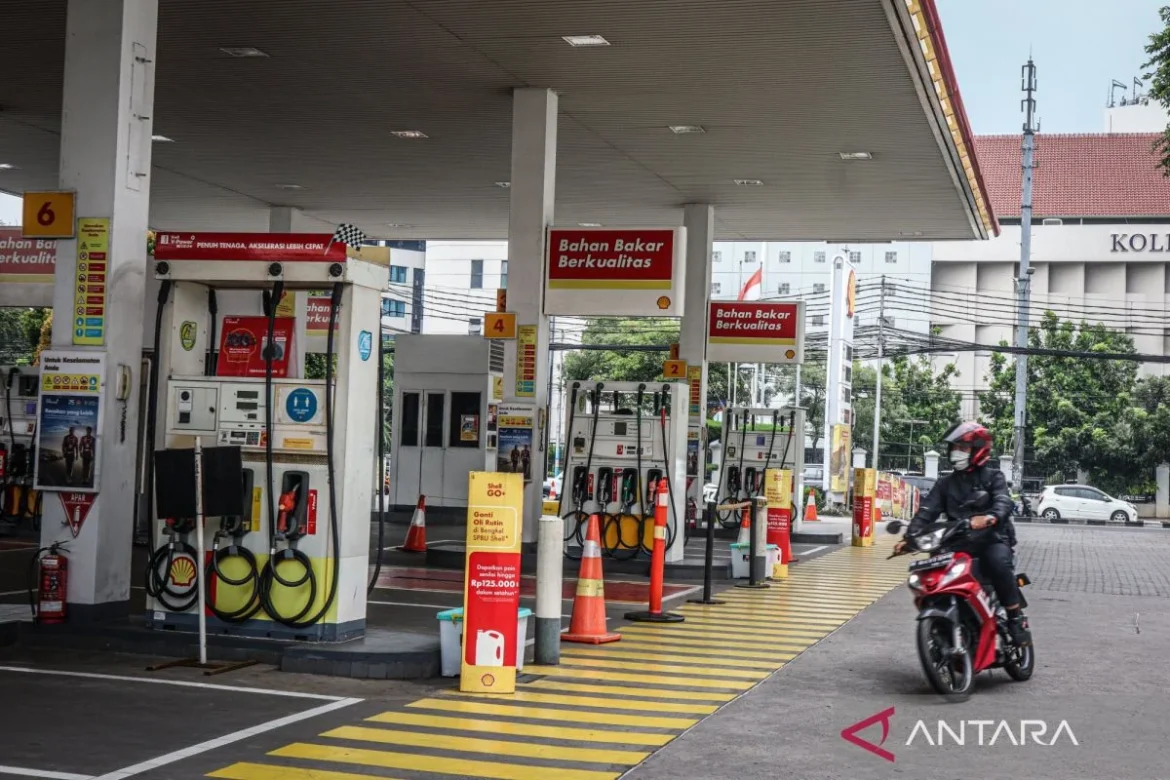
Jakarta (ANTARA) – Shell Indonesia is reminding vehicle owners of the importance of understanding the distinct characteristics and benefits of its various fuel offerings, as price adjustments are set to take effect across all its service stations starting December 1, 2025. This move, following recent supply dynamics and operational policy updates, underscores the need for informed consumer choices to optimize vehicle performance and manage fuel consumption effectively.
The price revisions will see several fuel types experience increases. Shell Super is now priced at approximately IDR 13,000 per liter. Shell V-Power will be available at around IDR 13,630 per liter, while V-Power Diesel will retail for approximately IDR 15,250 per liter. The premium variant, V-Power Nitro+, will also see its price adjusted to roughly IDR 13,890 per liter. These adjustments are part of a broader trend in the Indonesian fuel market, which has seen fluctuating prices influenced by global oil market volatility and domestic policy decisions.
The decision by Shell Indonesia to implement price changes, alongside a renewed focus on consumer education, highlights the competitive landscape of the fuel retail sector in Indonesia. Major players, including state-owned Pertamina and international companies like Shell and BP, regularly review their pricing strategies in response to market forces. For instance, Pertamina has also announced price adjustments for its premium fuels, such as Pertamax, with similar effective dates, signaling a coordinated market response to prevailing economic conditions.
Understanding the Shell Fuel Portfolio: A Guide for Indonesian Consumers
Shell Indonesia offers a diverse range of fuels, each engineered with specific technological advancements and designed to cater to different vehicle types and driving needs. Recognizing these distinctions is crucial for consumers aiming to achieve optimal engine performance, fuel efficiency, and long-term engine health, especially as price points shift.
Shell Super: The Everyday Efficiency Champion
Shell Super is formulated to deliver maximum efficiency, both in terms of engine performance and fuel economy. Its core technology, Dynaflex, is designed to reduce friction within the engine. This reduction in friction contributes to more stable engine performance, whether navigating smooth highways or enduring stop-and-go traffic.
With a Research Octane Number (RON) of 92, Shell Super is recommended for engines with a compression ratio of 9:1 to 10:1. This makes it a suitable choice for many Indonesian vehicles, including Light Commercial Goods Vehicles (LCGCs) and motorcycles with engine capacities exceeding 125cc. For drivers prioritizing fuel savings without compromising daily driving needs, Shell Super is often a preferred option due to its reputation for being an economical and stable RON 92 gasoline. The consistent availability of RON 92 fuels across various brands in Indonesia has made it a benchmark for mainstream passenger vehicles.
Shell V-Power: Enhanced Performance and Engine Cleanliness
Shell V-Power is specifically recommended for vehicles with higher compression ratios, typically ranging from 11:1 to 12:1, owing to its higher octane rating of RON 95. A key advantage of Shell V-Power lies in its advanced Dynaflex formulation, which contains three times more cleaning molecules compared to standard fuels. This enhanced cleaning capability plays a vital role in keeping the combustion chamber clean, thereby minimizing friction and maximizing the energy extracted from each combustion cycle.
The reduced friction achieved by V-Power can significantly suppress deposit formation by up to 80%. This leads to a more responsive and efficient engine, allowing vehicles to perform at their optimal potential. The Indonesian automotive market has seen a growing trend towards vehicles with higher compression ratios, driven by advancements in engine technology aimed at improving fuel efficiency and power output. For these vehicles, using a RON 95 fuel like V-Power is often stipulated by manufacturers to ensure peak performance and prevent potential engine knocking or pre-ignition.
Shell V-Power Nitro+: Unleashing Superior Performance
For drivers who demand peak performance from their vehicles, Shell V-Power Nitro+ presents a premium gasoline option. This fuel incorporates even more advanced friction-reducing technology, engineered to deliver increased power, faster acceleration, and smoother engine response. Introduced to the Indonesian market in April 2021, V-Power Nitro+ targets vehicle owners who are keen on both maintaining and significantly enhancing their vehicle’s performance capabilities.
This premium offering signifies Shell’s commitment to catering to a segment of the market that prioritizes exhilaration and responsiveness in their driving experience. The availability of such high-performance fuels aligns with the increasing sophistication of vehicles being imported and manufactured in Indonesia, many of which feature turbocharging and advanced engine management systems that benefit from higher octane fuels.
Shell V-Power Nitro+ (Highest Octane Variant): The Pinnacle of Engine Protection and Power
As the highest octane fuel available at Shell stations in Indonesia, V-Power Nitro+ is ideally suited for high-compression engines, specifically those with compression ratios between 11.3:1 and 12:1, including vehicles equipped with fuel injection technology. Its cutting-edge formulation boasts the capability to clean up to 100% of engine deposits, effectively restoring engine performance to its original, like-new condition.
Beyond its cleaning prowess, this top-tier fuel provides optimal protection against corrosion and ensures engine components remain clean over the long term. The tangible benefits for drivers include greater power output and a noticeably lighter feel during acceleration. This level of advanced fuel technology is particularly beneficial for modern, performance-oriented vehicles where precision and efficiency are paramount.
Shell V-Power Diesel: Modern Diesel Engine Optimization
Shell V-Power Diesel is specifically formulated for modern diesel-powered vehicles. It features a cetane number of 51 and a low sulfur content of 10 parts per million (ppm), meeting the stringent Euro 5 emission standards. This adherence to international emission norms is increasingly important as Indonesia progressively adopts cleaner fuel standards to mitigate environmental impact.
The technology embedded in V-Power Diesel provides comprehensive cleaning capabilities, targeting deposits within the Internal Diesel Injector Deposits (IDID) and the Exhaust Gas Recirculation (EGR) system. By maintaining the cleanliness of these critical components, the fuel enhances combustion efficiency and safeguards the engine against performance-degrading deposits. The Dynaflex technology present in V-Power Diesel also contributes to keeping vital components of the fuel system clean, thereby promoting engine longevity and responsiveness. The growing popularity of diesel vehicles in Indonesia, particularly for commercial use and larger SUVs, makes this specialized fuel a crucial offering for maintaining optimal engine health and operational efficiency.
Navigating Price Adjustments with Informed Choices
The price adjustments implemented by Shell Indonesia from December 1, 2025, serve as a timely reminder for consumers to re-evaluate their fuel choices. Understanding the specific benefits and technical specifications of each Shell fuel – from the everyday efficiency of Shell Super to the high-performance capabilities of V-Power Nitro+ and the specialized formulation of V-Power Diesel – empowers drivers to make informed decisions.
Beyond the immediate cost implications, selecting the appropriate fuel has a significant impact on the long-term health and performance of a vehicle’s engine. By aligning fuel choice with vehicle requirements and driving habits, consumers can not only manage their expenditure more effectively but also ensure their vehicles operate reliably and efficiently. This proactive approach to fuel selection contributes to a more comfortable, safe, and economical driving experience, even amidst fluctuating market prices. The Indonesian government’s ongoing efforts to manage fuel subsidies and align domestic prices with global benchmarks suggest that consumers will need to remain vigilant and informed about fuel market dynamics in the years to come. The role of fuel providers like Shell in educating consumers on product benefits becomes even more critical in such an environment.
Background and Market Context
The Indonesian fuel market is a significant and dynamic sector, influenced by a complex interplay of global crude oil prices, domestic demand, government policies on subsidies and taxation, and the operational strategies of major fuel retailers. Shell Indonesia, as one of the key international players in the market, operates within this framework, striving to balance competitive pricing with the provision of high-quality fuel products.
The announcement of price adjustments by Shell, alongside similar moves by domestic giants like Pertamina, reflects a broader trend of market normalization and adaptation to prevailing economic conditions. In recent years, Indonesia has seen efforts to deregulate the fuel sector and encourage competition, leading to a wider array of fuel choices for consumers. However, the underlying volatility of global energy markets, exacerbated by geopolitical events and supply chain disruptions, continues to pose challenges for both fuel providers and consumers.
The effective date of December 1, 2025, for these price changes suggests a strategic timing, possibly aligned with broader economic reviews or fiscal adjustments. The Indonesian government, through entities like the Ministry of Energy and Mineral Resources, plays a crucial role in setting fuel quality standards and overseeing market operations. The adherence of Shell’s V-Power Diesel to Euro 5 standards, for instance, is indicative of the country’s commitment to environmental regulations.
Timeline of Events and Future Outlook
While the immediate focus is on the price adjustments effective December 1, 2025, the context of fuel pricing in Indonesia is one of continuous evolution. Historically, fuel prices have been subject to significant fluctuations, often influenced by government subsidy policies. The gradual shift towards market-driven pricing for certain fuel grades, such as Pertamax and premium diesel, has empowered companies like Shell to adjust their retail prices more frequently based on supply costs and market demand.
The introduction of advanced fuel formulations like V-Power Nitro+ signifies an ongoing innovation drive within the industry. As vehicle technology continues to advance, with a growing emphasis on engine efficiency and performance, the demand for specialized fuels is expected to rise. This trend suggests that companies will continue to invest in research and development to offer products that meet these evolving needs.
Looking ahead, the Indonesian fuel market is likely to remain sensitive to global oil price trends, currency exchange rates, and government policies. Consumers can expect continued price adjustments, making it imperative for them to stay informed about product offerings and their associated benefits. The proactive approach taken by Shell in educating its customers about its fuel portfolio is a positive step towards fostering a more informed and empowered consumer base. The long-term implications for the market include greater consumer choice, increased competition, and a potential drive towards more sustainable fuel solutions as environmental regulations tighten. The ongoing development of alternative energy sources and electric vehicle infrastructure also presents a future landscape that fuel providers will need to navigate.
Broader Impact and Implications
The price adjustments and the accompanying educational push by Shell Indonesia have several broader implications for the Indonesian automotive sector and its consumers.
Firstly, it reinforces the trend of market-based pricing for fuels, moving away from heavily subsidized models for certain grades. This can lead to greater price stability in the long run, though short-term adjustments may cause temporary economic pressure on consumers.
Secondly, the emphasis on understanding fuel types highlights the growing sophistication of the Indonesian automotive market. As consumers become more discerning about vehicle maintenance and performance, the availability of specialized fuels that cater to specific engine requirements becomes increasingly important. This can foster a culture of proactive vehicle care, leading to longer vehicle lifespans and reduced maintenance costs for owners who make informed choices.
Thirdly, for Shell, this strategy aims to differentiate its brand and capture market share by offering not just fuel, but also value-added benefits through its product technology. By educating consumers, Shell seeks to build brand loyalty and encourage a preference for its offerings based on perceived quality and performance advantages.
Finally, the move by Shell, mirroring actions by other major fuel retailers, contributes to a dynamic and competitive fuel retail landscape in Indonesia. This competition, driven by product innovation and customer education, ultimately benefits consumers by providing them with more choices and a better understanding of the products they use daily. The Indonesian government’s role in ensuring fair competition and maintaining fuel quality standards remains paramount in this evolving market.