The political landscape in Kyiv has undergone a seismic shift following a series of high-level dismissals that have exposed deepening rifts within the Ukrainian leadership. President Volodymyr Zelensky, who has maintained a firm grip on the nation’s wartime administration, now faces a formidable political challenge from within his own former circle. The recent removal of Mykhailo Fedorov, a figure central to Ukraine’s technological defense and modernization, has catalyzed a movement among lawmakers and the public that could reshape the country’s internal power dynamics. According to reports from several Ukrainian lawmakers and international observers, the dismissal of Fedorov, followed closely by the removal of Commander-in-Chief Aleksandr Syrsky, marks a turning point in the perceived stability of the Zelensky administration.
The reorganization of the cabinet, described by some as a chaotic reshuffle, was framed by the President’s office as a necessary step to resolve "irreconcilable conflicts" between different factions of the government. At the heart of this dispute is a clash of philosophies: the forward-thinking, technocratic approach favored by younger officials like Fedorov, and the traditional, Soviet-style military doctrine represented by General Syrsky. However, the fallout from these decisions suggests that rather than streamlining the war effort, the dismissals have instead elevated the political profiles of those ousted, positioning them as viable alternatives to Zelensky’s leadership.
The Rise and Fall of Mykhailo Fedorov
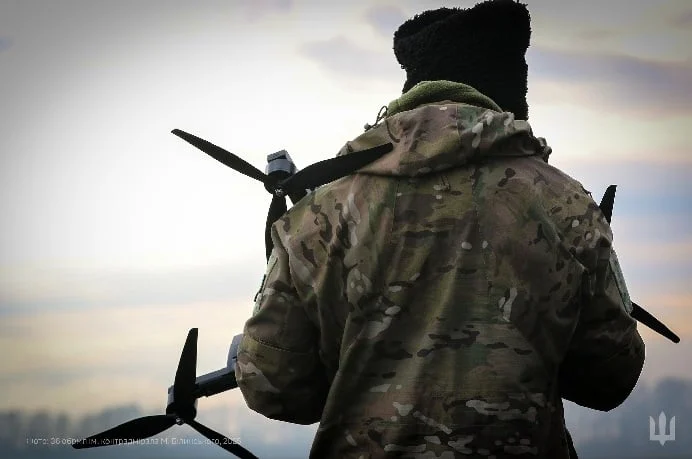
Mykhailo Fedorov, the former Minister of Digital Transformation who also played a pivotal role in defense procurement, has long been regarded as one of the most effective "young technocrats" in the Ukrainian government. His work on the "Diia" app and the "Army of Drones" initiative earned him significant acclaim both domestically and internationally. Fedorov’s ability to integrate modern technology into the battlefield was seen as a crucial counterweight to Russia’s numerical advantages.
The decision to dismiss Fedorov on July 16 was met with immediate backlash. In Kyiv and several other major cities, protests erupted as citizens and activists demanded his reinstatement. For many, Fedorov represented the future of a modernized, European Ukraine—one that moved away from the bureaucratic and rigid structures of the past. The move to oust him was seen by critics not as a strategic necessity, but as a political maneuver to sideline a rising star whose popularity was beginning to rival that of the President.
Lawmakers speaking on the condition of anonymity have noted that the "scandal" surrounding Fedorov’s exit has inadvertently gifted him a powerful political platform. "The sharks are waiting," one parliamentarian noted, suggesting that political elites are already preparing for a post-war electoral cycle where Fedorov could lead a new opposition movement.
The Military Command Crisis: The Syrsky Dismissal
The dismissal of General Aleksandr Syrsky, who replaced the widely popular Valery Zaluzhny earlier in 2024, has further complicated the narrative. Syrsky’s appointment was initially seen as a move by Zelensky to ensure a more compliant military leadership following public disagreements with Zaluzhny over the direction of the 2023 counteroffensive. However, Syrsky reportedly struggled to gain the trust of the rank-and-file soldiers, many of whom viewed him as a "Soviet-style" commander who was less concerned with troop welfare than his predecessor.
By removing Syrsky so soon after his appointment, Zelensky has inadvertently signaled a lack of consistency in military strategy. This "revolving door" of leadership at the highest levels of the Armed Forces of Ukraine (AFU) has raised concerns among Western allies and domestic critics alike. The President’s announcement on Telegram regarding Syrsky’s dismissal was intended to show a decisive hand, but it has instead fueled perceptions of an administration in turmoil.
Shifting Public Sentiment and Polling Data
The internal friction in the Ukrainian government is reflected in the shifting tides of public opinion. Data from the Kyiv International Institute of Sociology (KIIS) suggests a notable decline in the absolute trust once enjoyed by President Zelensky. For the first time since the full-scale invasion began in February 2022, Zelensky’s approval ratings are being challenged by his own subordinates.
The most recent polling data indicates that Mykhailo Fedorov’s net approval rating now sits approximately 2 percentage points higher than Zelensky’s. Perhaps more concerning for the administration is the "trust gap"—roughly 34% of respondents now express a lack of trust in the President’s leadership. This erosion of support is attributed to several factors, including the perceived lack of progress on the front lines, persistent rumors of government corruption, and the exhaustion of a population that has lived under martial law for over two years.
Furthermore, the shadow of Valery Zaluzhny continues to loom large over the political arena. Despite his dismissal and subsequent appointment as Ambassador to the United Kingdom, Zaluzhny remains the most popular figure in Ukraine. The fact that both Fedorov and Zaluzhny—two men sidelined by Zelensky—hold higher approval ratings than the President suggests a growing appetite for a change in leadership style.
Chronology of Internal Tensions
To understand the current political crisis, one must look at the timeline of events that led to this fractured state:
- Late 2023: Tensions between President Zelensky and then-Commander-in-Chief Valery Zaluzhny become public following the stalled summer counteroffensive. Zaluzhny’s "stalemate" comments in international media reportedly infuriated the President’s office.
- February 2024: Zelensky officially dismisses Zaluzhny, replacing him with Aleksandr Syrsky. The move is met with mixed reactions from the public and the military.
- Spring 2024: Reports emerge of friction between the Ministry of Digital Transformation (led by Fedorov) and the Ministry of Defense over the control of drone production and electronic warfare assets.
- June 2024: Jajak polls show Zelensky’s trust levels dropping below 65% for the first time, while Fedorov and Zaluzhny maintain high favorability.
- July 16, 2024: Mykhailo Fedorov is dismissed during a cabinet reshuffle. Protests break out in Kyiv.
- Late July 2024: Zelensky announces the dismissal of General Syrsky, citing the need for "new energy" and a resolution to internal military conflicts.
The "Technocrat vs. General" Divide
The conflict between Fedorov and the military establishment is emblematic of a broader struggle within Ukraine. On one side are the "technocrats"—young, Western-educated, and tech-savvy officials who believe that innovation, transparency, and decentralization are the keys to winning the war and rebuilding the country. On the other side is the "old guard"—military and bureaucratic figures who prioritize central control, traditional hierarchy, and Soviet-era operational protocols.
Fedorov’s dismissal is seen as a victory for the traditionalists in the short term, but it may prove to be a strategic error for Zelensky. By removing the primary advocate for technological reform, the administration risks alienating the very demographic—young professionals and tech workers—that has been essential to the nation’s resilience.
Statements and Reactions
While official government spokespersons have maintained that the changes are part of a routine "optimization of the state apparatus," the rhetoric from the opposition has been much sharper. Members of the "European Solidarity" party and other minority factions in the Verkhovna Rada (Parliament) have characterized the moves as an "authoritarian consolidation of power."
"We are seeing a pattern where anyone who gains too much popularity or shows too much independence is removed," said one opposition lawmaker. "This is not how a democracy functions, even during a war. We need experts like Fedorov to stay in their posts, not be sacrificed for political optics."
International reactions have been more measured but cautious. Diplomats from G7 nations have privately expressed concern that frequent changes in the defense and military leadership could disrupt the flow of military aid and complicate long-term strategic planning. The stability of the Ukrainian government is a key factor in the continued support of its Western partners.
Analysis of Implications
The emergence of Mykhailo Fedorov as a potential political rival to Zelensky has several long-term implications for Ukraine:
- Political Realignment: If Fedorov decides to establish his own political party, as suggested by some lawmakers, he could draw support from Zelensky’s "Servant of the People" party, leading to a significant realignment in the Verkhovna Rada. This would make it more difficult for the President to pass legislation without forming complex coalitions.
- Electoral Pressure: Although elections are currently suspended under martial law, the debate over when they should be held is intensifying. A popular opposition led by figures like Fedorov and backed by the military prestige of Zaluzhny would create immense pressure on Zelensky to hold elections as soon as security conditions permit.
- Military Morale: The frequent turnover in the high command (from Zaluzhny to Syrsky and now to an unnamed successor) can have a detrimental effect on troop morale. Soldiers require a sense of continuity and trust in their leadership to maintain effectiveness on the battlefield.
- Innovation Stagnation: There is a risk that the momentum in drone warfare and digital defense—areas where Ukraine has had a clear edge—could slow down without Fedorov’s direct oversight and political weight.
Conclusion
President Volodymyr Zelensky remains the face of Ukrainian resistance on the global stage, but domestically, his position is increasingly contested. The dismissal of Mykhailo Fedorov has not silenced a critic; rather, it has created a martyr for the cause of modernization and a potential challenger for the presidency. As the war continues and the challenges of governance mount, the internal unity that characterized the early days of the invasion is being replaced by a more complex and competitive political environment.
The coming months will be a critical test for Zelensky. He must balance the need for decisive wartime leadership with the democratic necessity of maintaining a broad and inclusive government. If he fails to address the concerns of the "technocrat" faction and the growing dissatisfaction within the military, he may find that his greatest challenge is not the enemy at the gates, but the rivals he helped create within his own halls of power. For now, the "sharks" of Ukrainian politics are indeed waiting, and the political landscape of the nation is more fluid than it has been in years.