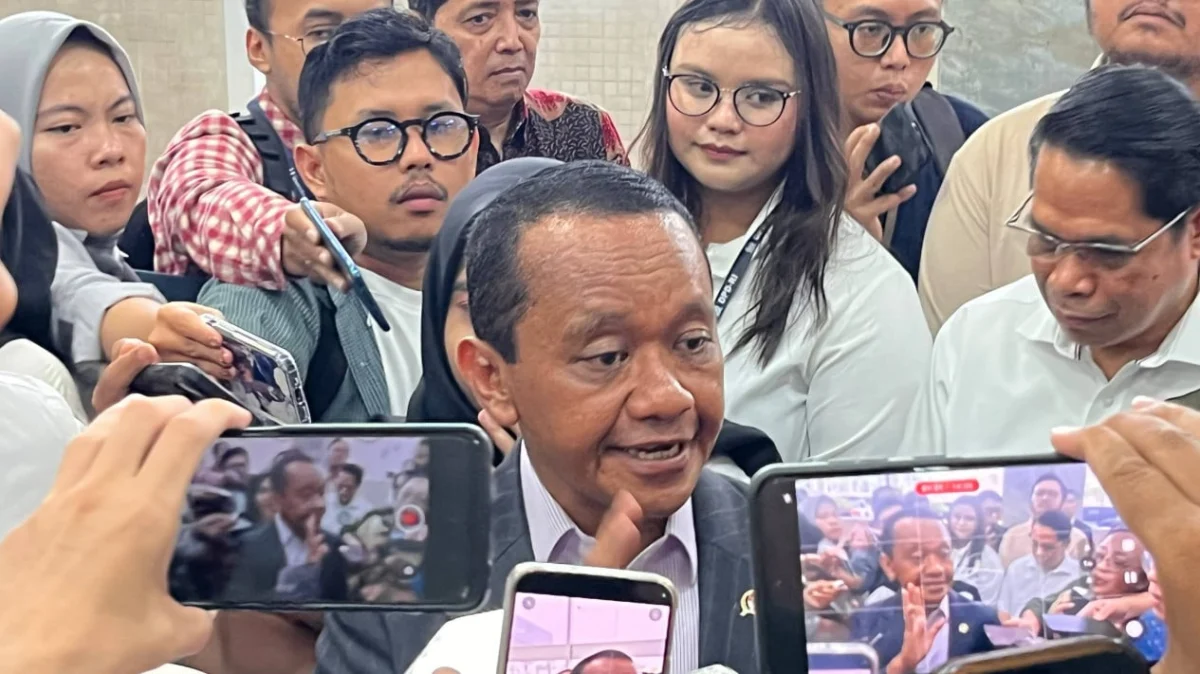
Jakarta, VIVA – The Indonesian government is actively evaluating the potential for a downward adjustment in the prices of non-subsidized fuel, following a sustained weakening trend in global crude oil markets. Minister of Energy and Mineral Resources (ESDM), Bahlil Lahadalia, confirmed on Monday, July 20, 2026, that calculations are underway, and high-level discussions with state-owned energy giant PT Pertamina (Persero) and other private fuel distributors are imminent to finalize the decision. This potential price cut would primarily benefit the segment of the population utilizing non-subsidized fuel, estimated to be around 20 percent of total consumers, often characterized as the more economically capable demographic.
Minister Lahadalia emphasized the government’s cautious approach, acknowledging the inherent volatility of both the Indonesian Crude Price (ICP) and international oil benchmarks. The objective is to devise a "wise formula" that simultaneously alleviates the burden on consumers without undermining the operational sustainability and financial health of the country’s vital oil and gas industry players. This intricate balancing act underscores the complexities of energy policy in a nation heavily reliant on fossil fuels and sensitive to price fluctuations. Beyond domestic price considerations, Lahadalia also reported to President Prabowo Subianto on Indonesia’s strategic crude oil and fuel procurement partnerships with various nations, assuring the public of the national energy supply’s security through the end of the year, with a firm commitment to maintaining stable subsidized fuel prices.
Navigating the Global Oil Market: A Delicate Balance
Indonesia, as both a significant oil producer and consumer, is acutely susceptible to the vagaries of the international crude oil market. The price of fuel in the country is broadly categorized into two segments: subsidized and non-subsidized. Subsidized fuels, primarily certain types of gasoline and diesel, are subject to government intervention to keep prices affordable for the majority of the population, often through direct subsidies or tax exemptions. Non-subsidized fuels, on the other hand, are priced closer to market rates, typically reflecting global crude oil prices, refining costs, distribution margins, and applicable taxes. This dual pricing mechanism aims to protect vulnerable segments of society while allowing market forces to influence prices for those with greater purchasing power.
The government’s decision-making process for non-subsidized fuel prices involves a comprehensive assessment of several key indicators. Central among these is the Indonesian Crude Price (ICP), which serves as a benchmark for domestically produced crude oil. The ICP itself is influenced by global benchmarks such as Brent crude and West Texas Intermediate (WTI), along with regional supply and demand dynamics. Other factors include the exchange rate of the Indonesian Rupiah against the US Dollar (as crude oil is traded internationally in USD), refining costs, transportation and distribution expenses, and the government’s excise duties and value-added taxes (VAT). A sustained decline in global crude oil prices, as observed recently, directly translates to lower procurement costs for refiners and distributors, thereby creating room for price reductions at the pump.
Minister Lahadalia’s announcement signals a proactive stance by the government to align domestic non-subsidized fuel prices with international market realities. This approach contrasts with the more insulated nature of subsidized fuel prices, which are often subject to broader socio-political and economic considerations, including inflation control and public welfare. The forthcoming discussions with Pertamina and other stakeholders are crucial for determining the precise extent and timing of any potential price adjustments, ensuring that the new pricing structure is fair, sustainable, and transparent.
Recent Global Oil Market Dynamics and Their Impact
The "weakening trend" in global crude oil prices, referenced by Minister Lahadalia, has been a notable feature of the international energy landscape over recent months. After periods of significant volatility driven by geopolitical tensions, supply chain disruptions, and post-pandemic demand surges, crude oil benchmarks have shown signs of softening. For instance, Brent crude futures, which had soared past $100 per barrel at various points in the past year, have more recently traded in a range that suggests reduced upward pressure, occasionally dipping below key psychological thresholds. Similarly, WTI crude, the US benchmark, has mirrored this trend, reflecting a broader market sentiment.

Several factors have contributed to this downturn. Foremost among them are growing concerns about a potential global economic slowdown, particularly in major economies like China and parts of Europe. Slower economic growth typically translates to reduced industrial activity and lower demand for crude oil. Additionally, some major oil-producing nations have either increased their output or maintained existing levels, contributing to a more robust supply picture. While OPEC+ (Organization of the Petroleum Exporting Countries and its allies) has periodically intervened to manage supply, market analysts have pointed to a complex interplay of demand-side weaknesses and stable-to-increasing non-OPEC+ supply, particularly from the United States. Geopolitical developments, while capable of causing sharp price spikes, have not, in the immediate past, generated sustained upward pressure that outweighs the broader economic concerns.
For Indonesia, these global trends directly influence the ICP. When international crude oil prices decline, the cost of importing crude for domestic refining, as well as the opportunity cost of selling domestically produced crude, decreases. This reduction in input costs forms the primary basis for the government’s consideration of lower non-subsidized fuel prices. The government’s vigilance regarding these fluctuations, as noted by Minister Lahadalia, is critical, given that sharp reversals in global prices could necessitate quick policy adjustments to avoid significant losses for fuel distributors or sudden price hikes for consumers.
Government’s Deliberation and Assurance of Stability
The process of adjusting non-subsidized fuel prices is not a unilateral decision but involves extensive consultation and analysis. Minister Lahadalia’s commitment to holding meetings with Pertamina and other private fuel businesses underscores the collaborative nature of this policy formulation. These discussions will likely delve into various technical aspects, including the current stock levels, import schedules, refining margins, and the financial health of the distributors. Pertamina, as the dominant player in Indonesia’s downstream oil and gas sector, holds a critical position in implementing any price changes and ensuring continuous supply across the archipelago.
Lahadalia’s emphasis on finding a "wise formula" reflects the government’s recognition of the delicate balance between market principles and social responsibility. While non-subsidized fuel users are often considered more affluent, sudden or drastic price fluctuations can still impact their economic planning and contribute to broader market uncertainty. Conversely, industry players, including Pertamina, need predictable pricing mechanisms to ensure their financial viability, allowing them to invest in infrastructure, maintain operational efficiency, and secure future energy supplies. The minister’s statement that the non-subsidized segment constitutes "20 percent, these are our able citizens" highlights the government’s differentiation in its approach to energy pricing, where the primary focus of direct intervention remains on subsidized fuels for the broader populace.
Furthermore, Minister Lahadalia provided a crucial update to President Prabowo Subianto regarding Indonesia’s strategic partnerships for crude oil and refined fuel procurement. These partnerships are vital for ensuring the nation’s energy security, particularly given Indonesia’s status as a net oil importer. By diversifying its sources and securing long-term supply agreements, the government aims to mitigate risks associated with global supply disruptions or price shocks. The assurance that "Alhamdulillah we are clear until, God willing, the end of the year, there are no problems" regarding national energy supply is a significant statement, providing confidence to both consumers and businesses. This commitment is further bolstered by the categorical declaration that "insya Allah there will be no increase whatsoever" for subsidized fuel prices, directly addressing a key concern for the majority of Indonesian households and a critical component of the country’s inflation management strategy.
Potential Implications for Consumers, Economy, and Industry
A reduction in non-subsidized fuel prices, if implemented, would have several ripple effects across the Indonesian economy.
For Consumers: The direct beneficiaries would be individuals and businesses that rely on non-subsidized fuels, such as owners of private vehicles (many of which use higher-octane fuels like Pertamax or Pertamax Turbo), certain industrial sectors, and commercial transportation not covered by subsidized fuel schemes. Lower fuel costs would translate into reduced transportation expenses, potentially freeing up disposable income for other goods and services. While the impact on the overall cost of living might be less pronounced than a change in subsidized fuel prices, it could still contribute positively to consumer sentiment and purchasing power for the affected segment.

For the Economy: From a macroeconomic perspective, lower non-subsidized fuel prices could contribute to a moderation of inflation. Although non-subsidized fuel has a smaller weighting in the consumer price index (CPI) compared to subsidized fuel, reduced transportation costs for businesses could lead to lower logistics expenses, which might then be passed on to consumers through stable or reduced prices for goods and services. This could indirectly support the central bank’s efforts to keep inflation within its target range. Additionally, increased consumer spending, fueled by savings from lower fuel costs, could provide a modest boost to economic activity.
For the Industry: Businesses across various sectors, particularly those with significant transportation or operational fuel costs (e.g., manufacturing, logistics, tourism, and agriculture), would welcome lower non-subsidized fuel prices. Reduced input costs could improve profit margins, potentially encouraging investment or allowing for more competitive pricing of their products and services. For fuel distributors like Pertamina, the challenge lies in managing margins while adhering to government directives. While lower crude prices reduce procurement costs, the retail price adjustments must still cover operational expenses, infrastructure development, and ensure a reasonable return on investment. The government’s "wise formula" aims to strike this balance, preventing undue financial strain on these crucial entities.
Broader Energy Policy and Future Outlook
Indonesia’s energy policy is a complex tapestry woven with threads of economic development, social equity, and environmental sustainability. The management of fuel prices is a recurring theme, often sparking public debate and requiring careful political navigation. The government’s continued commitment to stable subsidized fuel prices reflects its dedication to social welfare and poverty alleviation, recognizing that fuel costs disproportionately affect lower-income households. Simultaneously, the willingness to adjust non-subsidized prices based on market dynamics demonstrates a pragmatic approach to economic management, aligning domestic prices with global trends where feasible.
Looking ahead, Indonesia continues to pursue a broader energy transition strategy aimed at diversifying its energy mix and reducing its long-term reliance on fossil fuels. Investments in renewable energy sources, energy efficiency initiatives, and the development of alternative fuels are central to this vision. However, in the near to medium term, fossil fuels will remain a critical component of the nation’s energy matrix, making prudent management of their supply and pricing paramount. The forthcoming meetings and subsequent announcements regarding non-subsidized fuel prices will serve as a key indicator of the government’s responsiveness to global market shifts and its ongoing commitment to balancing economic stability with consumer welfare.
As the global energy landscape remains dynamic, with geopolitical events, economic shifts, and climate change policies constantly influencing supply and demand, Indonesia’s approach to fuel pricing will continue to evolve. The current consideration of non-subsidized fuel price cuts offers a timely illustration of the government’s adaptive strategy, aiming to harness favorable international conditions to benefit its citizens while safeguarding the stability of its vital energy sector. The nation awaits the outcome of these critical deliberations, which will undoubtedly shape economic sentiments and household budgets in the coming months.