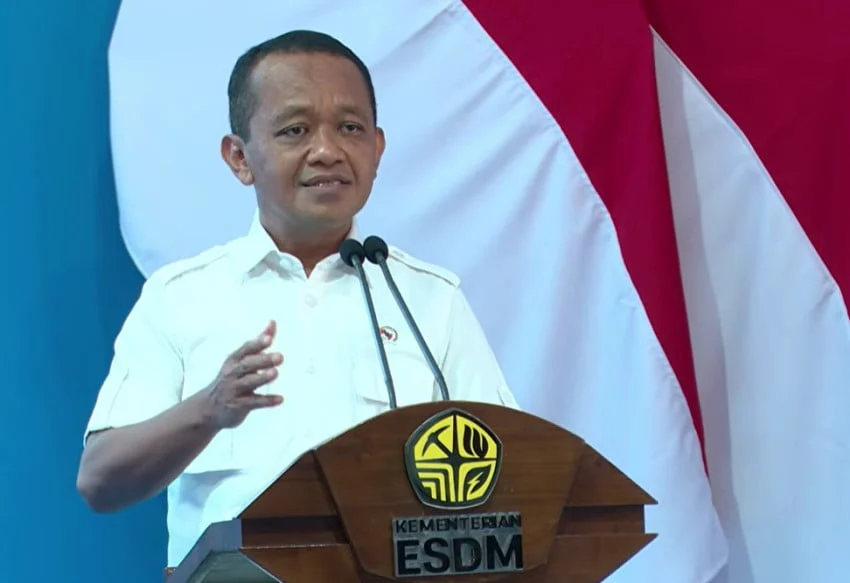
JAKARTA – Indonesia’s Minister of Energy and Mineral Resources (ESDM), Bahlil Lahadalia, has made a bold projection, asserting that hydrogen fuel cell vehicles (HFCVs) are poised to emerge as formidable competitors to battery electric vehicles (BEVs) within the next five to ten years. Speaking at the Global Hydrogen Ecosystem 2026 event in Jakarta on Tuesday, July 21, 2026, Minister Lahadalia underscored the accelerating pace of hydrogen technology development, which he believes possesses the transformative potential to redefine the future trajectory of the eco-friendly transportation sector. His remarks highlight a growing sentiment among policymakers and industry leaders regarding the diverse pathways to sustainable mobility, moving beyond the predominant focus on battery technology.
"This is an environmental issue, and my conviction is that, at the latest within 5-10 years, hydrogen will rival battery-based electric vehicles," Minister Lahadalia declared, emphasizing the critical role of environmental considerations in shaping future energy policies and technological investments. The Global Hydrogen Ecosystem 2026 served as a pivotal platform for stakeholders across the energy, automotive, and technology sectors to converge, discuss, and strategize on the global rollout and integration of hydrogen as a clean energy carrier. Indonesia, with its vast renewable energy potential and strategic geographical position, is keen to position itself as a key player in this burgeoning global hydrogen economy.
The Environmental Imperative: Addressing Battery Waste
A cornerstone of Minister Lahadalia’s argument rests on the environmental advantages offered by hydrogen vehicles, particularly their minimal waste footprint compared to BEVs. He articulated that HFCVs do not generate the significant battery waste associated with BEVs, which presents a long-term ecological challenge. The production of lithium-ion batteries, the backbone of current BEVs, requires substantial mining of critical minerals such as lithium, cobalt, nickel, and manganese. These processes often carry environmental and social costs, including habitat destruction, water pollution, and human rights concerns in mining regions. Furthermore, the end-of-life management of EV batteries poses a complex problem. While recycling technologies are advancing, they are not yet universally scalable or economically viable enough to handle the anticipated deluge of spent batteries. The current global recycling rate for lithium-ion batteries remains relatively low, with many batteries ending up in landfills, where their hazardous components can leach into the environment.
In stark contrast, HFCVs generate only water vapor as a byproduct during operation, offering a truly zero-emission solution at the tailpipe. This fundamental difference positions hydrogen as a potentially cleaner alternative over the entire lifecycle, provided the hydrogen itself is produced using renewable energy sources—a concept known as "green hydrogen." This distinction resonates deeply with nations grappling with burgeoning waste management issues and striving for more holistic environmental sustainability in their energy transitions.
Navigating the Hurdles: Challenges for Hydrogen Adoption
Despite the compelling environmental narrative, Minister Lahadalia candidly acknowledged the substantial challenges that currently impede the widespread implementation of hydrogen technology. These hurdles encompass a spectrum of issues, from technological efficiency and market certainty to the colossal investment requirements and the imperative for robust regulatory frameworks.
A primary concern highlighted by the Minister is the current cost of hydrogen production, which remains prohibitively high when compared to established energy sources like petroleum-based fuels, bioenergy, and even electricity. "Hydrogen is indeed still expensive. This is a challenge in terms of how to obtain more efficient technology so that its price becomes competitive," he remarked. This cost disparity is largely attributable to the nascent stage of green hydrogen production technologies, which rely on electrolysis powered by renewable electricity. While the cost of renewable energy continues to fall, the capital expenditure for electrolyzers and the operational costs associated with large-scale green hydrogen production facilities are still significant. Grey hydrogen, produced from natural gas without carbon capture, is currently cheaper but defeats the environmental purpose. Blue hydrogen, also from natural gas but with carbon capture, represents a transitional step but still relies on fossil fuels. The ultimate goal is to scale up green hydrogen to achieve cost parity.
Beyond production costs, other technological and infrastructural inefficiencies also contribute to the economic hurdles. The energy conversion chain for hydrogen involves several steps: electricity to hydrogen (electrolysis), compression or liquefaction for storage, transportation, and then conversion back to electricity in the fuel cell stack within the vehicle. Each conversion step entails energy losses, impacting overall efficiency. The storage and distribution infrastructure for hydrogen is also considerably more complex and expensive to build out than electric charging networks, requiring specialized high-pressure tanks or cryogenic facilities.
Furthermore, the lack of market certainty and significant upfront investment needs create a classic "chicken-and-egg" dilemma. Automotive manufacturers are hesitant to commit to mass production of HFCVs without a robust refueling infrastructure, while energy companies are reluctant to invest in building hydrogen stations without a sufficient number of vehicles on the road to ensure demand. This interdependent challenge necessitates coordinated efforts from both public and private sectors to kickstart the hydrogen ecosystem. Regulatory support is equally crucial, encompassing not only safety standards for hydrogen handling and storage but also incentive schemes that can level the playing field with established or more mature clean energy technologies like BEVs.
The Global Hydrogen Push: A Timeline of Innovation and Investment
The debate surrounding hydrogen’s potential is not new, but recent technological breakthroughs and renewed global commitment to decarbonization have reignited interest. Hydrogen fuel cells were first developed in the 19th century, with early prototypes of hydrogen-powered vehicles emerging in the mid-20th century. However, challenges related to cost, storage, and infrastructure kept them largely in the realm of research and niche applications.
The 1990s and early 2000s saw a concerted push by several major automotive manufacturers, notably Toyota, Honda, and Hyundai, to develop production-ready HFCVs. Models like the Toyota Mirai, Honda Clarity Fuel Cell, and Hyundai Nexo represent the culmination of decades of research, offering competitive range and refueling times similar to gasoline cars. Despite these advancements, widespread consumer adoption has been limited due to the sparse refueling infrastructure and higher vehicle purchase costs compared to BEVs.
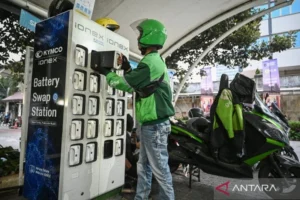
Meanwhile, the 2010s witnessed the rapid ascent of BEVs, driven by significant battery cost reductions, improving range, and a rapidly expanding charging network. Governments worldwide, including Indonesia, have rolled out various incentives for BEVs, ranging from tax breaks and purchase subsidies to free parking and dedicated charging infrastructure development. For instance, Indonesia has been actively promoting BEV adoption through policies like import duty exemptions, luxury goods tax reductions, and even the potential for 0% vehicle ownership tax (PKB) in certain regions, as highlighted by related government initiatives. This aggressive push for BEVs has created a substantial lead in market penetration and consumer familiarity.
However, the past five years have seen a resurgence of interest in hydrogen, particularly green hydrogen, as a versatile energy carrier for hard-to-abate sectors (heavy industry, long-haul transport, aviation, shipping) and as a means for long-duration energy storage. Major economies like the European Union, Japan, South Korea, Australia, Germany, and the United States have unveiled ambitious national hydrogen strategies, committing billions of dollars to research, infrastructure development, and pilot projects. These strategies often include targets for green hydrogen production capacity, hydrogen refueling station deployment, and the integration of hydrogen into industrial processes and power generation.
Supporting Data and Expert Perspectives
Global consulting firms and energy agencies like the International Energy Agency (IEA) and the Hydrogen Council project significant growth in the hydrogen economy over the coming decades. The IEA’s "Global Hydrogen Review" consistently emphasizes the need for policy support to scale up green hydrogen production and infrastructure. While current global hydrogen production is dominated by grey hydrogen (around 95%), projections indicate a dramatic shift towards green and blue hydrogen by 2030 and beyond, driven by falling renewable energy costs and carbon pricing mechanisms.
Industry analysts often point to the complementary roles of BEVs and HFCVs. BEVs are widely considered ideal for urban commuting, short-to-medium range travel, and light-duty vehicles where charging infrastructure is readily available. HFCVs, on the other hand, offer distinct advantages for heavy-duty trucks, buses, trains, and potentially long-range passenger vehicles, where rapid refueling, long range, and consistent performance under heavy loads are critical. Refueling an HFCV can take just 3-5 minutes, comparable to gasoline cars, which is a significant advantage over even the fastest BEV charging times for long journeys.
Statements from related parties, though not directly quoted in the original brief, can be logically inferred based on industry trends. Automotive manufacturers like Toyota and Hyundai, which have heavily invested in HFCVs, would likely echo Minister Lahadalia’s optimism, emphasizing the technological maturity of their fuel cell platforms and their environmental credentials. Energy companies involved in renewable power generation might express strong interest in developing green hydrogen projects, seeing it as a crucial pathway to utilize surplus renewable electricity and diversify their portfolios. Environmental advocacy groups would likely welcome the push for green hydrogen but would stress the absolute necessity of ensuring that hydrogen production is genuinely clean, warning against the pitfalls of "blue" or "grey" hydrogen masquerading as sustainable solutions.
Indonesia’s Strategic Position and Broader Implications
Indonesia’s foray into the hydrogen discussion is particularly significant given its vast renewable energy potential. The archipelago nation possesses abundant geothermal, hydro, solar, and wind resources that could be harnessed to produce green hydrogen. This presents a dual opportunity: to decarbonize its domestic transportation and industrial sectors and to potentially become a major exporter of green hydrogen and its derivatives to energy-hungry East Asian economies like Japan and South Korea.
The broader implications of a burgeoning hydrogen economy are profound. Economically, it promises job creation across the entire value chain, from renewable energy development and electrolyzer manufacturing to hydrogen production, distribution, and fuel cell vehicle manufacturing. Technologically, it fosters innovation in materials science, catalysts, and energy storage. Geopolitically, a transition to hydrogen could enhance energy security for nations currently reliant on fossil fuel imports, diversifying energy sources and reducing vulnerability to price volatility and supply chain disruptions. For Indonesia, this could mean reducing its dependence on imported fossil fuels, improving its trade balance, and establishing itself as a leader in the regional clean energy landscape.
However, consumer adoption will be a crucial factor. Public perception, safety concerns (despite hydrogen being extensively researched for safety), and the initial cost of ownership will need to be addressed through sustained public education campaigns and attractive incentive programs. The development of a comprehensive national hydrogen strategy, complete with clear targets, investment roadmaps, and a supportive regulatory framework, will be paramount for Indonesia to realize Minister Lahadalia’s vision.
Conclusion: A Dual Path to Sustainable Mobility
Minister Bahlil Lahadalia’s forecast at the Global Hydrogen Ecosystem 2026 underscores a pivotal shift in the global dialogue on sustainable transportation. While battery electric vehicles have undeniably spearheaded the initial phase of the electric revolution, the growing recognition of their lifecycle environmental challenges, coupled with rapid advancements in hydrogen technology, is paving the way for a more diversified approach. Indonesia, by actively exploring and promoting hydrogen, signals its commitment to a multi-faceted energy transition that prioritizes comprehensive environmental benefits and long-term energy security. The next five to ten years will be critical in determining whether hydrogen can indeed overcome its current cost and infrastructure hurdles to stand shoulder-to-shoulder with BEVs, offering a complementary and robust pathway towards a truly clean and sustainable mobility future. The journey ahead demands continued innovation, strategic investments, and collaborative policy-making to transform this promising vision into a tangible reality.