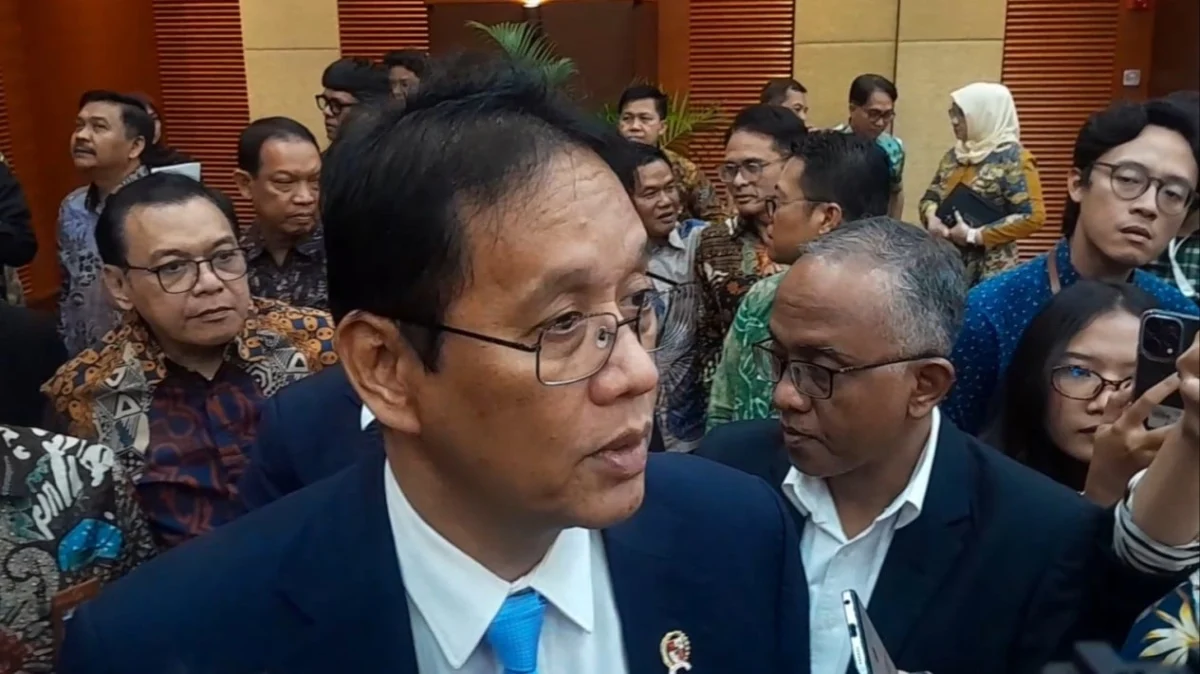
Jakarta, Indonesia – In a pivotal meeting held at the Ministry of Finance on Friday, July 24, 2026, Finance Minister Purbaya Yudhi Sadewa underscored the government’s unwavering commitment to ensuring the equitable and efficient distribution of subsidized fuel (BBM) and 3-kilogram (kg) Liquefied Petroleum Gas (LPG). The Minister revealed that high-level discussions are actively underway with Pertamina, the state-owned energy giant, focusing specifically on integrating advanced technological solutions to channel these vital subsidies precisely to their intended recipients. The move signals a robust push to curb widespread leakage and optimize the national budget, aligning with broader governmental efforts to enhance social equity and fiscal responsibility.
The Urgent Imperative for Subsidy Reform
Indonesia, as one of the world’s largest archipelagic nations, has long grappled with the complex challenge of energy subsidies. Historically, these subsidies, particularly for fuel and LPG, have represented a substantial burden on the state budget, often diverting significant funds that could otherwise be allocated to critical development sectors such as infrastructure, education, and healthcare. The current system, despite its benevolent intent to cushion the impact of global energy price fluctuations on the populace, has proven to be inefficient and prone to misuse.
Minister Sadewa highlighted the pervasive issue where subsidized commodities like Pertalite gasoline and 3-kg LPG, intended for lower-income households and small businesses, are frequently utilized by affluent individuals and commercial entities. "The problem is clear: currently, anyone, even the wealthy, can access Pertalite or the subsidized 3-kg LPG," Sadewa stated during his remarks to reporters after the meeting. This untargeted distribution not only inflates the subsidy bill but also undermines the principle of social justice, as the benefits disproportionately flow to those who least need them, while the truly vulnerable struggle for access. Estimates from various economic think tanks and government analyses have frequently suggested that a significant portion, sometimes up to 30-40%, of energy subsidies do not reach the targeted groups, translating into billions of dollars in annual losses.
The government’s renewed focus on technology is therefore not merely an operational adjustment but a strategic imperative. It aims to rectify these systemic flaws, ensuring that the fiscal support reaches its rightful beneficiaries, thereby maximizing the impact of every rupiah spent on social welfare programs.
Chronology of Subsidy Challenges and Reform Attempts

Indonesia’s journey with energy subsidies is a long and often contentious one. Fuel subsidies, in particular, have been a politically sensitive issue, leading to public protests and policy reversals in the past.
- Pre-2000s: Fuel subsidies were generally broad, covering almost all fuel types, leading to massive budget outlays.
- Early 2000s: Reform efforts began, with gradual removal of subsidies for premium gasoline and a shift towards more targeted approaches. However, political considerations often led to slow progress.
- 2014: The issuance of Presidential Regulation (Perpres) No. 191 of 2014 marked a significant attempt to streamline the provision, distribution, and retail price of fuel. This regulation laid the groundwork for differentiating between subsidized and non-subsidized fuels and introduced mechanisms for their distribution. However, the implementation faced challenges, particularly in effectively identifying eligible recipients.
- Mid-2010s to Early 2020s: Despite Perpres 191/2014, the leakage of subsidies persisted. The sheer volume of subsidized fuel (Pertalite and Solar) and LPG 3 kg, coupled with a lack of robust verification mechanisms at the point of sale, allowed widespread circumvention. The government continued to bear a heavy fiscal burden, exacerbated by volatile global oil prices.
- 2022-2023: Faced with surging global energy prices and an escalating subsidy bill, the government intensified discussions on subsidy reforms. This period saw the introduction of early versions of digital registration platforms, such as MyPertamina, aimed at collecting consumer data for eventual targeting. These initial steps, while imperfect, highlighted the potential of technology.
- Late 2023 – Early 2024: The Ministry of Energy and Mineral Resources (ESDM) announced intentions to revise Perpres No. 191 of 2014. The proposed revisions specifically aimed to introduce stricter purchase limitations for Pertalite and Biosolar (subsidized diesel), based on vehicle type and engine capacity (cubic centimeter or CC). Concurrently, discussions began on transforming the LPG 3 kg subsidy from a commodity-based to a beneficiary-based scheme, leveraging national poverty data.
- July 24, 2026: The meeting between Minister Sadewa and Pertamina CEO Mantiri signifies a critical juncture in these ongoing reform efforts, placing technology at the forefront of the solution. The focus has shifted from merely restricting access to enabling precise identification of eligible beneficiaries through digital means.
Technology as the Key Enabler: A Multi-pronged Approach
The core of the current strategy revolves around the deployment of sophisticated technology to create a closed-loop system for subsidy distribution. Minister Sadewa explicitly sought to understand "how technology will be used to ensure the subsidy is accurately targeted." This implies a comprehensive digital ecosystem designed to verify eligibility in real-time at the point of sale.
Several technological avenues are being explored and considered:
- Integrated Digital Platforms (e.g., MyPertamina): Building upon existing frameworks like the MyPertamina application, the government aims to create a more robust and mandatory registration system. This platform would require individuals and small businesses to register their details, including national identity numbers (NIK), vehicle information (for fuel), and socio-economic data. This data would then be cross-referenced with national databases.
- QR Code/RFID Systems: Once registered and verified, eligible users could be issued unique QR codes or RFID tags linked to their identity and entitlement. At fuel stations or LPG outlets, these codes/tags would be scanned to verify eligibility and track purchases, automatically limiting quantities based on predefined quotas. This would eliminate manual checks and reduce opportunities for fraud.
- National Data Integration: A critical component is the seamless integration of consumer data with existing government databases. This includes:
- Pensasaran Percepatan Penghapusan Kemiskinan Ekstrem (P3KE): A database designed to identify households living in extreme poverty.
- Data Terpadu Kesejahteraan Sosial (DTKS): The Integrated Social Welfare Data, which lists households eligible for various social assistance programs.
- Vehicle Registration Data: To verify vehicle ownership, type, and engine capacity, crucial for limiting subsidized fuel access.
Such integration would provide a comprehensive profile of potential beneficiaries, allowing for dynamic eligibility checks and preventing misuse.
- Real-time Monitoring and Analytics: The digital system would enable real-time monitoring of subsidy distribution across the archipelago. Data analytics tools could identify anomalies, potential fraud patterns, and areas of high demand or unusual consumption, allowing for rapid intervention and policy adjustments.
- Biometric Verification (Long-term consideration): While perhaps a more futuristic approach, biometric verification (e.g., facial recognition or fingerprint scanning) could further enhance security and prevent identity theft at points of sale, though this would require significant infrastructure and public acceptance.
Implementing such a large-scale technological solution in a country as diverse and geographically challenging as Indonesia presents its own set of hurdles. These include ensuring digital literacy among all segments of the population, providing equitable access to technology (smartphones, internet connectivity), safeguarding data privacy, and building robust, tamper-proof IT infrastructure across thousands of distribution points. Pertamina, with its extensive network of fuel stations and LPG agents, will play an instrumental role in deploying and managing these technological interfaces at the ground level.
Stakeholders’ Perspectives and Commitments
The success of this ambitious reform hinges on the coordinated efforts and unwavering commitment of multiple government agencies and state-owned enterprises.

- The Ministry of Finance’s Stance: Minister Purbaya Yudhi Sadewa’s presence at the forefront of these discussions underscores the fiscal imperative driving the reform. His insistence on "no price hike" for subsidized fuel, at least for now, is a strategic decision to manage public sentiment while simultaneously addressing the core issue of leakage. "We are not discussing price increases," Sadewa affirmed. "Our priority is to ensure the subsidy is precisely targeted so that the volume can be controlled. We will await Pertamina’s proposals on other matters." This signals a clear policy direction: fiscal stability will be achieved through efficiency and targeted distribution, rather than simply passing on costs to consumers. The potential budget savings from effective targeting could be substantial, freeing up funds for more productive investments.
- Pertamina’s Pivotal Role: As the sole distributor of subsidized fuel and LPG, Pertamina, under the leadership of CEO Simon Aloysius Mantiri, is central to the operationalization of these technological solutions. The company will be responsible for investing in and deploying the necessary hardware and software at thousands of fuel stations and LPG agents nationwide. This will require significant capital expenditure, extensive training for its personnel and partners, and a robust cybersecurity framework. Pertamina is expected to present detailed proposals outlining the technological roadmap, implementation timelines, and resource requirements. Their collaboration will be crucial in translating policy intent into practical reality. While no direct quote from Mr. Mantiri was provided in the original article, his participation in such a high-level meeting indicates Pertamina’s full alignment with the government’s vision for subsidy reform and its readiness to leverage its operational capabilities.
- Ministry of Energy and Mineral Resources (ESDM): The ESDM remains instrumental in establishing the regulatory framework. Their ongoing revision of Perpres No. 191 of 2014 is the legal backbone that will enable the new distribution schemes. This revision is expected to formalize the criteria for eligibility, purchase limits based on vehicle specifications, and the legal basis for using digital identification systems. The ESDM will also be responsible for monitoring the overall energy sector, ensuring supply stability during the transition, and refining policies based on implementation feedback.
- Public and Civil Society: While not directly quoted, public reaction will be a critical factor. Consumer advocacy groups and civil society organizations have long called for fairer subsidy distribution. However, concerns may arise regarding data privacy, potential for technical glitches, and ensuring accessibility for all, especially those in remote areas with limited digital access. Clear communication campaigns and robust grievance mechanisms will be essential to foster public trust and acceptance.
Broader Implications and Potential Impact
The successful implementation of technology-driven subsidy targeting could have far-reaching implications across several dimensions:
- Fiscal Prudence: The most immediate impact would be significant savings for the state budget. By curbing leakage and ensuring that only eligible beneficiaries receive subsidies, the government could reallocate billions of dollars annually towards productive investments in infrastructure, human capital development, or environmental initiatives. This would strengthen Indonesia’s fiscal resilience against global economic shocks.
- Economic Efficiency and Equity: A more targeted subsidy system would reduce market distortions caused by cheap, widely available fuel. It could encourage more efficient energy consumption among higher-income groups and promote the adoption of cleaner energy alternatives. Crucially, it would enhance social equity by ensuring that government aid truly reaches the poor and vulnerable, directly supporting their welfare and reducing poverty.
- Enhanced Data Governance: The initiative necessitates the creation of comprehensive, integrated national databases for social welfare and energy consumption. This could pave the way for improved data governance across government sectors, enabling more informed policymaking and efficient resource allocation beyond just energy subsidies.
- Operational Challenges and Mitigation: The sheer scale of implementation across an archipelago of thousands of islands and millions of consumers will be immense. Challenges will include ensuring reliable internet connectivity at all points of sale, managing a massive database, training thousands of personnel, and handling potential system failures or cyber threats. A phased rollout, robust public education campaigns, and a responsive customer support system will be vital for mitigating these operational hurdles.
- Environmental Considerations: While not the primary driver, a more targeted subsidy system that discourages overconsumption by wealthier segments could indirectly contribute to reduced fossil fuel consumption and lower carbon emissions, aligning with Indonesia’s broader climate change commitments.
The Path Forward: A Vision for Equitable Energy Access
The discussions between Finance Minister Purbaya Yudhi Sadewa and Pertamina CEO Simon Aloysius Mantiri mark a definitive step towards a future where Indonesia’s energy subsidies are not just a fiscal burden but a precise instrument of social welfare. By harnessing the power of technology, the government aims to transform a leaky, untargeted system into one that is transparent, efficient, and genuinely equitable.
The coming months will be critical as Pertamina finalizes its technological proposals and the Ministry of Energy and Mineral Resources concludes the revision of Perpres No. 191 of 2014. The successful deployment of these integrated digital solutions will not only ensure that every liter of subsidized fuel and every kilogram of subsidized LPG reaches its intended recipient but also set a new standard for public service delivery and fiscal responsibility in Indonesia. This initiative represents a profound commitment to building a more just and prosperous nation, where government support truly empowers those who need it most.