Jakarta, Indonesia – The year 2026 marks a significant milestone in urban mobility, with electric bicycles (e-bikes) firmly establishing themselves as a preferred mode of daily transportation across Indonesia and globally. Driven by an escalating demand for efficiency, low operational costs, and environmentally friendly solutions, the e-bike sector has witnessed unprecedented innovation. Manufacturers, responding to sophisticated consumer expectations and technological advancements, have rolled out a diverse range of models featuring increasingly comprehensive functionalities, from high-capacity batteries offering extended range to advanced braking systems and integrated smart features.
The surge in e-bike adoption is not merely a fleeting trend but a fundamental shift in how urban populations navigate their daily lives. In Jakarta, a metropolis grappling with persistent traffic congestion and air quality concerns, e-bikes offer a compelling alternative that aligns with both individual convenience and broader sustainability goals. Prospective buyers in this burgeoning market are advised to look beyond the initial price tag and meticulously evaluate crucial factors such as battery capacity, maximum travel range per charge, load-carrying capability, the robustness of after-sales services, and the readily available supply of spare parts. These considerations are paramount to ensuring optimal long-term utility and user satisfaction, reflecting a growing consumer sophistication that now prioritizes durability and support alongside performance.
The Rise of E-Mobility: A Decade of Transformation (2016-2026)
The journey of electric bicycles from niche products to mainstream mobility solutions has been a gradual yet accelerating process, culminating in their prominent status in 2026. Prior to 2016, e-bikes were often perceived as heavy, expensive, and limited in performance. However, significant technological breakthroughs in battery technology, particularly the widespread adoption of lighter and more energy-dense lithium-ion cells, coupled with more efficient motor designs, began to revolutionize the market.
By 2020, as global awareness of climate change intensified and urban planning initiatives increasingly focused on sustainable transport, e-bikes started gaining traction in European and North American markets. The COVID-19 pandemic, paradoxically, provided an unexpected boost, with many seeking socially distanced transportation alternatives, further accelerating adoption rates. Governments worldwide, including Indonesia, began introducing incentives such as purchase subsidies, tax breaks, and investments in cycling infrastructure—dedicated bike lanes, secure parking, and public charging stations—to encourage e-bike usage.
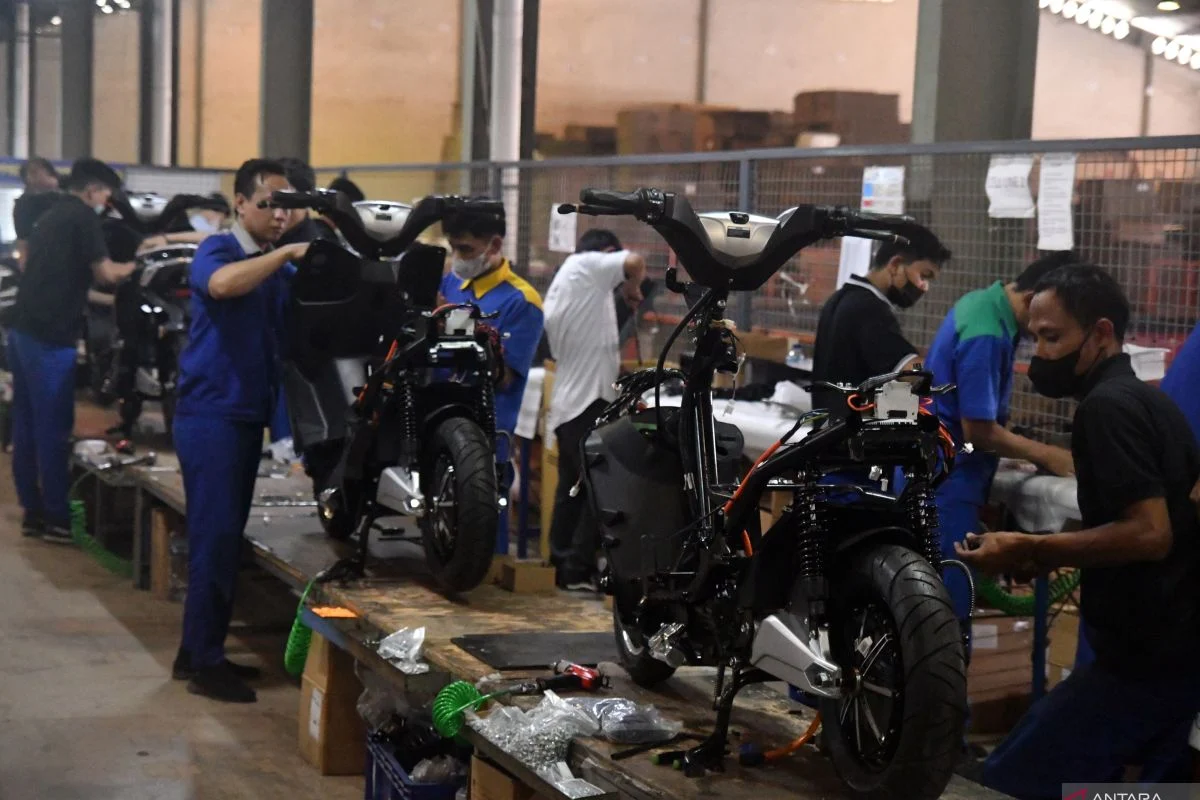
Between 2022 and 2025, the market matured rapidly. Manufacturers refined designs, integrated smart technologies like GPS tracking, anti-theft systems, and regenerative braking, and diversified their product lines to cater to various consumer segments, from urban commuters and leisure riders to cargo delivery services. Frame materials evolved, incorporating lighter alloys and composites, while component integration improved, leading to sleeker, more aesthetically pleasing, and more durable e-bikes. This period also saw the standardization of certain battery and motor components, making repairs and upgrades more accessible. By 2026, the market is characterized by intense competition, continuous innovation, and a strong consumer focus on value, performance, and sustainability.
Key Market Dynamics and Supporting Data in 2026
The global electric bicycle market is projected to reach an estimated USD 75 billion by 2027, growing at a compound annual growth rate (CAGR) of approximately 12% from 2022. Southeast Asia, and Indonesia in particular, has emerged as a powerhouse in this growth trajectory. In 2025 alone, Indonesia experienced a remarkable 30% surge in e-bike sales, driven by a combination of government support, increasing urbanization, and a youthful, tech-savvy demographic keen on adopting new technologies. Market analysts at "Global Mobility Insights" indicate that over 60% of new e-bike sales in Indonesia in 2026 are for daily commuting purposes, highlighting their critical role in urban infrastructure. The average range of a mid-tier e-bike model in 2026 stands at an impressive 80-120 kilometers on a single charge, with rapid charging capabilities allowing for a full charge in as little as 3-4 hours for premium models. This enhanced performance significantly alleviates range anxiety, a previous barrier to widespread adoption.
Dr. Anya Sharma, lead analyst at Global Mobility Insights, commented on the trend: "The integration of AI-driven diagnostics, enhanced battery longevity through advanced Battery Management Systems (BMS), and improved motor efficiency has made 2026 a pivotal year for e-bike adoption. Especially in dense urban centers like Jakarta, e-bikes offer an unparalleled blend of convenience, cost-effectiveness, and environmental responsibility, fundamentally reshaping personal transportation paradigms."
Top Electric Bicycle Recommendations for 2026
Drawing from extensive market analysis and consumer feedback, here are six highly recommended electric bicycle models poised to offer exceptional value and performance in 2026:
-
Uwinfly D66A
The Uwinfly D66A continues its reign as one of the most popular choices, leveraging its robust 600-watt brushless DC motor that delivers consistent power for diverse daily commuting needs. This 2026 iteration boasts a high-capacity 48V 15Ah lithium-ion battery, providing an estimated range of 60-70 kilometers on a single charge, ideal for extended urban travel. Charging time has been optimized to approximately 4-5 hours. The D66A integrates a suite of modern features, including energy-efficient LED lighting for enhanced visibility, a comprehensive digital instrument panel displaying speed, battery level, and mileage, and puncture-resistant tubeless tires for improved safety and reduced maintenance. Its hydraulic disc braking system offers superior stopping power in various weather conditions, while an optional smartphone app connectivity allows for ride tracking, remote locking, and diagnostic checks. Its sturdy frame and comfortable ergonomics make it a reliable workhorse for everyday mobility. -
Viar Vitron 02
The Viar Vitron 02 distinguishes itself with a sleek, minimalist design and a remarkably robust aluminum alloy frame, making it an excellent choice for urban explorers. Engineered for city travel, its 500-watt motor provides ample power for navigating inclines and accelerating swiftly through traffic. The integrated 36V 12Ah battery offers a comfortable range of up to 50-60 kilometers. A key differentiator for the Vitron 02 is Viar’s expansive and well-established after-sales service network across Indonesia. This widespread support ensures easy access to maintenance, repairs, and genuine spare parts, providing unparalleled peace of mind for owners. The 2026 model features an upgraded front suspension system for smoother rides over varied urban terrains and enhanced ergonomic seating for prolonged comfort. -
Exotic Veloce V7
For users prioritizing practicality and maneuverability, the Exotic Veloce V7 presents an exemplary solution. Its compact design, often featuring a convenient folding mechanism in its latest iteration, makes it exceptionally portable and suitable for multi-modal commuting or storage in smaller living spaces. Despite its size, the Veloce V7 does not compromise on features. It comes equipped with bright LED lights for safety, an intuitive digital display providing essential ride information, and an ergonomically designed seating position that ensures comfort even during longer rides. Its lightweight frame, typically weighing around 18-20 kg, combined with a 350-watt motor and a 36V 10Ah battery, offers a practical range of 40-50 kilometers, making it a preferred choice for quick errands and short-to-medium distance urban commutes where space efficiency is paramount. -
Pacific Ventura R5 E-Bike
The Pacific Ventura R5 E-Bike stands out by seamlessly blending the traditional cycling experience with the benefits of electric assistance. This model caters specifically to riders who appreciate the physical engagement of pedaling but welcome motor support when encountering hills, headwinds, or simply desiring a less strenuous journey. The Ventura R5 features a sophisticated pedal-assist system (PAS) with multiple assistance levels (typically 1-5), allowing riders to customize the motor’s contribution based on their preference and terrain. Its torque-sensing technology ensures a natural and responsive power delivery, mimicking the feel of a conventional bicycle. Equipped with a reliable 250-watt hub motor and a discreetly integrated 36V 8Ah battery, it offers assistance for up to 50 kilometers. High-quality Shimano gearing and robust disc brakes further enhance its performance and safety, appealing to fitness enthusiasts and those transitioning from traditional bicycles. -
Selis Sanur E-Bike
The Selis Sanur E-Bike has garnered significant popularity due to its straightforward design, user-friendly operation, and highly competitive pricing, positioning it as an accessible entry point into the e-bike market. The 2026 model retains its core philosophy of simplicity and reliability, making it an ideal choice for everyday activities within urban areas. It typically features a 350-watt motor and a 36V 10Ah lead-acid or a more modern lithium-ion battery, providing a practical range of 30-40 kilometers suitable for daily commutes, grocery runs, or leisure rides around the neighborhood. Its robust construction ensures durability, while minimal electronic complexities contribute to ease of maintenance. The Sanur E-Bike is particularly favored by those seeking an uncomplicated, reliable, and cost-effective personal electric vehicle without an excess of complex features. -
United Nebular E-Bike
The United Nebular offers a distinct city bike aesthetic, combining timeless design with modern electric capabilities. Engineered for urban comfort, it features an upright riding position, wide handlebars, and often a suspension fork, ensuring a comfortable journey over varied cityscapes. The integrated electric motor, typically a 250-watt or 350-watt hub drive, provides seamless assistance, making daily commutes and leisurely rides significantly more enjoyable. Its 36V 10Ah battery is often elegantly integrated into the frame, contributing to its sleek appearance and offering a range of 40-55 kilometers. The Nebular also incorporates practical features like integrated front and rear racks, full fenders, and bright lights, making it highly functional for urban living. It appeals to consumers who desire an environmentally friendly vehicle that also makes a stylistic statement, blending modern technology with classic cycling appeal.
Comprehensive Guide to Selecting Your Ideal Electric Bicycle
Before committing to a purchase, prospective e-bike owners in 2026 should engage in a thorough evaluation process, considering several critical aspects that extend beyond the initial aesthetic appeal:
- Purpose of Use: Define your primary need. Is it for daily commuting, leisure rides, cargo transport, or tackling challenging terrains? This will dictate the required motor power, battery capacity, frame type (e.g., folding, step-through, mountain), and accessory integration.
- Battery Specifications: Beyond capacity (Ah), inquire about the battery’s voltage (V), type (lithium-ion is standard, but advancements like solid-state batteries are emerging), estimated charge cycles, and warranty. A higher Ah and V generally translate to greater range and power.
- Motor Type and Power: E-bikes typically feature hub motors (located in the wheel hub) or mid-drive motors (located at the pedals). Mid-drive motors often offer better torque, balance, and efficiency, especially for hills, while hub motors are generally more affordable. Motor power (watts) influences acceleration and hill-climbing ability.
- Range and Charging Time: Verify the manufacturer’s stated range against real-world conditions (rider weight, terrain, assist level). Consider the convenience of charging time and whether you have accessible charging points at home or work.
- Load Capacity and Rider Weight: Ensure the e-bike can safely accommodate your weight and any additional cargo you plan to carry. This is crucial for performance and safety.
- Frame Material and Geometry: Lighter frames (aluminum alloy, carbon fiber) enhance maneuverability and range. Consider frame style (step-through for easy mounting, diamond for rigidity) and ensure it matches your body type for ergonomic comfort.
- Braking System: Hydraulic disc brakes offer superior stopping power and modulation compared to mechanical disc or rim brakes, especially important for heavier e-bikes and higher speeds.
- Suspension: For rougher urban roads or off-road use, front suspension or full suspension can significantly improve ride comfort.
- Integrated Smart Features: Many 2026 models include GPS tracking, anti-theft alarms, smartphone app connectivity (for ride data, diagnostics, navigation), integrated lighting, and USB charging ports. Evaluate which features are essential for your needs.
- After-Sales Service and Spare Parts Availability: A robust service network and easy access to genuine spare parts are vital for long-term maintenance and repairs, particularly in a rapidly evolving market.
- Local Regulations: Be aware of local laws regarding e-bike speed limits, motor power restrictions, helmet requirements, and where e-bikes are permitted to operate.
- Test Ride: Always conduct a test ride to assess comfort, handling, motor feel, and overall suitability before making a final decision.
Mr. Budi Santoso, Head of Urban Development for Jakarta, emphasized the broader implications: "Our ongoing investment in dedicated cycling infrastructure, coupled with the rising popularity of electric bicycles, is transforming urban mobility and fostering a greener city environment. We anticipate that by 2030, non-motorized and electric two-wheeler transport will account for over 25% of all daily commutes in Jakarta." Furthermore, a spokesperson for the Indonesian Ministry of Industry highlighted that "local manufacturing of e-bike components and full assemblies is experiencing unprecedented growth, contributing significantly to our national economy, fostering technological self-sufficiency, and creating thousands of skilled jobs."
The burgeoning electric bicycle market in 2026 reflects a global movement towards more sustainable, efficient, and health-conscious modes of transport. With an ever-expanding array of choices, consumers are now empowered to select an e-bike that perfectly aligns with their specific requirements, whether for daily commutes, school runs, or leisure activities. Continuous advancements in battery technology, motor efficiency, and integrated safety features are solidifying the electric bicycle’s position as a compelling and indispensable alternative in the modern transportation landscape. Its transformative impact extends beyond individual convenience, profoundly influencing urban planning, environmental sustainability, and public health, promising a cleaner, quieter, and more connected future for cities worldwide.
Pewarta: M. Hilal Eka Saputra Harahap
Editor: Suryanto
Copyright © ANTARA 2026