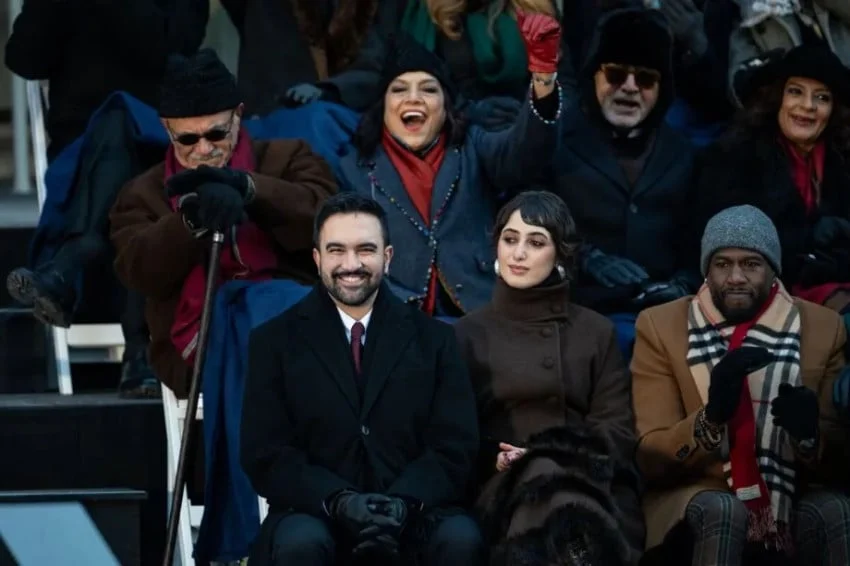
New York City Mayor Zohran Mamdani and his wife, Rama Duwaji, have received a barrage of death threats following their vocal criticism of Israel’s military actions in Gaza and the Mayor’s explicit call for Israeli Prime Minister Benjamin Netanyahu to face prosecution at the International Criminal Court (ICC). The revelations, initially reported in interviews with Rolling Stone and The New York Times, have sent ripples through New York’s political landscape, underscoring the intense polarization surrounding the Israeli-Palestinian conflict and its impact on public officials. Mayor Mamdani, who assumed office on January 1, 2026, has maintained a consistent stance on the conflict throughout his political career, but his elevated platform as mayor has amplified both his message and the ensuing backlash.
Escalation of Threats and Mayoral Resolve
The Mayor disclosed the gravity of the situation in a recent public statement, acknowledging that both he and Duwaji had become targets of menacing communications. "It is difficult to prepare oneself for death threats, but when you are prepared to stand up for everyone, there are consequences," Mamdani stated, reflecting a defiant posture against attempts to silence him. He further elaborated that such threats were not entirely new, having previously experienced similar intimidation during his tenure as a New York State Legislator. However, the scale and intensity have markedly increased since his inauguration as Mayor, demonstrating a direct correlation between his more prominent role and the heightened animosity. His wife, Rama Duwaji, a public figure in her own right and an outspoken advocate for human rights, has also faced significant criticism and direct threats due to her alignment with the Mayor’s views on Israel and Gaza.
The Mayor’s office has confirmed that the New York City Police Department (NYPD) has been actively investigating the threats. While specific details regarding the nature and origin of these threats have been withheld for security reasons, sources close to the investigation suggest they include online harassment, anonymous letters, and direct phone calls, some containing graphic descriptions of violence. Increased security protocols have been implemented for both the Mayor and his family, a standard procedure when public officials face credible threats. The NYPD has pledged to use all available resources to identify and prosecute those responsible, emphasizing the seriousness with which any threats against public servants are treated. The situation has prompted broader concerns about the safety of elected officials, particularly those who engage in highly contentious geopolitical debates.
Chronology of Controversial Statements
Mayor Mamdani’s political identity has long been intertwined with his advocacy for Palestinian rights and his critical stance on U.S. foreign policy in the Middle East. Prior to his mayoral term, as a State Legislator representing Astoria, Queens, Mamdani was a vocal critic of American military aid to Israel, consistently arguing against its use in ways that he contended contributed to the suffering of Palestinian civilians. His legislative record included efforts to push for greater accountability in U.S. aid packages and to highlight the humanitarian crisis in Gaza.
The pivotal interviews that spurred the latest wave of threats occurred in the months following his January 2026 inauguration. In the Rolling Stone piece, Mamdani reiterated his long-held convictions, linking the "consequences" he now faces to his unwavering commitment to defending marginalized communities. He spoke broadly about the moral imperative to challenge actions that lead to civilian casualties and human rights abuses, regardless of geopolitical alliances.
However, it was his interview with The New York Times that drew the sharpest rebuke and triggered the most severe threats. In this conversation, Mayor Mamdani explicitly stated that Israeli Prime Minister Benjamin Netanyahu should "face legal proceedings in The Hague." This direct reference to the International Criminal Court (ICC) and its jurisdiction over alleged war crimes and crimes against humanity placed Mamdani firmly in opposition to official U.S. policy, which generally rejects the ICC’s authority over Israeli or American citizens and has historically protected Israeli leaders from such international legal actions. The statement came in the context of recent ICC actions, which had indeed issued arrest warrants for certain Israeli and Hamas leaders, intensifying the global debate over international justice and sovereignty.
Rama Duwaji, known for her background in advocacy and community organizing, has not shied away from public engagement on these issues. In various public appearances and social media posts, she has consistently echoed her husband’s sentiments, emphasizing the humanitarian dimension of the conflict and calling for an end to violence against civilians. Her active role in supporting the Mayor’s positions has unfortunately made her a secondary target for those seeking to intimidate the mayoral family.
Zohran Mamdani: A Profile in Progressive Activism
Zohran Mamdani, a relatively young and charismatic figure, rose to prominence on a progressive platform that resonated deeply with a diverse segment of New York City voters. Born in Uganda to a family with a strong history of activism and intellectual pursuits, Mamdani’s upbringing instilled in him a profound commitment to social justice. His academic background, combined with his experience in community organizing, shaped his political philosophy. He entered the State Legislature as a fresh voice, quickly becoming known for his sharp intellect, compelling rhetoric, and fearless advocacy for progressive causes.
His mayoral campaign, which culminated in his victory in late 2025, focused on issues such as affordable housing, criminal justice reform, climate action, and a more equitable distribution of city resources. Crucially, his campaign also addressed foreign policy, particularly the Israeli-Palestinian conflict, framing it as a human rights issue with significant local resonance due to New York City’s large and politically active Arab, Jewish, and Muslim communities. His election represented a significant shift in New York City’s political landscape, signaling a desire among many voters for leaders who are willing to challenge established norms and speak out on global issues through a human rights lens. His supporters view him as a principled leader unafraid to confront difficult truths, while critics often accuse him of overstepping his municipal authority by engaging in complex international affairs.
The Geopolitical Undercurrent: Israel-Palestine in NYC Politics
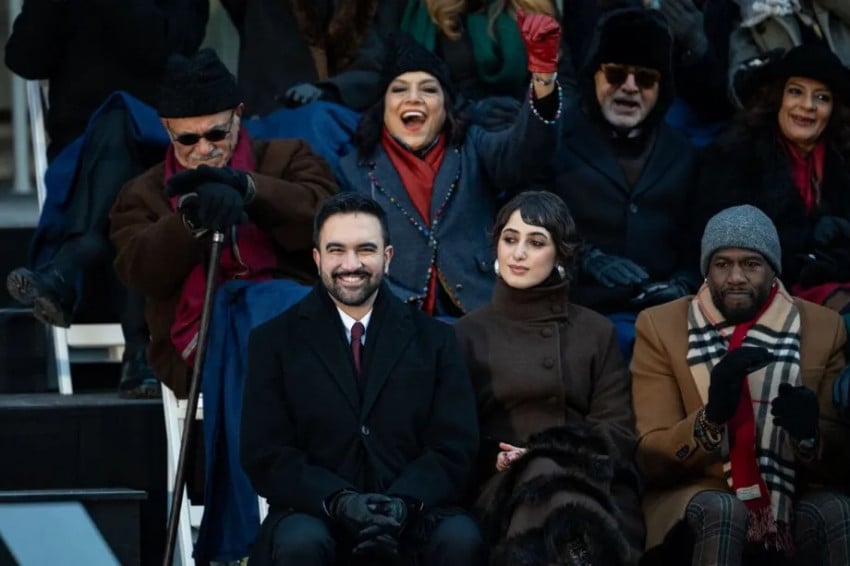
New York City, a global melting pot, serves as a microcosm of international conflicts, with the Israeli-Palestinian issue frequently manifesting in local politics and public discourse. The city is home to one of the largest Jewish populations outside of Israel and a significant and growing Arab and Muslim community, alongside a vibrant tapestry of other ethnicities and faiths. This demographic reality often transforms global events into local flashpoints, with rallies, protests, and heated debates becoming common occurrences.
The intense emotions surrounding the conflict have led to heightened tensions, particularly in the wake of recent escalations in Gaza. Public officials in New York City often find themselves navigating a delicate balance, attempting to represent diverse constituencies while also maintaining a coherent political stance. Mamdani’s outspokenness, while lauded by his supporters, has inevitably drawn the ire of those who hold opposing views, particularly pro-Israel advocacy groups who often view criticism of Israel as antisemitic or harmful to the U.S.-Israel alliance. This intricate web of local demographics and global geopolitics creates a volatile environment for any public figure daring to take a strong, unequivocal stance on the conflict. The threats against Mayor Mamdani are a stark illustration of how deeply entrenched and emotionally charged this issue remains within the city.
The International Criminal Court and Benjamin Netanyahu
The Mayor’s specific call for Benjamin Netanyahu to face justice at the International Criminal Court (ICC) is particularly significant. The ICC, established by the Rome Statute, is a permanent international court that investigates and prosecutes individuals accused of genocide, war crimes, crimes against humanity, and the crime of aggression. Based in The Hague, Netherlands, its jurisdiction extends to individuals from states that have ratified the Rome Statute or situations referred by the UN Security Council.
In recent years, the ICC’s Office of the Prosecutor has initiated investigations related to the Israeli-Palestinian conflict, including alleged crimes committed in the Palestinian territories. This has led to the issuance of arrest warrants for high-profile figures, including leaders from both Hamas and Israel. The United States, while generally supportive of international justice, has historically not recognized the ICC’s jurisdiction over its own citizens or those of its close allies, such as Israel. This stance is rooted in concerns about sovereignty and potential politicization of the court.
Mayor Mamdani’s statement directly challenges this U.S. policy, aligning him with international legal advocates and a segment of the global community that believes all individuals, regardless of their political office, should be held accountable for alleged international crimes. His public endorsement of ICC action against Netanyahu is a powerful political statement, highlighting a growing divergence between progressive American politicians and traditional U.S. foreign policy on issues related to international law and the Israeli-Palestinian conflict. This stance positions him as a global figure in the debate, rather than solely a municipal leader, thereby drawing international attention and, consequently, global scrutiny and animosity.
Reactions from Across the Political Spectrum
The news of death threats against Mayor Mamdani and his wife has elicited a range of reactions, reflecting the deep divisions within New York City and beyond.
- Law Enforcement and Security Agencies: The NYPD, supported by potential federal partners like the FBI if the threats cross state lines, has unequivocally condemned the threats, emphasizing their commitment to protecting all public officials. A spokesperson for the NYPD stated, "Threats against elected officials are a grave concern and will be investigated thoroughly with all available resources. We uphold the right to free speech but draw a clear line at intimidation and violence."
- Political Allies and Progressive Groups: Many of Mamdani’s progressive allies and civil liberties organizations have rallied in his defense, condemning the threats as an attack on democratic discourse and free speech. Councilwoman Aisha Khan, a prominent progressive voice, declared, "Mayor Mamdani has every right to voice his conscience, and these despicable threats are an attempt to silence dissent. We stand firmly with the Mayor and Rama Duwaji against all forms of intimidation." Human rights groups echoed these sentiments, highlighting the chilling effect such threats can have on public officials willing to take unpopular stances.
- Political Opponents and Centrist Voices: While generally condemning the threats of violence, some of Mamdani’s political opponents have also criticized his statements, arguing that a mayor’s role should focus on local issues rather than controversial foreign policy. Former City Council Speaker Robert Davis, a moderate Democrat, commented, "While threats of violence are unacceptable and must be prosecuted, Mayor Mamdani’s comments on international tribunals are divisive and arguably outside the purview of his office. They risk alienating segments of our city and distracting from critical municipal challenges." These criticisms, while not condoning violence, implicitly suggest that the Mayor’s rhetoric contributed to the hostile environment.
- Pro-Israel Organizations: Leading pro-Israel advocacy groups in New York, while publicly condemning any threats of violence, have also reiterated their strong disagreement with Mayor Mamdani’s characterization of Israel’s actions and his call for Netanyahu’s prosecution. A statement from the Jewish Community Relations Council of New York noted, "We unequivocally condemn any threats of violence against public officials. However, we also strongly disagree with Mayor Mamdani’s inflammatory rhetoric, which undermines efforts for peace and demonizes a democratic ally. Such statements only serve to fuel division and antisemitism within our city."
- Pro-Palestinian Organizations: Organizations advocating for Palestinian rights have expressed solidarity with Mayor Mamdani and his wife, viewing the threats as an attempt to suppress legitimate criticism of Israeli policies. A spokesperson for the Palestinian American Community Center stated, "The threats against Mayor Mamdani are a direct consequence of his courageous stance for justice and accountability. We stand with him and his family and urge authorities to protect those who speak truth to power, especially on issues of human rights."
Implications for Public Discourse and Official Security
The threats against Mayor Mamdani and Rama Duwaji carry significant implications for the future of public discourse and the security of elected officials in New York City and across the nation. In an increasingly polarized political climate, where social media amplifies both support and animosity, the line between passionate debate and dangerous incitement has become increasingly blurred.
Firstly, this incident highlights the growing danger faced by public officials who engage in controversial or unpopular foreign policy debates. The expectation that mayors should stick solely to potholes and local taxes is being challenged by a new generation of politicians who believe global issues have local impacts and demand a moral stance. However, this expanded scope of engagement comes with increased personal risk.
Secondly, the situation raises critical questions about freedom of speech versus the potential for incitement. While Mamdani’s right to express his views is constitutionally protected, the intensity of the reaction underscores the volatile nature of the Israeli-Palestinian conflict and the ease with which strong opinions can be misinterpreted or weaponized by extremist elements. The incident serves as a stark reminder of the responsibilities that come with public platforms, both for those speaking and for those reacting to their words.
Finally, the heightened security measures and ongoing investigations will undoubtedly place additional strain on city resources and may contribute to a more cautious approach by other public figures contemplating similar interventions in international affairs. The chilling effect of such threats could deter future leaders from taking principled stands on contentious issues, potentially narrowing the scope of public debate and undermining democratic participation.
As New York City moves forward, the Mayor’s office and law enforcement agencies will continue to monitor the situation closely. The incident serves as a sobering reminder of the challenges inherent in political leadership in the 21st century, where local governance often intersects with global conflicts, and where the digital age has made public figures more accessible, and vulnerable, than ever before. The outcome of the investigations and the long-term impact on Mayor Mamdani’s tenure will be closely watched, shaping the discourse on political courage, public safety, and the role of cities in global affairs.