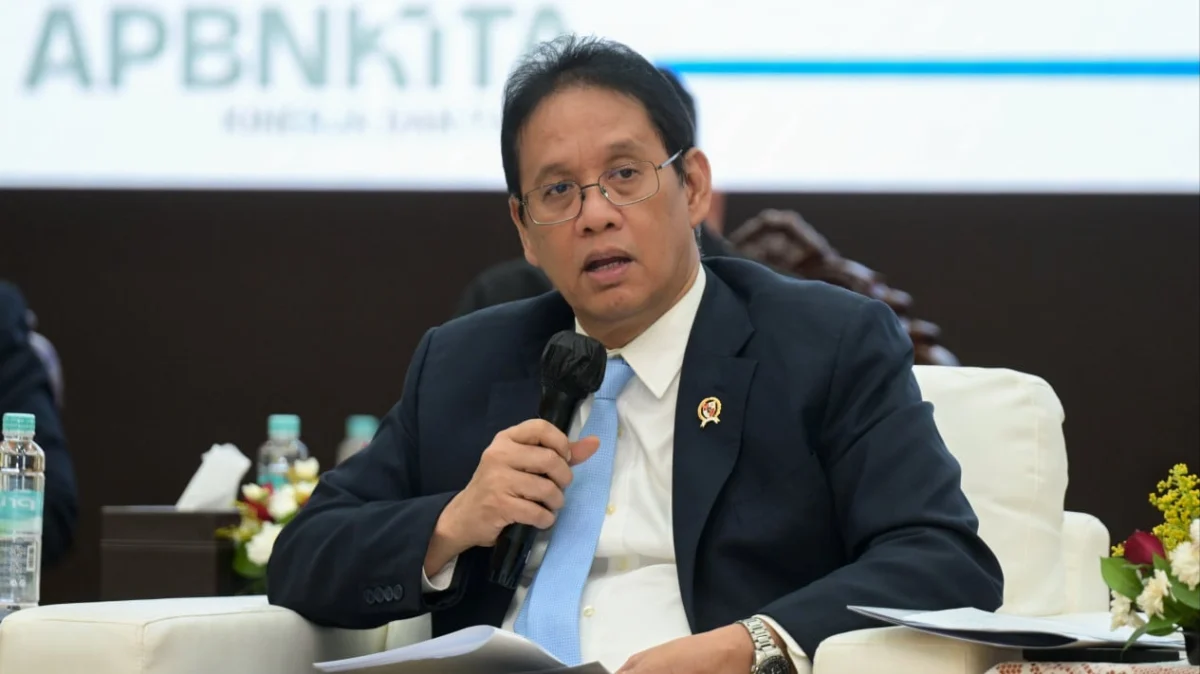
Jakarta, VIVA – Indonesia’s Finance Minister, Purbaya Yudhi Sadewa, has provided a firm assurance that the resolution of the substantial debt accrued by the Jakarta-Bandung High-Speed Rail (KCJB) project, famously branded "Whoosh," will not impose an undue burden on the state budget (APBN). Speaking at the Ministry of Finance in Jakarta on Thursday, July 23, 2026, Minister Purbaya reiterated the government’s commitment to minimizing the use of direct APBN funds for this critical infrastructure obligation. This stance underscores a delicate balancing act for the government: delivering a flagship project while maintaining fiscal prudence amidst ongoing economic pressures.
"While Whoosh operates under the government’s purview, we are actively working to reduce the reliance on APBN funds for its financing as much as possible, though the management remains under our oversight," Minister Purbaya stated, signaling a strategic approach to debt management that aims to leverage various financial instruments beyond direct budgetary allocations. His comments come at a crucial juncture as the nation gravenes with the financial intricacies of one of its most ambitious infrastructure endeavors.
The Genesis and Financial Evolution of the Whoosh Project
The Jakarta-Bandung High-Speed Rail, or Whoosh, stands as a monumental symbol of Indonesia’s infrastructure ambition and a key pillar of its strategic partnership with China. Inaugurated for commercial operations, it marks Southeast Asia’s first high-speed rail system, connecting Jakarta, the bustling capital, with Bandung, a major cultural and economic hub in West Java, significantly reducing travel time from over three hours to approximately 45 minutes.
The project’s journey, however, has been fraught with financial complexities that have continually challenged its initial business model. Conceived under a business-to-business (B2B) scheme, the project was initially envisioned to be developed without any direct financial guarantees or capital injections from the Indonesian state budget. The consortium responsible, PT Kereta Cepat Indonesia China (KCIC), a joint venture between an Indonesian state-owned enterprises (SOEs) consortium led by PT Kereta Api Indonesia (KAI) and China Railway International Co. Ltd., was expected to manage its financing independently.
The initial estimated cost for the 142.3-kilometer railway was approximately US$6.07 billion. However, unforeseen challenges, including protracted land acquisition processes, design modifications, geological complexities during tunnel construction, and the global economic disruptions caused by the COVID-19 pandemic, led to significant cost overruns. By late 2021, the project’s revised cost estimate had ballooned to approximately US$7.27 billion, representing an increase of about US$1.2 billion. This substantial escalation necessitated a re-evaluation of the financing structure, compelling the Indonesian government to step in.
In a pivotal shift from the initial B2B framework, Presidential Regulation No. 93 of 2021 was issued, amending the previous regulation to allow for state budget involvement. This paved the way for the Indonesian government to inject state capital participation (Penyertaan Modal Negara/PMN) into PT KAI, which in turn would channel funds into KCIC. This decision was critical in preventing the project from stalling, but it simultaneously raised questions about fiscal responsibility and the potential burden on the APBN, which Minister Purbaya is now actively addressing. The majority of the debt is reportedly financed by the China Development Bank (CDB), requiring a robust repayment strategy.
Minister Purbaya’s Assurance and Strategic Fiscal Management

Minister Purbaya’s recent statements are a direct response to these lingering concerns regarding the project’s financial obligations. His core message is unequivocal: the government is committed to finding solutions that will not directly deplete the national treasury. This commitment is vital for several reasons. Firstly, it safeguards Indonesia’s fiscal health, preventing an increase in the national debt burden that could impact other critical public services and development programs. Secondly, it aims to maintain public confidence in the government’s ability to manage large-scale infrastructure projects responsibly, particularly those involving international financing and complex risk profiles.
The Minister emphasized that while the project’s financial management falls under the government’s purview, the strategy involves minimizing direct APBN expenditure. This implies a multifaceted approach to financing, wherein the Ministry of Finance will act as a strategic manager, orchestrating various financial instruments and mechanisms rather than merely drawing from the consolidated fund. This indirect approach aims to ring-fence the APBN from immediate and substantial outflows related to Whoosh’s debt.
Exploring Alternative Financing Mechanisms: The Role of SMVs
When pressed for specifics on the repayment mechanism, Minister Purbaya remained tight-lipped about the exact details but offered a significant clue: the utilization of Special Mission Vehicles (SMVs). "No, I have many SMVs (Special Mission Vehicles)," he remarked, indicating that these specialized entities would play a crucial role.
Special Mission Vehicles are typically government-owned or government-backed entities established to achieve specific policy objectives, often in infrastructure development or public finance. In Indonesia, prominent examples include PT Sarana Multi Infrastruktur (SMI) and PT Penjaminan Infrastruktur Indonesia (PII). These SMVs are designed to provide financing, guarantees, or other financial services for infrastructure projects, often by mobilizing capital from various sources, including domestic and international markets, development banks, and private investors.
The potential roles of SMVs in Whoosh’s debt settlement could include:
- Refinancing: An SMV could potentially refinance a portion of KCIC’s existing debt by issuing its own bonds or securing new loans, possibly with more favorable terms or longer maturities. This would effectively shift the debt obligation from KCIC to the SMV, which is still government-controlled but operates off-budget.
- Credit Enhancement: An SMV could provide guarantees or credit enhancements for KCIC’s debt, making it more attractive for lenders and potentially lowering interest rates. While this still represents a contingent liability for the state, it avoids direct cash outflows from the APBN.
- Project Financing Intermediary: An SMV could act as an intermediary, structuring complex financial deals that blend various funding sources, including commercial loans, export credits, and potentially even future revenue streams from the Whoosh project itself, though this would be subject to ridership performance.
- Capital Mobilization: SMVs possess the expertise and mandate to tap into diverse capital markets, potentially raising funds through bonds or other financial instruments that are not directly classified as sovereign debt, thereby helping to manage the overall debt-to-GDP ratio.
The advantage of using SMVs lies in their ability to operate with greater financial flexibility and specialized expertise compared to direct government departments. They can also provide a layer of separation, allowing the government to support critical projects without immediately impacting the APBN’s bottom line. However, it is crucial to note that even if the debt is managed by an SMV, the ultimate backing often remains with the state, creating contingent liabilities that require careful monitoring and transparent reporting to ensure fiscal stability.
The Panda Bond Consideration and Broader Fiscal Strategy
Another instrument that has been mentioned in the context of Indonesian financing needs is the "Panda Bond." Panda Bonds are Yuan-denominated bonds issued by non-Chinese issuers in mainland China. For a project like Whoosh, with significant Chinese involvement and financing, tapping into China’s capital markets via Panda Bonds could be a logical consideration.

However, Minister Purbaya clarified that the immediate priority for Panda Bonds is to address the nation’s APBN deficit. "These (Panda Bonds) are for covering our deficit. In the future, whether we will use them for this purpose, we will see," he stated. This indicates that while Panda Bonds remain an option for diversifying Indonesia’s funding sources, the current fiscal strategy prioritizes macroeconomic stability and managing the overall national debt. The government’s prudent approach ensures that any new debt instruments are aligned with broader fiscal objectives, rather than being solely project-specific. Covering the APBN deficit is a fundamental task for the Ministry of Finance, crucial for maintaining economic stability and investor confidence.
Expert Perspectives and Broader Implications
Economists and financial analysts generally commend the government’s commitment to minimizing the direct APBN burden for Whoosh’s debt. However, they also emphasize the need for transparency regarding the specifics of SMV utilization and the extent of contingent liabilities. Dr. Mira Kartika, a fiscal policy expert from a leading Indonesian university (hypothetical), commented, "While SMVs offer a clever mechanism to manage debt off-balance sheet, the public must still understand the underlying risks. Ultimately, if an SMV faces repayment difficulties, the government, as its owner or guarantor, will bear the ultimate responsibility. Clear reporting is paramount."
The financial challenges faced by Whoosh underscore several critical implications for Indonesia’s infrastructure development strategy:
- Fiscal Discipline and Transparency: The case highlights the ongoing imperative for fiscal discipline and transparent financial reporting in large-scale infrastructure projects. The shift from a purely B2B model to one involving state guarantees and equity participation underscores the inherent risks in such ventures and the need for robust feasibility studies and risk-sharing agreements from the outset.
- Precedent for Future Projects: Whoosh’s financing model sets a precedent for how Indonesia might approach future mega-projects, especially those involving international partnerships. It emphasizes the importance of meticulously structured agreements that clearly delineate responsibilities, risk allocation, and exit strategies for all parties.
- Role of State-Owned Enterprises: The project also sheds light on the evolving role of SOEs in driving national development. While they are expected to be commercially viable, their involvement in strategic projects often intertwines with national interests and public service obligations, creating complex financial interdependencies with the state.
- Economic Impact: Despite its financial hurdles, the Whoosh project is expected to deliver significant economic benefits. Reduced travel times foster greater connectivity, stimulate economic activity in the corridors between Jakarta and Bandung, and potentially boost tourism and regional development. The long-term economic returns are crucial for justifying the initial investment and ongoing financial management efforts.
- Challenges of Public-Private Partnerships: The Whoosh experience serves as a case study in the complexities of public-private partnerships, particularly in emerging economies. Factors such as land acquisition, regulatory frameworks, currency fluctuations, and geopolitical considerations can significantly impact project timelines and costs, requiring adaptable and resilient financial strategies.
The Path Forward: Oversight and Sustainability
The Ministry of Finance, under Minister Purbaya’s leadership, faces the intricate task of navigating these financial waters. The strategy to leverage SMVs and other off-budget instruments demonstrates an innovative approach to managing a significant national debt without overburdening the APBN directly. However, continuous oversight, rigorous financial modeling, and transparent communication will be essential.
Going forward, the government will need to detail how these SMVs will generate the necessary funds for repayment, whether through operational revenues from Whoosh (which will require robust ridership and tariff structures), or through other revenue-generating activities of the SMVs themselves. The long-term sustainability of Whoosh’s operations and its ability to generate sufficient revenue to cover its operational costs and contribute to debt servicing will be paramount.
In conclusion, Minister Purbaya Yudhi Sadewa’s assurance that Whoosh’s debt will not burden the APBN reflects a strategic and cautious approach to national fiscal management. By exploring sophisticated financial instruments like Special Mission Vehicles and carefully considering future funding options like Panda Bonds, the government aims to fulfill its commitments on a flagship infrastructure project while safeguarding the nation’s financial health. The coming months will undoubtedly reveal more details about these innovative financing strategies and their long-term implications for Indonesia’s economic landscape.